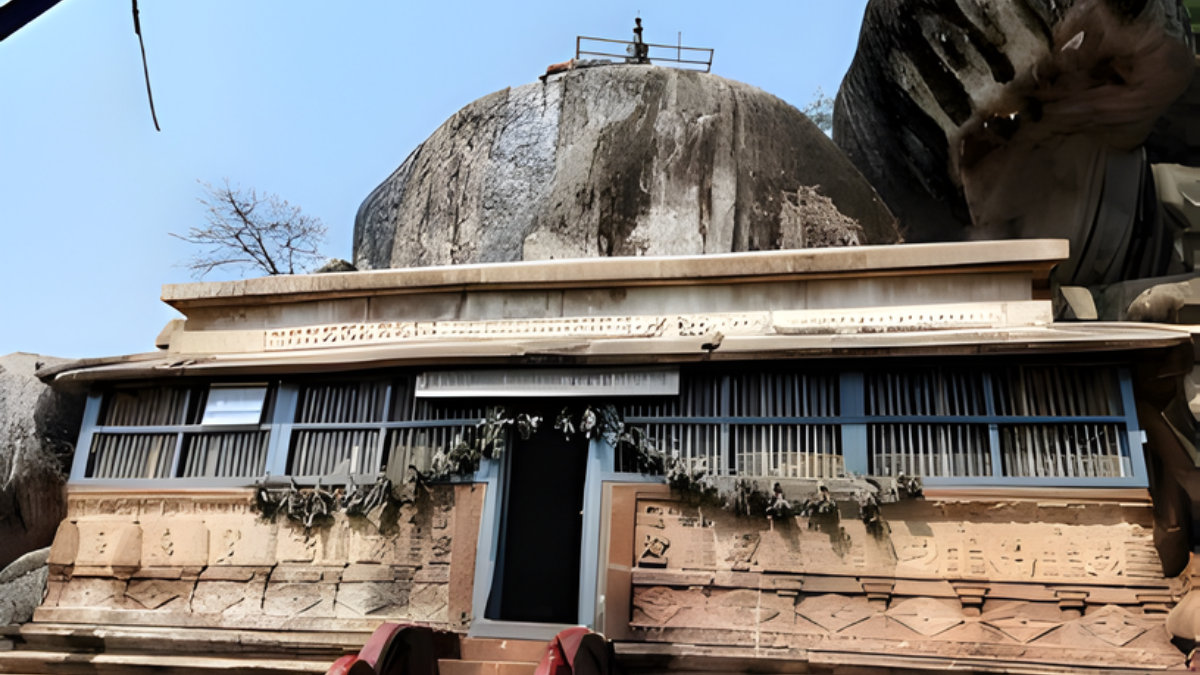
Renukamba Temple, a cave shrine dedicated to Goddess Renuka (Photos: Karnataka Tourism)
Chandragutti sits quietly in the Western Ghats, where the landscape is marked by thick forests and rocky hills. The town is best known for its ancient temples carved into the hillside, which blend naturally with the surroundings. With very few tourist facilities, the place still feels untouched, offering a calm and peaceful escape from busy hill stations.
Located in Shivamogga district of Karnataka, roughly 16 km from Soraba in the Western Ghats. It rises about 848 meters above sea level on a rocky hill surrounded by dense Malnad forests and misty slopes. The region is defined by its natural terrain and layered history making it ideal for travellers who enjoy heritage sites that still feel undiscovered.
Heritage sites and temples
Renukamba Temple
The spiritual heart of Chandragutti is the Renukamba Temple, a cave shrine dedicated to Goddess Renuka. The main sanctum is carved into natural rock high on the hill and draws devotees and visitors. It is linked with the legend of Renuka and her son Parashurama, giving the place its mythic pull.
Also Read: Chitkul: Last inhabited village of Himachal Pradesh
Chandragutti Fort
Above the temple lies the ancient Chandragutti Fort ruins. Built on a cliff and made from locally quarried stone, the fort was a strategic stronghold for rulers from the Kadambas of Banavasi to the Vijayanagara Empire and later the Nayakas and Maratha generals. Walking the forested path up reveals old fort walls, small shrines and panoramic views of the surrounding Ghats.
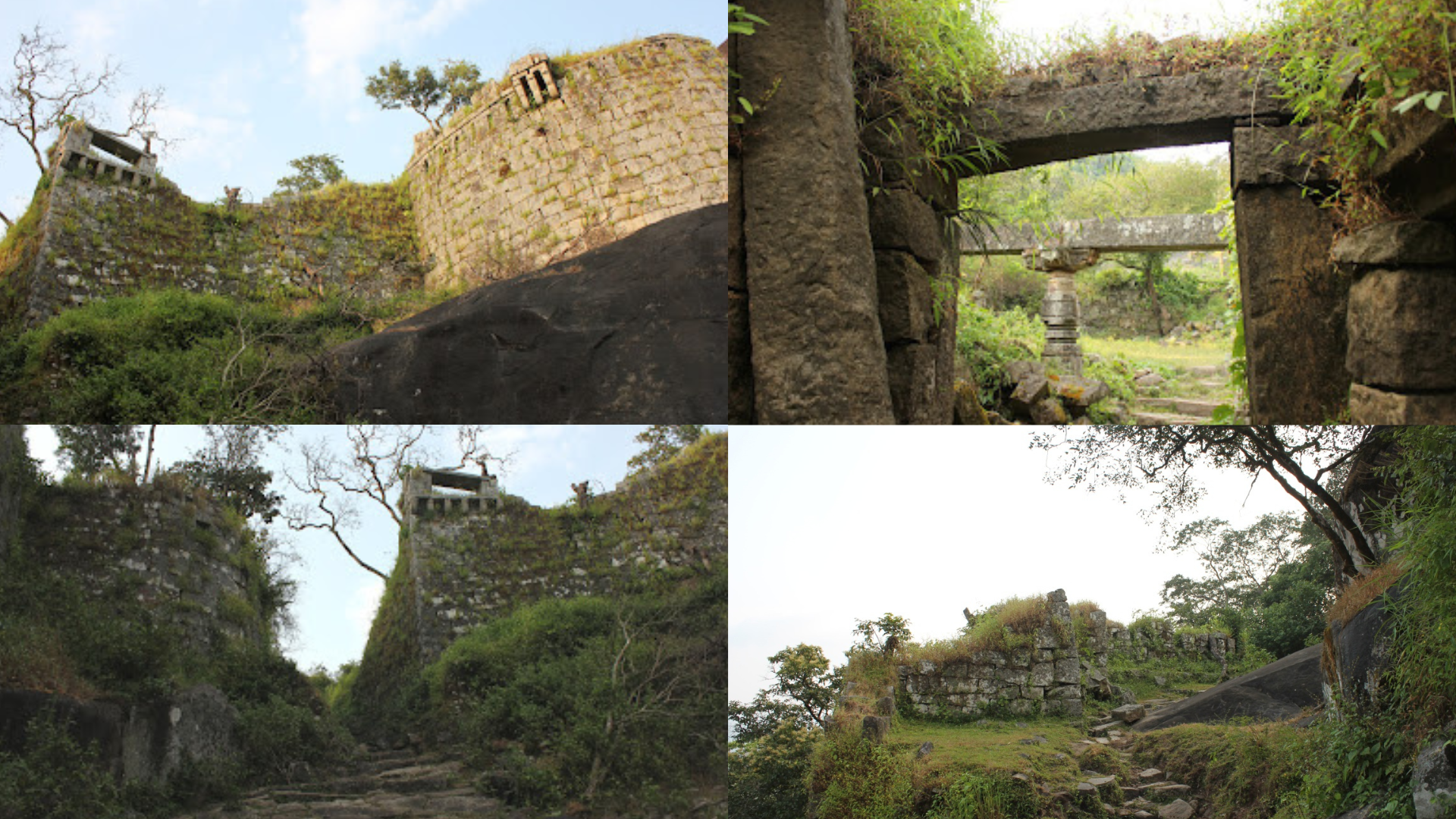
The fort was a key stronghold from the Kadambas to the Vijayanagara Empire
Bhairava and minor shrines
Along the steps up the hill and near the Renukamba cave you will find smaller shrines to Kala Bhairava and other local deities. These spots add a layer of folk belief to the site and show how religious practice here blends formal temple worship with village and forest traditions.
Region’s uniqueness
Chandragutti sits in the Malnad belt of Karnataka, known for its thick forests, granite hills and a climate influenced by frequent rains. This is the land of laterite paths, moss-covered rocks and intermittent waterfalls rather than manicured gardens or huge crowds. The forests around are home to birds and flora that shift with the seasons, making it appealing for nature lovers and photographers.
What sets it apart from famous hill towns is the sense of undiscovered space, away from mass tourism. Local pilgrims and trekkers move along the paths, while the hill trails retain a sense of belonging to the communities that live here.
The best time to visit Chandragutti is between October-February, when the weather is pleasant and ideal for trekking and outdoor exploration. The monsoon months transform the landscape into a lush green area, though trails can be slippery. Summer months are warmer but still manageable for short hikes, especially during early mornings.
Also Read: Lonar Lake: Maharashtra’s otherworldly wonder
Culture and lifestyle
The culture around Chandragutti reflects Malnad traditions, shaped by forest life and long connections with temple rituals. Villages here have a relaxed pace, with daily life often moving between fields, local markets and communal gatherings under large trees.
Festivals tied to local temples bring communities together, with Renukamba Jatre fair in early spring being one of the most significant, when people from across the region come to pay respects and celebrate.
The principal language here is Kannada, with local dialects that carry cadences of the Western Ghats. Folk music and ritual performances are still part of village festivities and temple events.
Local food and cuisine
The cuisine in Chandragutti reflects the simplicity of Malnad life and the use of fresh local produce. Daily meals often feature akki rotti, or rice flatbread, and akki saaru or spicy rice soup, while bhakris or fried snacks made of ragi or rice, paired with greens or lentil stews are common staples. Steamed rice served with saaru, palya or vegetable side dishes, and spiced pickles or chutneys reflects the region’s traditional palate.
Snacks like Maddur vade and local sweets prepared during festivals offer a taste of Karnataka’s broader South Indian cuisine but with a distinctive Malnad touch. Many households rely on ingredients sourced from nearby fields and forests, such as greens, spices and jaggery, giving each meal an earthy, authentic flavour rooted in the local landscape.
Daily life rhythms
Life here is unhurried. People often gather in open courtyards or under shaded village trees in the afternoon breeze, talk of monsoon rains and harvests combined with news from nearby towns. Farming, cattle rearing and small trade form the backbone of local livelihoods.
Travellers who stay in home-style accommodations or guesthouses often find themselves invited to eat or walk the surrounding paths with locals, offering a clear view into rural Malnad life.