Indian-origin economists are quietly shaping global policy and research
Across global financial institutions, economists of Indian origin are quietly shaping the direction of international economic policy. From poverty reduction and development strategy to debt management and crisis response, their research, leadership and policy decisions are influencing how governments and multilateral bodies respond to the world’s most pressing economic challenges.
Abhijit Banerjee, Development economist and Nobel laureate
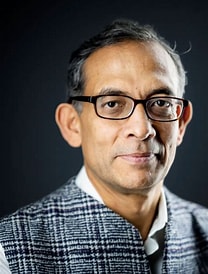
Abhijit Banerjee
Abhijit Banerjee is a leading development economist and Nobel laureate for his work in the subject. Born in 1961 in Mumbai and raised in Kolkata, he completed his graduation in Economics at Presidency College, University of Calcutta in 1981, post-graduation in Economics from Jawaharlal Nehru University in 1983, and doctorate in Economics from Harvard University in 1988.
After his Doctorate, he taught at Harvard University and Princeton University before joining the Massachusetts Institute of Technology as the Ford Foundation International Professor of Economics. He also co-founded the Abdul Latif Jameel Poverty Action Lab, which conducts field experiments to improve policy design.
Banerjee is best known for transforming the study of poverty through evidence-driven policy. He co-pioneered the use of randomised controlled trials to assess the real-world impact of development programmes, shifting global thinking toward testing specific interventions in education, healthcare and financial inclusion. Governments, international agencies and NGOs now rely on these methods to design and evaluate anti-poverty initiatives.
He was awarded the 2019 Nobel Prize in Economic Sciences, along with Esther Duflo, his wife, and Michael Kremer, for their experimental approach to alleviating global poverty. He has also received other honours including the Sloan Research Fellowship, Guggenheim Fellowship, Infosys Prize and a Gerald Loeb Award honourable mention for Poor Economics.
Also Read: Indian judges presiding over western courtrooms
Ajay Banga, President, World Bank Group
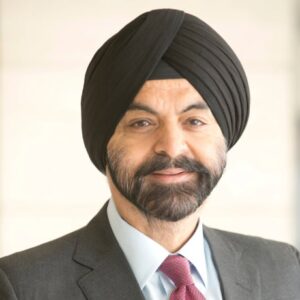
Ajay Banga
Ajay Banga leads the World Bank Group as its President, overseeing the institution’s work on development finance, poverty reduction and economic resilience across low-and middle-income countries.
In this role, he guides policy priorities and funding strategies aimed at addressing global challenges such as inequality, climate vulnerability and sustainable growth.
Born in 1959 in Pune, Banga grew up in a military family that moved across the country. He studied economics at St Stephen College, Delhi University and completed his post-graduation from the Indian Institute of Management Ahmedabad.
Before joining the World Bank in 2023, Banga served as President and Chief Executive Officer of Mastercard, where he played a major role in expanding digital payments and financial inclusion worldwide. His experience across global finance, public-private partnerships and emerging markets informs the World Bank’s approach to mobilising capital, strengthening institutions and supporting inclusive economic development.
Banga has been honoured with India’s Padma Shri and has received international recognition including the Foreign Policy Association Medal and the Ellis Island Medal of Honour.
Gita Gopinath, Deputy Managing Director, International Monetary Fund
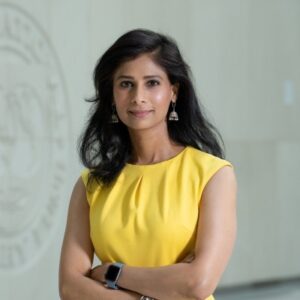
Gita Gopinath
Gita Gopinath is a leading macroeconomist and a central figure in global economic policy. Born in 1971 in Kolkata, she completed her graduation and post-graduation in Economics from the University of Delhi, followed by another post-graduation in Economics from the University of Washington and doctorate in Economics from Princeton University in 2001.
She has held academic positions at the University of Chicago Booth School of Business and Harvard University and has served as Chief Economist and later as First Deputy Managing Director of the International Monetary Fund, guiding the institution’s economic analysis and policy advice on issues including sovereign debt, international trade and fiscal responses to crises.
Her leadership was particularly visible during the Covid-19 pandemic, when the IMF advised countries on managing economic fallout, supporting growth and maintaining financial stability. Gopinath’s work has reinforced the importance of coordinated global responses in an increasingly interconnected economy.
She has received several honours, including the Pravasi Bharatiya Samman awarded by the Government of India.
Also Read: Five Indian-origin CEOs transforming major American industries
Indermit Gill, Chief Economist and Senior Vice President for Development Economics, World Bank Group
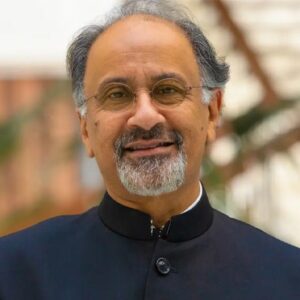
Indermit Gill
Indermit Gill is a leading development economist and a key figure in shaping global development policy. He studied economics at St. Stephen College, Delhi University and the Delhi School of Economics and completed his doctorate in Economics at the University of Chicago.
Gill has worked in both academic and institutional roles across the United States and India and currently serves as Chief Economist and Senior Vice President for Development Economics at the World Bank Group, where he oversees research and policy analysis that influence strategies on poverty reduction, economic growth, public debt and institutional reform.
He is best known for his work on the structural foundations of long-term development, including productivity, governance and sound macroeconomic management and his research continues to guide policymakers in developing and middle-income countries facing complex economic transitions.
He has received recognition for his contributions to development economics, including numerous academic citations and leadership roles within major global institutions.
Urjit Patel, Executive Director, International Monetary Fund
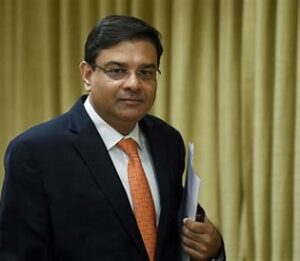
Urjit Patel
Urjit Patel is an Indian-origin economist and former central banker who serves as Executive Director at the International Monetary Fund, representing India and several other countries.
Born in Nairobi, Kenya, he completed his education in India and abroad, studied economics at the London School of Economics, completed an M Phil at Oxford University and earned his doctorate in Economics from Yale University.
After his Doctorate, he worked in global finance and policy before returning to India, where he served as the Governor of the Reserve Bank of India.
Patel is known for his work on monetary policy, financial regulation and central banking reform and his experience from emerging market economies helps ensure IMF policy reflects the realities of diverse financial systems.
In his role at the IMF, Patel participates in decisions that shape policies on global finance, monetary stability and crisis response, balancing the needs of advanced and developing economies. He has received honours including the Wilbur Cross Medal from Yale University and is an Honorary Fellow of Linacre College, Oxford.