Peter Singh and Neeno Kaur turned their home into a green ecosystem, keeping indoor AQI at 10-15 (Photos: Aanant Aquaponics)
With urban pollution levels frequently reaching hazardous in cities like Delhi, families are looking for ways to limit exposure to toxic outdoor air while trying to improve the air they breathe indoors. Beyond mechanical air purifiers or chemical solutions.
A Delhi home where greenery sets the air standard
In South Delhi’s Sainik Farms, Peter Singh and Neeno Kaur, a couple in their 70s, have reimagined their house as a living ecosystem rather than just a building. They work on urban agriculture, aquaponics, rooftop farms and sustainable living systems, and also train others through courses and workshops. Their home sustains around 15,000 plants arranged in rooftop gardens, green walls, hanging pots and planter corners throughout the indoor and outdoor spaces. This green approach helps maintain an exceptionally low indoor Air Quality Index (AQI) of 10-15, even when Delhi’s outdoor air is thick with smog.
Their efforts go beyond greenery. The home is solar-powered, runs off-grid and uses rainwater harvesting for irrigation, blending sustainability with indoor health. The couple also grow their own vegetables, closing the loop on food and air quality in a way few urban households attempt.
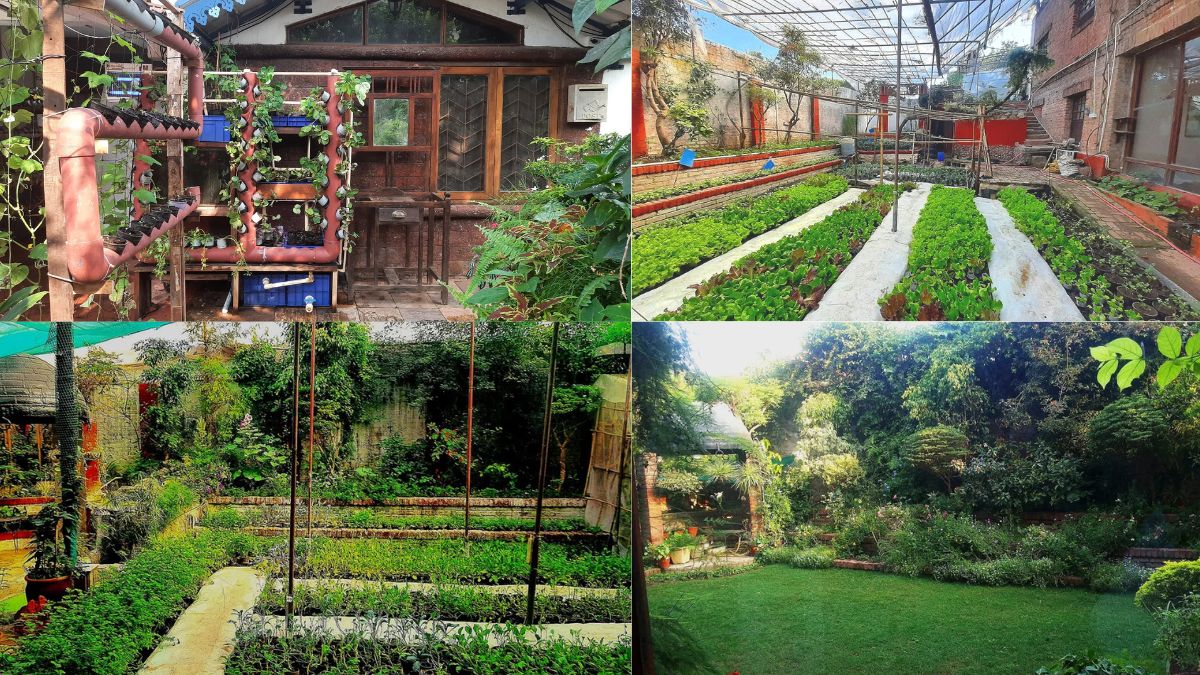
They grow their own vegetables, improving indoor health and linking food production to cleaner air
Why plants matter to urban residents
Across Delhi and other polluted metros, demand for ‘air-purifying’ indoor plants has climbed sharply, especially during winter months when pollution peaks. Nurseries report customers choosing species like snake plants, peace lilies, money plants, spider plants, areca palms and Boston ferns for their reputed air-filtering qualities.
These plants are popular for practical reasons. They are easy to care for in apartments and many bloom in low light and typical indoor conditions. For budget-conscious families, they are also affordable alternatives to high-tech air systems. Beyond their functional benefits, they add greenery and aesthetic appeal while offering perceived and real improvements in indoor comfort.
Also Read: Delhi’s AQI Women Ambassadors clear the air in Delhi’s construction industry
These plants can absorb certain volatile organic compounds (VOCs) and release oxygen, contributing to fresher air and improved humidity. Some species, like snake plants, can even continue photosynthesis at night.
Stories from everyday households
Across social and community gardening groups, urban gardeners share how adding clusters of plants has made their homes feel fresher and more comfortable. Parents note that living rooms with spider plants or potted palms seem less dusty and children with allergies appear to breathe easier at home. Many treat their plant collection as a family project, involving children in watering and care, turning indoor greenery into a lifestyle habit rather than a weekend hobby.
These narratives reflect a shift that plants are no longer just decoration. They are part of how urban families conceive of their living environment in a polluted world.
Broader context and community action
The rise in plant-based indoor air strategies comes against a backdrop of public health concerns about pollution in India. Advocacy groups and movements like the Clean Air India Movement have driven awareness about air quality, while local campaigns push for better monitoring and cleaner energy solutions.
At the same time, startups and innovators are blending native plant systems with technology to create new air purification solutions such as wall-mounted plant filtration systems that leverage plant root and leaf processes to clean indoor air more efficiently.
What started as a simple home trend is becoming a quiet social movement. In cities where pollution is a constant threat, indoor plants offer families a low-cost way to take back some control over their health. They also build community, neighbours share tips, nurseries become local support systems and green living becomes a shared lifestyle choice. In that sense, indoor gardening is not just about cleaner air but about how people adapt, connect and protect their homes in an increasingly polluted world.