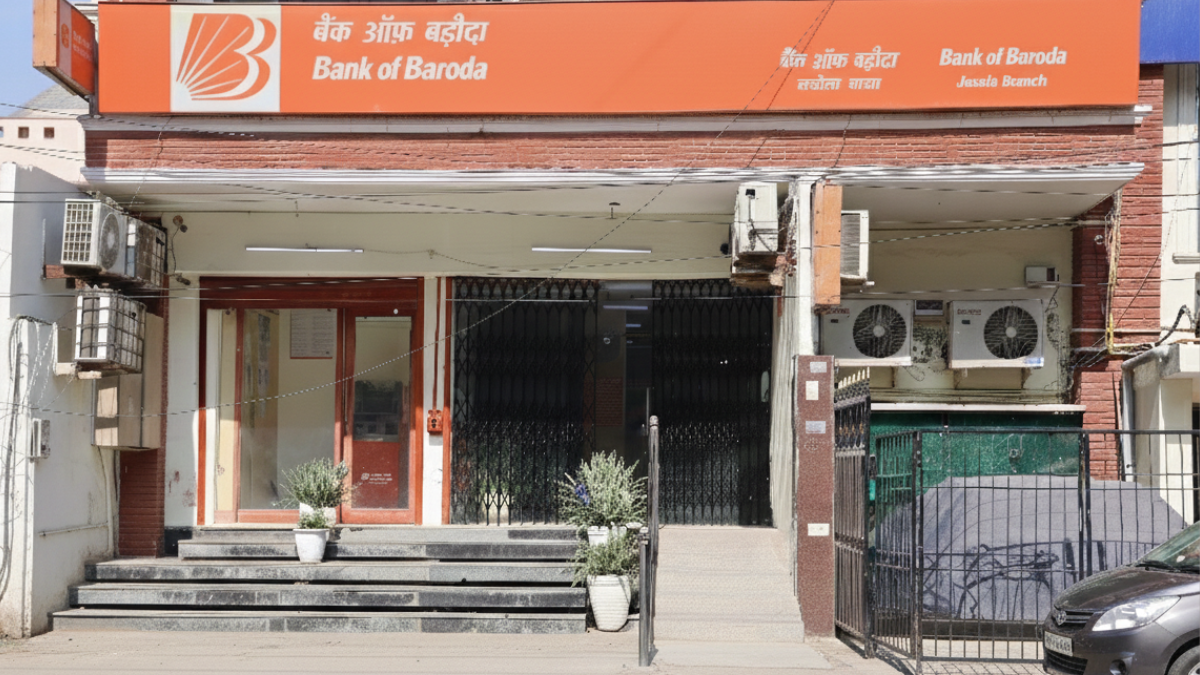
Banking unions are joining a nationwide general strike on Thursday (Photo: Sunil Yadav/ MIG)
On the morning of Thursday, when bank branches across India are expected to remain shut or understaffed, the disruption will not come from a sudden financial shock or cyber outage, but from a quieter, deeper unease within India’s organised workforce.
For decades, banking unions have been among the most cautious and institutionally-bound labour bodies in the country more inclined towards negotiation than confrontation. Their decision to join a nationwide general strike alongside 10 Central Trade Unions marks a significant shift, signalling that what is at stake, they believe, goes beyond wages or service conditions. It is, as union leaders frame it, about the future of job security, collective bargaining, and organised employment itself.
The call to strike was formally reiterated in a letter dated January 28, jointly signed by the general secretaries of the All India Bank Employees Association (AIBEA), All India Bank Officers’ Association (AIBOA) and the Bank Employees Federation of India (BEFI).
Addressed to bank units and members nationwide, the letter lays out a catalogue of concerns from the implementation of the four new Labour Codes to rising unemployment, fixed-term employment, and the government’s stance on working hours that have pushed banking unions to mobilise at an unprecedented scale.
“The labour codes proposed to be implemented are totally against the workers,” the letter states, adding that “stringent conditions have been prescribed to register trade unions,” while employers with fewer than 300 workers could terminate employees without seeking prior government concurrence. For unions accustomed to sector-wide protections, these provisions represent not reform, but rollback.
Also Read: Indian banks likely to adopt 5-day work week
At the middle of the protest are the four Labour Codes, the Code on Wages, Industrial Relations Code, Social Security Code, and Occupational Safety, Health and Working Conditions Code passed between 2019 and 2020 but yet to be fully implemented. While the government has argued that the codes simplify India’s complex labour regime and improve ease of doing business, trade unions argue that simplification has come at the cost of worker protections.
According to workers, Industrial Relations Code fundamentally alters the balance of power between workers and employers. It makes forming unions more difficult, legalises fixed-term employment across sectors, and raises the threshold for government approval for layoffs and retrenchment. In banking, where public service and accountability are central, this is deeply worrying.
Bank employees, particularly in public sector banks, already operate under intense pressure. According to data from the Ministry of Finance, public sector banks have seen a net reduction of over 1,50,000 employees between 2015 and 2024, even as the volume of accounts, digital transactions and compliance requirements has grown exponentially. RBI figures show that India now processes over 13 billion digital payment transactions per month, much of it routed through bank infrastructure managed by a shrinking staff count.
Inside a public sector bank branch in Delhi’s Laxmi Nagar area, assistant manager Anil Kumar describes days that regularly stretch well beyond official working hours. “We come in at 09:30, but rarely leave before 19:00 or 20:00. There are targets for deposits, insurance, digital onboarding, plus regular banking work. Now, instead of addressing staff shortages, the government wants to increase permissible working hours. That feels like punishment, not reform,” Kumar tells Media India Group.
The January 28 letter specifically flags this concern, noting that while bank unions have long demanded a five-day work week to improve work-life balance bringing banking in line with most government departments the government’s proposed rules under the Occupational Safety Code could allow employers to extend daily working hours. For employees already stretched thin, this signals a future of longer days without commensurate relief.
Beyond working hours, the issue of employment generation looms large. Based on the Monthly PLFS bulletins from the Ministry of Statistics and Programme Implementation (MoSPI), in April 2025, the unemployment rate (CWS) for youth aged 15-29 in urban areas was 17.2 pc, which rose to 17.9 pc in May 2025. For the same period in April 2025, the nationwide youth unemployment rate (15-29 years) across both rural and urban areas was 13.8 pc.
Also Read: Fragile protections for workers weakened further by New Labour Codes
“Fixed-term employment may sound efficient, but it destroys the idea of a career. Earlier, even temporary staff had a pathway to permanency. Now, young people are hired on contracts, rotated out, and replaced. There’s no security, no loyalty, and no future,” Soumya Rani, a clerical staff member at a public sector bank in Uttar Pradesh tells Media India Group.
The anxiety is compounded by the broader trajectory of banking reforms. Privatisation of select public sector banks remains on the government’s agenda, even as consolidation through mergers has already reduced the number of PSBs from 27 in 2017 to 12 today. Each merger has brought along closure of branches, redeployment of staff, and changes in service conditions often without proportional hiring.
“Every reform is sold as efficiency. But efficiency cannot mean doing more work with fewer people indefinitely. Banks are not factories; they are public institutions handling people’s savings, pensions and livelihoods,” says Rani.
The participation of bank unions in the February 12 strike also reflects a sense of solidarity with workers across sectors. The 10 Central Trade Unions backing the strike represent millions of workers in manufacturing, transport, mining, construction and services. Their common platform includes demands for universal social security, repeal of the new labour codes, job creation, and protection of public sector enterprises.
For banking unions, joining such a broad-based mobilisation is not a decision taken lightly. Historically, strikes in the banking sector have been limited to sector-specific demands and carefully timed to minimise public inconvenience. This time, union leaders argue, the issues transcend sectoral boundaries.
The potential impact of the strike is significant. Bank closures could disrupt cheque clearances, branch-based services, and loan disbursements, even as digital services remain operational. For many customers particularly pensioners and small businesses this is an inconvenience. Unions acknowledge this, but says that short-term disruption is necessary to prevent long-term erosion of rights.
Also Read: Cross-brand loyalty coalitions transform India’s retail banking landscape
“People see banks as stable, privileged workplaces, they don’t see the stress, the understaffing, the pressure to sell products. This strike is also about making invisible labour visible,” says Kumar.
As February 12 approaches, the government has maintained that the labour codes are progressive and pro-worker, pointing to provisions such as universalisation of minimum wages and expanded social security coverage. But without meaningful dialogue with unions, trust remains low.
What the strike ultimately represents is a moment of reckoning. For banking unions, it is a recognition that incremental negotiations may no longer suffice in the face of structural changes to labour law. For India’s workforce, it reflects a growing fear that stability is becoming a relic of the past.