
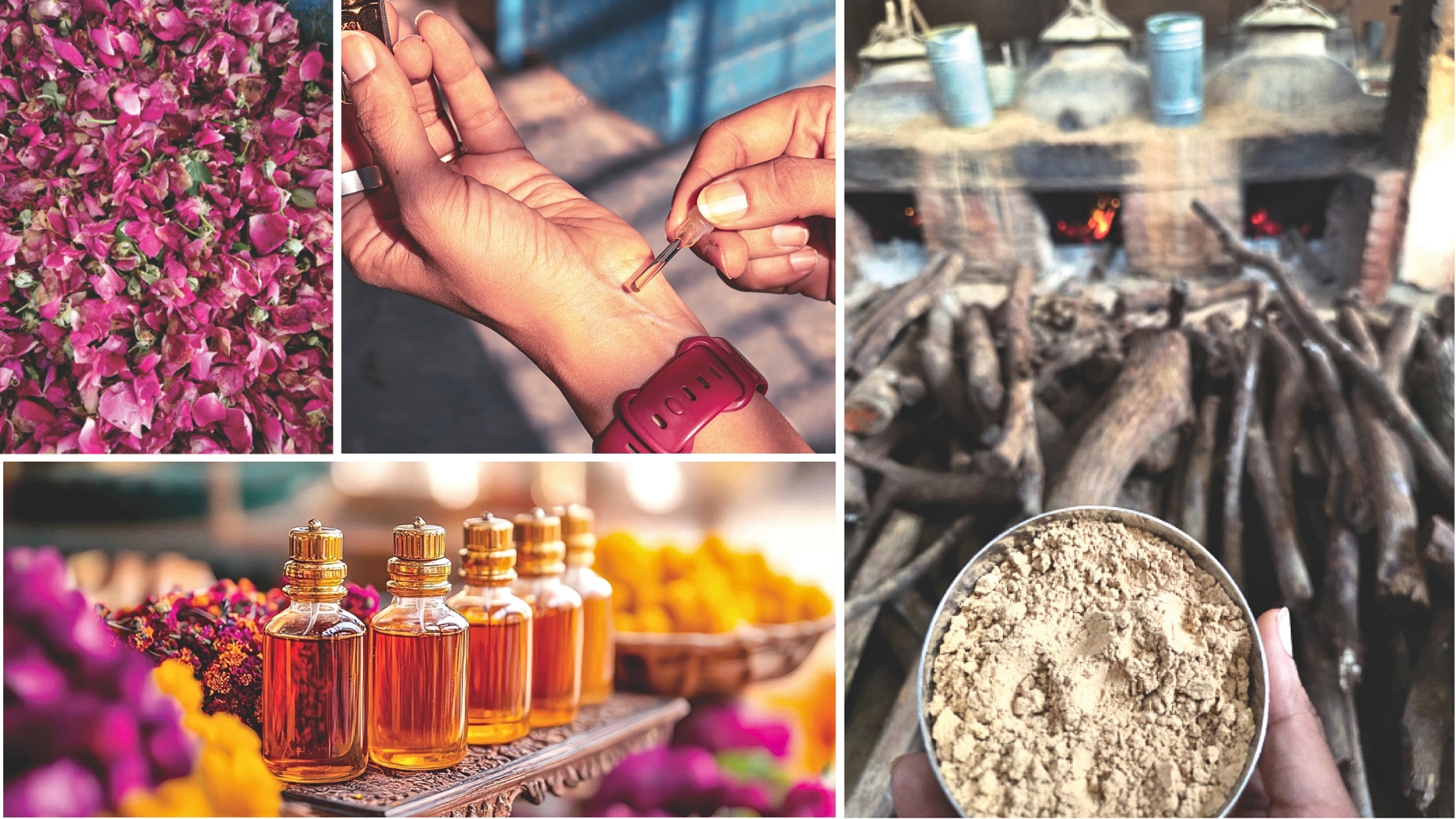
A glimpse into the centuries-old perfume-making traditions of Kannauj, India’s perfume capital
Imagine stepping into a room where ancient scents whisper stories of kings and queens, where the air itself is imbued with the delicate aroma of jasmine, rose and sandalwood. Picture a serene morning in Kannauj, euphemistically called the perfume capital of India, located about 120 km from Lucknow in Uttar Pradesh, as the first rays of a rising sun filter through copper distillation pots, releasing fragrant vapours crafted by artisans whose families have honed this craft for centuries.
A visit to a perfume manufacturing unit here is not any trip, but a sensory voyage that envelops travellers in the magic of India’s perfume heritage, blending history, culture and craftsmanship into an unforgettable experience.
India’s perfume heritage, largely concentrated in and around Kannauj, spans over 1,000 years. It remains one of the world’s last bastions for traditional attar (natural perfume oil) production, utilising copper deg-bhapka stills and sandalwood oil bases.

Divyaudit Narain Singh
With rising awareness and a growing demand for niche experiences amongst modern-day tourists, the heritage in Kannauj has fuelled a growing tourism niche, attracting both domestic and international travellers alike, seeking authenticity and sensory discovery.
“Over the last five years, there has been a remarkable rise in interest around perfume tourism in India, particularly as travellers look for experiences that combine heritage, craftsmanship and sensory discovery,” Divyaudit Narain Singh, Owner, Anand Bhawan Palace, a homestay in Kannauj, tells India & You.

Gitesh Kumar
He notes that Kannauj has become a cultural magnet, attracting those eager to explore India’s centuries-old attarmaking traditions.
“Our content initiatives have helped translate digital curiosity into real-world engagement, with inbound inquiries and group bookings rising quarteron-quarter. Visitors seek immersive, sensory-driven encounters that go beyond retail to explore provenance, craftsmanship, and storytelling,” Gitesh Kumar, CEO, an Indian perfume manufacturing company that operates under the brand Etherea Essentia in Haryana, tells India & You.
Also Read: Spiritual tourism puts Uttar Pradesh on path to progress
Experiential offerings: Beyond the fragrance
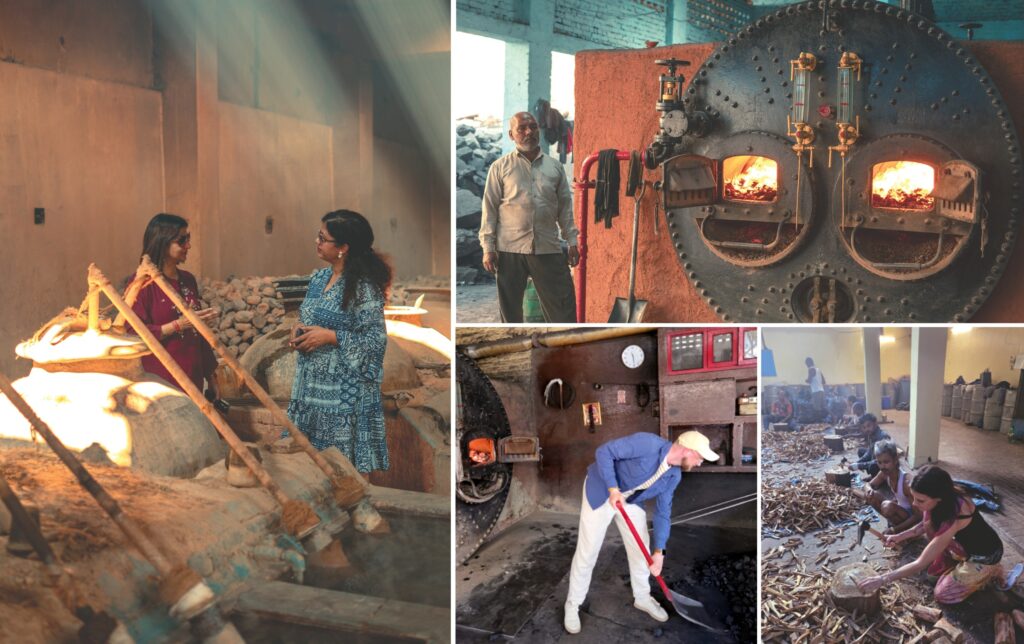
Visitors can explore traditional attar distilleries and witness the delicate process of crafting natural fragrances
Visitors can embark on guided tours of traditional attar distilleries where the age-old copper stills glisten in the soft glow of firelight, revealing the intricate process of distilling natural scents.
Hands-on workshops invite guests to experience the art of perfume blending, using pure essential oils and age-old techniques passed down through generations. Strolling along fragrant scent trails that wind through fields of jasmine, rose and mehndi, participants can witness the making of incense cones by skilled local artisans.
The day culminates in storytelling sessions that trace the rich history of Indian perfumery, its royal origins, trade legacy and the deep cultural meanings carried in every drop of attar.
“We offer a range of immersive, hands-on experiences designed to help guests connect deeply with the world of Indian perfumery,” Singh adds.
The offering is crafted for diverse visitors such as 40 pc domestic cultural explorers from big cities, 45 pc international fragrance aficionados, and 15 pc wellness and sustainability travellers drawn to mindful, slow-living experiences.
“The Kannauj experience unfolds as a multi-sensory journey. Highlights include the ‘Deg-Bhapka Distillery Walk’ with live demonstrations of traditional copper stills, and the ‘Blending & Layering Workshop’ where visitors craft their own personalised scents using rose, saffron, vetiver, cypriol and jasmine,” Kumar adds.
Also Read: Scented Success: India’s candle market warms up post-pandemic
Visitor patterns and trends
Perfume tourism shows marked seasonality with peak periods between October and March, coinciding with cooler weather and cultural festivals that enhance footfall by 50-60 pc. Off-season months still attract curated, smaller groups, particularly international guests seeking personalised olfactory stories.
“During the peak months from October to March, visitor counts range between 180 and 250 per month, with festival and wedding seasons seeing even higher spikes,” says Kumar.
According to him, off-season visitors moderate to 60–100 per month, often with sessions scheduled early morning or late evening to beat heat and the visitors’ mix includes 70-75 pc individual walk-ins and 25-30 pc curated groups including content creators, students, corporate groups and travel partners. This segmentation reflects emerging trends towards experiential, sensorydriven tourism.
Hospitality meets heritage
Tourism operators and heritage hotels, including Ama Stays & Trails, a brand of IHCL, India’s largest hospitality company, have partnered with perfume tourism initiatives to develop Scent of Royalty packages that bundle weekend stays at heritage properties with perfume blending workshops, temple incense making and curated culinary experiences, elevating visitor engagement.
“We are in discussions with premium travel agencies and heritage hotel brands to create exclusive Scent of Royalty weekend packages, combining a stay at Anand Bhawan Palace, perfume workshops, temple flower incense making and curated local cuisine experiences,” says Singh.
This integration of luxury hospitality and cultural immersion ensures a holistic sensorial journey.
“We aim to create Scent Circuits of India, a national network celebrating regional fragrance traditions that couples hands-on craft exploration with local cuisine, music, and storytelling to create cultural immersion rather than observation,” says Kumar.
Also Read: Live like a royal at these heritage luxury hotels in India
The eclectic olfactory map of India
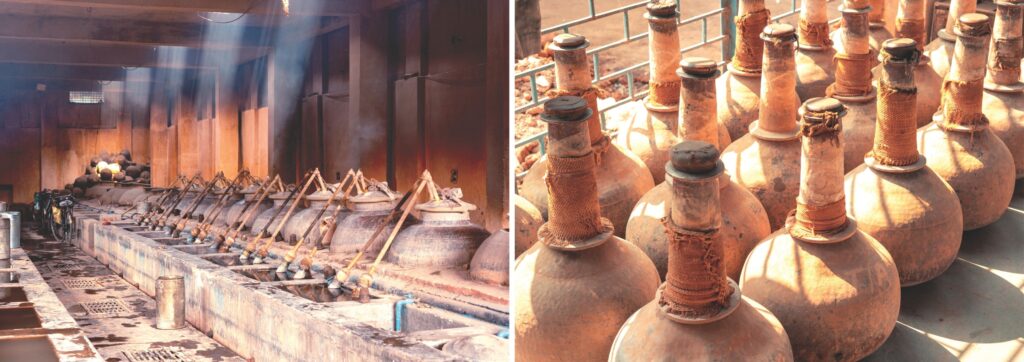
The first rays of sunrise filter through copper distillation pots as fragrant vapours rise
India’s perfume industry extends far beyond Kannauj, revealing a diverse and regionally rooted olfactory map. In Goa, perfumery takes an experimental turn with blends that incorporate coastal botanicals, sea breezes and tropical florals.
Tamil Nadu preserves the timeless tradition of temple jasmine, a fragrance central to daily rituals and religious offerings. Mysore, long celebrated for its sandalwood, showcases both its heritage of intricate wood carving and its age-old scent rituals that link art with aroma.
Further east and south, Assam and Kerala add depth to this fragrant mosaic through oud-inspired narratives and traditional spice distillation practices that reflect their rich ecological and cultural histories.
This regional diversity allows guests to appreciate how geography, culture and climate influence fragrance traditions.
“Our itineraries often draw contrasts and inspirations from other regional perfume cultures, showing guests how India’s fragrance heritage is both diverse and interconnected,” says Singh.
Despite the rising demand, further development of perfume tourism in India faces hurdles including limited infrastructure, lack of awareness, seasonal constraints and challenges in preserving traditional knowledge amid urban migration. Yet, the niche players already in the sector smell opportunities in global demand for authentic, natural fragrances and sustainable tourism.
Also Read: Khari Baoli: Asia’s largest spice market remains timeless
“Rising global demand for authentic, natural and sustainable fragrances gives India a strong edge,” says Singh.
He sees Kannauj’s heritage as a niche parallel to Grasse in southern France, poised to grow with better branding and storytelling. Initiatives like Tirwa Farms Rural Livelihood Project and Anand Bhawan Palace’s workshops are transforming perfumery from industrial craft to cultural experience.
Kumar outlines practical steps to tackle challenges through curated partnerships, timed visits and inclusive artisan participation to ensure quality and sustainability.
“We address challenges with practical interventions like shaded demo zones, pre-booked multilingual storytelling, safety protocols, and inclusion of women artisans. Our partnerships with hotels, OTAs and educational institutions aim to sustain quality and scale responsibly,” Kumar adds.
This synergy of heritage and innovation could position India as an emerging hub for olfactory tourism, weaving timeless traditions into the luxury and experiential travel fabric. By blending heritage, sensory immersion, wellness, and luxury hospitality, this niche promises to entice culturecurious, sensory-driven travellers worldwide.
