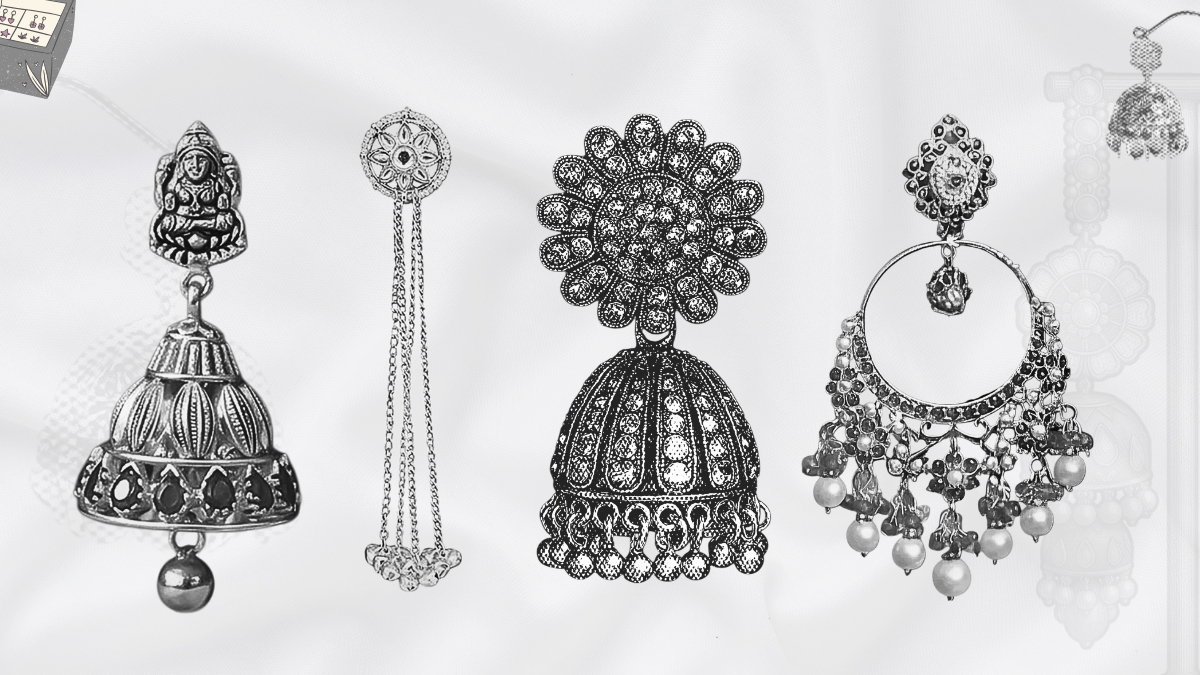
In an era of fast fashion and fleeting trends, the jhumka remains stubbornly timeless
Few pieces of jewellery in India carry as much cultural weight as the jhumka, a dangling ear-ring. Suspended delicately from the ear, shaped like a dome or a bell, the jhumka has travelled centuries across dynasties, temples, weddings, marketplaces and today, Instagram feeds.What began as sacred adornment has evolved into a statement of identity, craftsmanship and continuity.
In an era of fast fashion and fleeting trends, the jhumka remains stubbornly timeless. It continues to bridge ritual and rebellion worn at weddings, protests, dance stages and college campuses alike. Each regional variation tells a story of geography, belief and craftsmanship, reminding that jewellery in India is never merely decorative. Across India, each region has shaped the jhumka in its own image, embedding local history, belief systems and aesthetics into metal and stone.
Also Read: Traditional jewellery: A dazzling tapestry of Indian cultures
From the sacred bells of South Indian temples to the marital symbolism of Kashmir’s Dejhoor, jhumkas are living artefacts. They evolve, adapt and endure much like the cultures that created them.
Kundan and Meenakari Jhumkas
Kundan and Meenakari Jhumkas
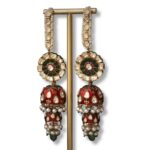
In Rajasthan, jhumkas are inseparable from Kundan and Meenakari traditions. Developed under Rajput and Mughal patronage, these techniques involve setting uncut stones in gold (kundan) and decorating the reverse side with colourful enamel (meenakari).
Historically, these jhumkas were worn by queens and noblewomen, reflecting wealth, power and refined taste. The vibrant enamel work featuring floral and geometric motifs added layers of artistry rarely visible at first glance.
Even today, Kundan-Meenakari jhumkas dominate Rajasthani bridal jewellery. Jaipur and Jodhpur remain global centres for these crafts, supplying both traditional and contemporary markets.
Temple Jhumkas
Temple Jhumkas
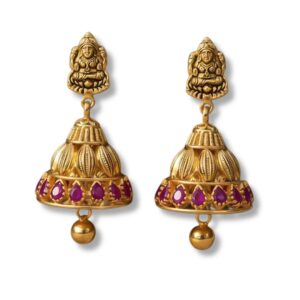
In South India, jhumkas find their most sacred expression in temple jewellery, particularly in Tamil Nadu and Karnataka. These jhumkas are often large, heavy and richly detailed, inspired by the bells found in Hindu temples.
Historically, temple jhumkas were crafted for deities and worn by devadasis or temple dancers during ritual performances. Made from gold and adorned with rubies, uncut diamonds and pearls, they depicted gods, goddesses and mythological motifs.
Today, temple jhumkas are an integral part of not only classical dances like the Bharatanatyam or Kuchipudi, but also an important component of bridal jewellery. While their ceremonial significance remains intact, contemporary versions made with gold-plated alloys or silver have made them more accessible to a wider audience.
Karnphool Jhumka
Karnphool Jhumka
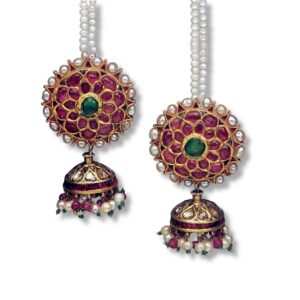
The Karnphool, meaning “ear flower,” traces its origins to ancient Sanskrit texts and temple sculpture. Popular across North and Central India, this design places a floral stud at the earlobe, often paired with a jhumka or dangling element below.
Historically, Karnphools were worn by women of royal and aristocratic households, as well as by temple dancers. The floral motif symbolised fertility, beauty and the cyclical nature of life central themes in Indian aesthetics.
Even today, Karnphool jhumkas are widely used in bridal jewellery, especially in classical dance forms like Kathak and Odissi. Modern jewellers continue to reinterpret the design using diamonds, pastel stones and detachable elements, making it both ceremonial and versatile.
Dejhoor
Dejhoor
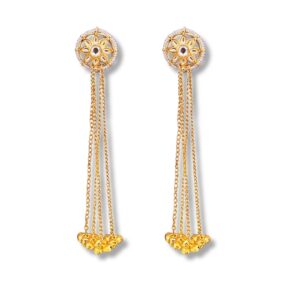
Perhaps one of the most culturally significant jhumka-like ornaments in India is the Dejhoor, traditionally worn by married Kashmiri Pandit women. More than a piece of jewellery, it is a powerful marker of marital status and community identity.
Typically crafted in gold, Dejhoors consist of two pendants suspended from the ears by a red thread or gold chain, passing over the head. The design dates back centuries and is deeply embedded in Kashmiri Pandit customs, symbolising protection, continuity and blessings for married life.
Also Read: Priceless Nizam jewellery on display
Despite displacement and migration, the Dejhoor remains an essential part of Kashmiri Pandit weddings today.
While younger generations continue to revive it in lighter, contemporary forms and fusion wear, there has also been a trend towards newer, heavier designs larger gold pendants, more intricate filigree work, and longer chains that make the ornament more dramatic and visually striking during wedding ceremonies, reflecting both modern tastes and traditional grandeur.
Awadhi Jhumkas
Awadhi Jhumkas
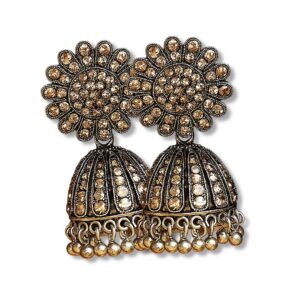
In Uttar Pradesh, particularly in the Awadh region, jhumkas evolved under Mughal and Nawabi patronage during the 18th and early 19th centuries, when jewellery reflected courtly grace rather than overt grandeur.
Lucknow’s master craftsmen created gold jhumkas adorned with fine filigree work, pearl fringes and floral engravings, often designed to sway gently with movement. Traditionally worn by women from aristocratic households as well as classical music and dance artistes, these jhumkas became symbols of refinement and cultural sophistication.
Today, Awadhi jhumkas are worn at weddings, cultural events or even in formal gatherings, often paired with dresses like chikankari saris, anarkalis and shararas.
Lotan Jhumka
Lotan Jhumka
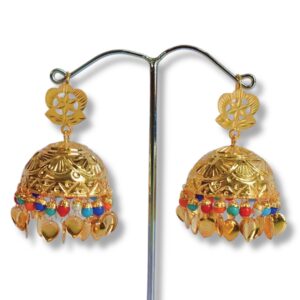
In Punjab, jewellery mirrors the region’s exuberance, and the Lotan Jhumka is no exception. Traditionally crafted in gold or silver, these jhumkas feature a rounded dome with dangling bead-like elements often resembling droplets, from which the name lotan (meaning “to drip”) is believed to derive.
Historically, Punjabi jhumkas were worn during weddings, harvest festivals like Baisakhi, and folk performances such as giddha. They symbolised prosperity and joy, complementing the region’s vibrant textiles and phulkari embroidery.
Also Read: Lab-grown diamonds challenge tradition, reshape jewellery market
Today, Lotan Jhumkas remain a staple for Punjabi brides and are frequently spotted at cultural festivals. Modern adaptations include oxidised silver versions and lightweight designs that pair easily with everyday dresses, proving that tradition in Punjab is never static, it dances forward.
Chand Bali Jhumkas
Chand Bali Jhumkas
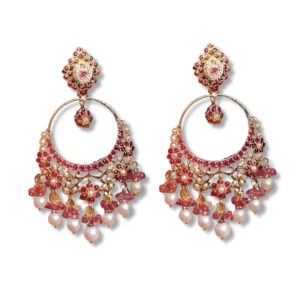
The Chand Bali, literally meaning “moon-shaped ornament,” has roots in Mughal-era jewellery traditions, flourishing under royal patronage across North India. While technically distinct from bell-shaped jhumkas, Chand Balis often merge with jhumka drops, creating a hybrid design that has endured for centuries.
Inspired by the crescent moon an important motif in Islamic art, Chand Bali jhumkas were once worn by queens and courtesans in royal courts. They were crafted in gold, studded with pearls, emeralds or rubies, and symbolised femininity and cosmic beauty.
In contemporary India, Chand Bali jhumkas are among the most revived heritage designs. From Bollywood red carpets to wedding trousseaux, they remain a favourite, now reimagined in polki, kundan and even minimalistic silver for younger wearers.