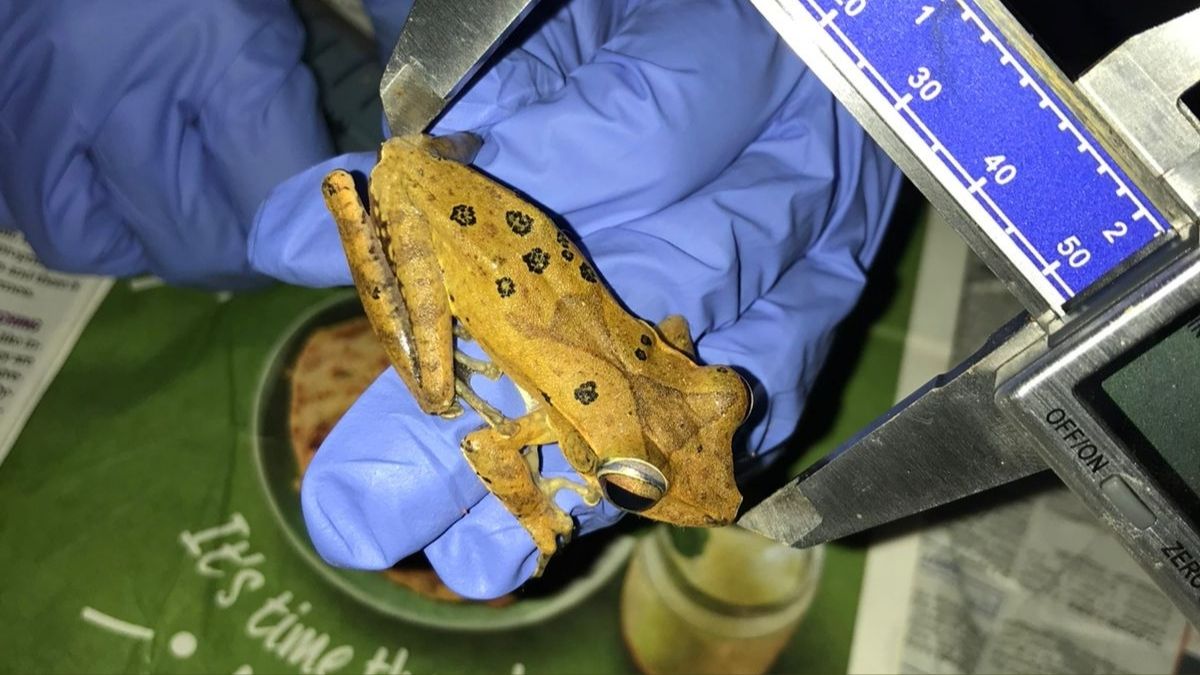
In the last four decades, amphibian populations worldwide have declined by 80 pc, with 37 species reported extinct (Photos: Madhushri Mudke)
The Western Ghats, that stretch from southern Gujarat to the tip of Peninsular India in Kerala, support over 250 amphibian species, but a new study tracking frog communities in a Tier II city in Karnataka has found that urban expansion is not reducing species counts so much as transforming which species can survive, steadily replacing habitat specialists with a handful of disturbance-tolerant generalists.
The study, co-authored by Madhushri Mudke of the Centre for Wildlife Studies and Aravind N A Senior Fellow at the Ashoka Trust for Research in Ecology and the Environment (ATREE), is based on field surveys conducted across 23 sites along a 30 km urbanisation gradient in Udupi, a Tier II city at the foothills of the Western Ghats in Karnataka. The surveys, carried out across two monsoon seasons in 2018 and 2019, recorded 947 individual frogs representing 19 species. The sites were categorised as eight forest sites, 13 city sites, and two at the city-forest edge.
Also Read: Indian villages that are turning the tide on environmental degradation
The Western Ghats are among the eight biodiversity hotspots on the planet. Amphibians are the most threatened vertebrates globally, with roughly 41 pc of all species facing extinction, a figure higher than birds at 13 pc, mammals at 27 pc, and reptiles at 21 pc. In the last four decades, amphibian populations worldwide have declined by 80 pc, with 37 species reported extinct. India holds a disproportionately high number of data-deficient and threatened species, most concentrated in the Western Ghats, says the study.
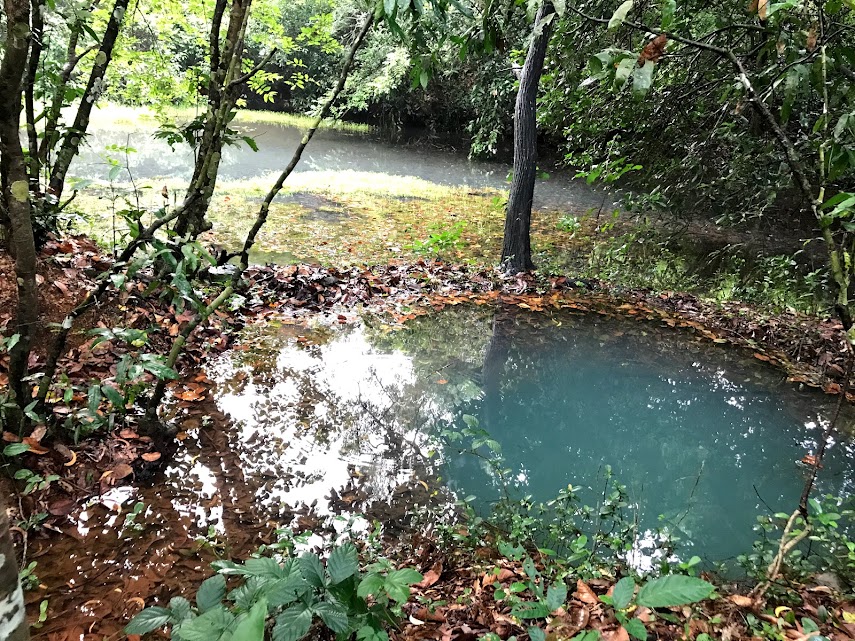
Ephemeral pool
The surveys were conducted on laterite plateaus, flat-topped rock outcrop ecosystems formed by weathering that support endemic flora and fauna. Despite their ecological value, these plateaus are officially classified as wasteland under current land-use frameworks, leaving them exposed to agriculture, urban construction, and mining. Mudke has noted that this classification means many Western Ghats foothills are regarded as having no ecological worth, making them first in line for development.
The study’s core finding is that urbanisation does not simply reduce the number of frog species but reshapes entire frog communities.
“Urbanisation does not simply reduce the number of frog species it reshapes entire frog communities. My research shows that while some generalist species can persist in cities, specialised species with unique ecological traits are much more vulnerable. Frogs that depend on cool, moist microclimates, rocky streams, leaf litter, tree cover or specialised reproductive habitats are gradually filtered out as urban areas expand. This process leads to the replacement of specialised species by a few disturbance-tolerant generalists, resulting in the loss of the Western Ghats’ unique amphibian diversity,” Mudke tells Media India Group.
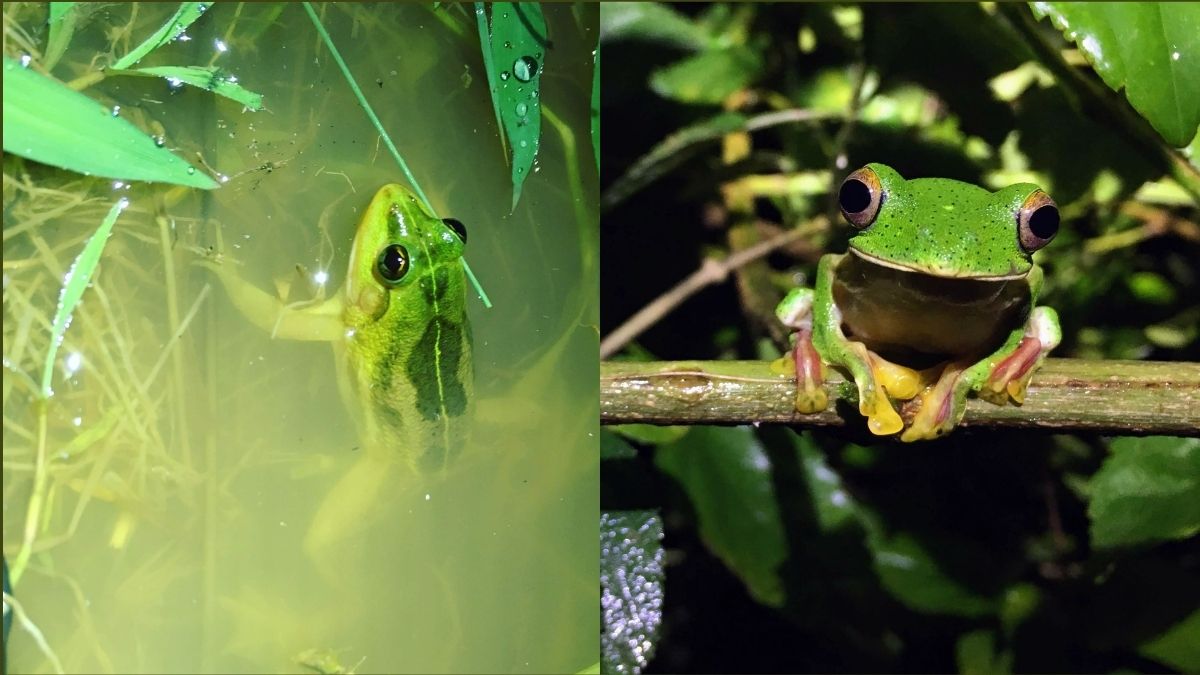
The Malabar gliding frog or Malabar flying frog is a rhacophorid tree frog species found in the Western Ghats of India
Species richness across urban, edge, and forest sites was broadly comparable, and peaked at the urban-forest edge, which suggests that moderately urbanised land can still hold significant biodiversity. But the composition of communities shifted substantially. Specialist frogs those that are arboreal, fossorial, large-bodied, or reproductively dependent on specific conditions such as direct development where eggs hatch as froglets rather than tadpoles were concentrated at sites farther from the urban core, at higher elevations, in cooler and more humid conditions. Generalist species tolerant of disturbed environments occupied urban sites. The Malabar gliding frog, Rhacophorus malabaricus, a large-bodied, tree-dwelling species endemic to the Western Ghats, was among the specialists found consistently away from the city centre.
Also Read: Greenpeace urges FIFA World Cup fans to support Congo Basin conservation
At each site, the research team recorded environmental variables including temperature, elevation, and humidity, alongside anthropogenic pressures such as road density, artificial light, and noise pollution. Statistical modelling was used to identify associations between these variables and the functional traits of species recorded.

Madhushri Mudke
The consequences of this community-level shift go well beyond species counts. “Each specialised frog species performs a unique ecological role that cannot always be replaced by more common species. When specialised species disappear, we lose not only biodiversity but also important ecosystem functions. Frogs regulate insect populations, transfer nutrients between aquatic and terrestrial ecosystems, and serve as prey for many other animals. Many species also depend on highly specific microhabitats, such as rocky stream edges or ephemeral pools. Losing these habitats means losing the ecological functions associated with those species. Because amphibians are highly sensitive to environmental change, their decline is also an early warning that the broader ecosystem is under stress,” says Mudke.
Microhabitats are central to how specialist species survive within or near cities. Ephemeral pools, moist rocky patches, leaf litter, and shallow wetland margins regulate local temperature and humidity, provide breeding sites, and offer refuge. Frogs of the genus Indirana, for example, produce tadpoles that depend entirely on moist rocky surfaces for survival. A rocky patch that might appear negligible in a development plan could be the sole breeding habitat for an entire species in that area. Even a temperature shift of one or two degrees is enough to affect amphibians, given their sensitivity to microclimate conditions. The research found that sites retaining diverse microhabitats buffered some of the community-level effects of urbanisation.
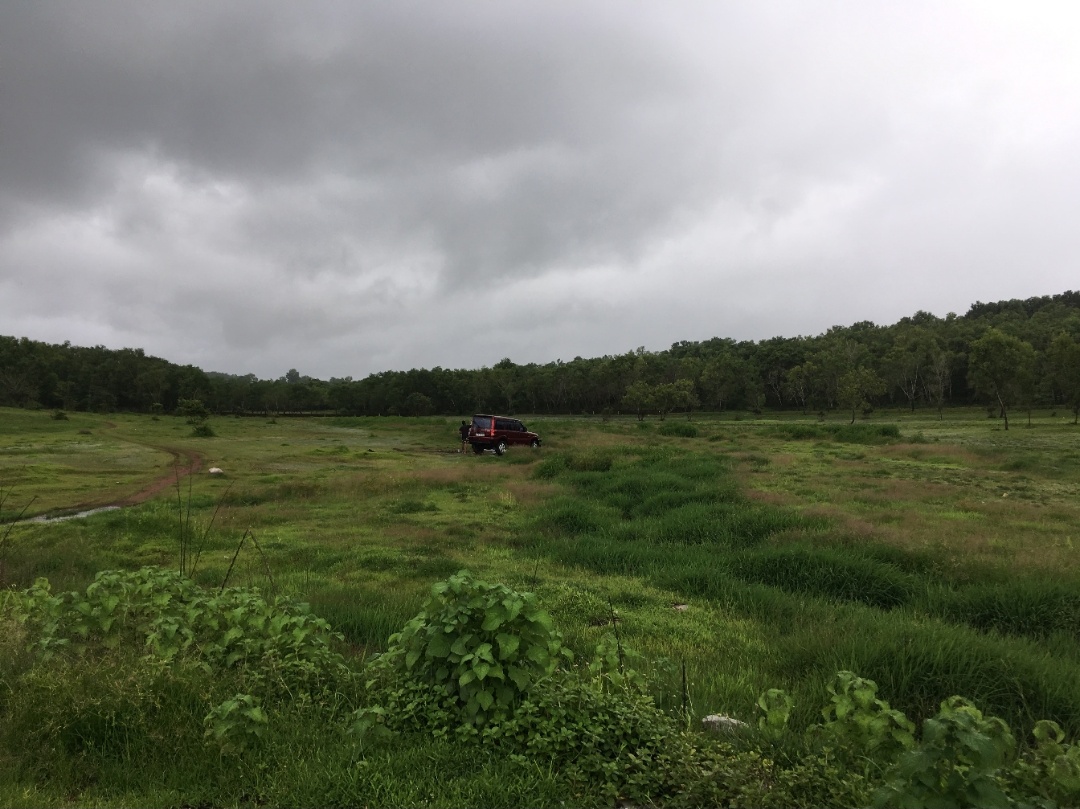
Lateritic plateaus feature natural freshwater rock pools that provide a secure, predator-free refuge for endemic frog eggs and tadpoles during the monsoon
Udupi differs from metropolitan cities in one important respect, that it has retained a range of natural habitats including sacred groves, patches of vegetation preserved through cultural and religious practice. The presence of these groves appears to have contributed to the relative stability of overall species richness across sites in the study, and their inclusion points to the conservation value of culturally maintained green spaces that fall outside formal protected area networks.
According to the researchers, the Micrixalus genus, the dancing frogs, illustrates what is at stake. Endemic to the Western Ghats and ranked fifth among the top ten most threatened genera in the world, dancing frogs inhabit first-to-third-order freshwater streams with 70 to 80 pc canopy cover in moist evergreen forests at elevations above 265 metres. They require highly specific microhabitat conditions that urban and peri-urban environments cannot provide.
Also Read: Cockroaches not pests, primordial for biodiversity
“Conservation planning needs to move beyond protecting forests alone and start protecting the small natural habitat features which support ample biodiversity. Urban planning should retain native vegetation, ephemeral pools, wetland shallows, grassy patches, leaf litter, rocky outcrops and other microhabitats that create cooler, more humid conditions. These features may seem insignificant, but they are essential for many specialised frog species. My research suggests that incorporating amphibian-sensitive planning into urban development, while maintaining habitat heterogeneity and ecological connectivity, is one of the most effective ways to conserve frogs and support biodiversity as cities continue to grow, especially within sensitive areas like the Western Ghats,” says Mudke.
India’s Tier II cities are expanding at a pace that outstrips conservation planning in most cases. Udupi itself exemplifies the trajectory, with laterite plateaus on its outskirts facing pressure from construction and soil mining. The study’s authors have called for long-term monitoring to determine whether the observed community compositions remain stable as urbanisation deepens, and for further research into whether urban expansion reduces genetic connectivity between amphibian populations. A single monsoon gradient study in one city cannot be directly applied elsewhere, but the trait-filtering mechanism it identifies gives planners and ecologists a framework for anticipating what kinds of species are most at risk as any tropical city grows, they say.