
Norwegian journalist became victim of cyber harassment and doxxing after criticising PM's refusal to answer the press
Cyber harassment and coordinated online abuse targetting Norwegian journalist Helle Lyng escalated after she questioned Indian Prime Minister Narendra Modi during a press interaction in Oslo on May 18, prompting concern from Reporters Without Borders (RSF), a press freedom watchdog, which has called on Indian authorities and social media platforms to take immediate action to stop the attacks and restore her suspended Instagram account.
In a press statement, RSF described the situation that took place during a joint press event involving the Indian and Norwegian prime ministers, where both leaders had stated in advance that they would not take questions from the media. As they were leaving the stage, Lyng challenged the Indian prime minister, asking why he would not take questions from what she described as one of the freest presses in the world. Modi, who has not held a press conference since taking office in 2014, did not respond.
Following the exchange, Lyng posted about the incident on social media, referencing the RSF World Press Freedom Index and highlighting the contrast between press freedom rankings in Norway and India.
She stated that questioning public power remains part of a journalist’s responsibility, particularly in international diplomatic settings.
Soon after her post, Lyng became the target of a sustained online harassment campaign. She received abusive messages and threats from multiple accounts, many linked to Hindu nationalist far-right networks.
The attacks included defamatory labels such as ‘spy’, ‘propaganda agent,’ and other abusive terms, alongside sexualised insults and violent threats. Her personal phone number was also circulated and she reported receiving WhatsApp messages containing explicit threats, including a message wishing harm on her family.
Also Read: India’s ranking in 2025 RSF World Press Freedom Index improves to 151
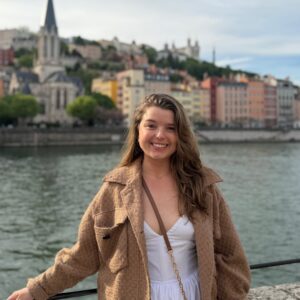
Helle Lyng
Lyng also reported that her Instagram account was suspended on May 19, while she experienced temporary access issues on other platforms. Although she regained access to Facebook, her Instagram account remains blocked, adding to concerns about platform response to coordinated abuse.
“Throughout all the day I have struggled to log onto my Instagram account. Now I have been suspended. It is a small price to pay for press freedom, but I have never experienced it before,” says Lyng.
According to the statement, RSF warns that the harassment campaign reflects a broader pattern of online intimidation targeting journalists who criticise public authorities or challenge official narratives. The organisation says such campaigns often rely on coordinated amplification through social media networks and marginal media platforms, which rapidly escalate abuse and make containment difficult once momentum builds.
RSF says the case illustrates the growing risks faced by journalists engaging with powerful political figures and the increasing use of digital platforms to silence critical voices through intimidation and harassment. The organisation has called on the authorities in India to take action against those responsible for arranging and amplifying the abuse and to ensure accountability for coordinated online harassment networks.
RSF has also urged social media companies to act quickly to restore Lyng’s suspended account and strengthen moderation systems to prevent coordinated harassment, anonymous threats, and targeted smear campaigns against journalists.
The statement from RSF says that this case is a stark demonstration of the dire state of press freedom in India, noting that online harassment is increasingly being used as a tool to intimidate journalists who question those in power. The organisation stressed that both state authorities and digital platforms have a responsibility to prevent exemption and protect media professionals from coordinated abuse.
