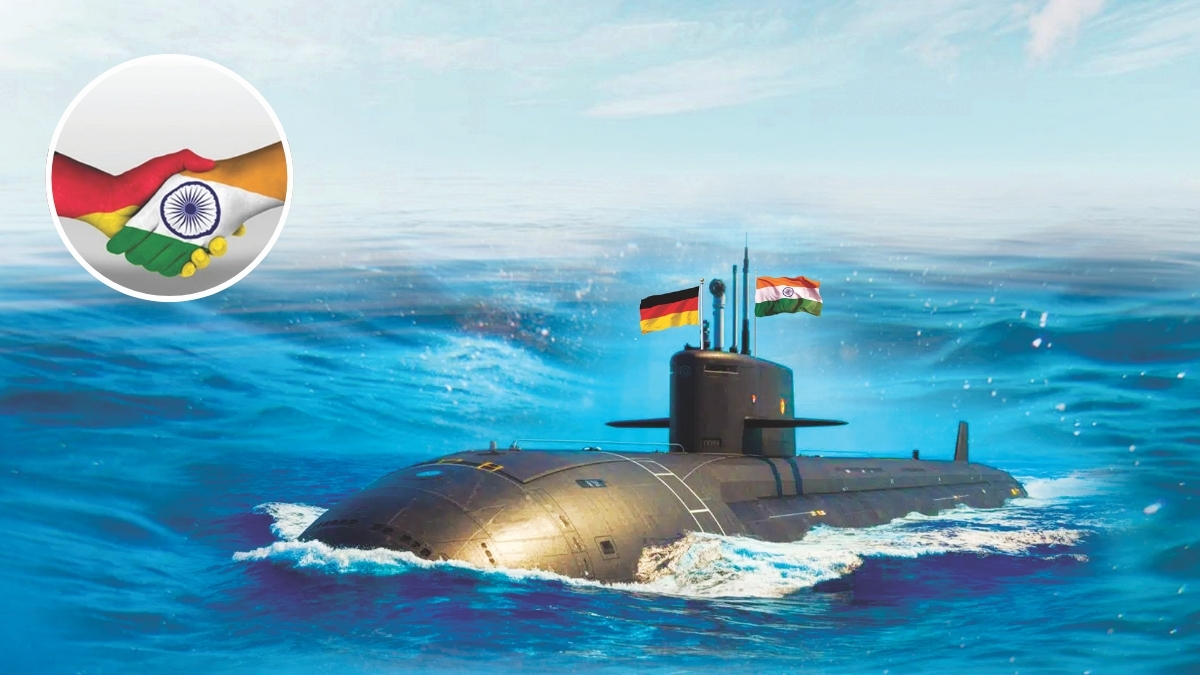
India and Germany are set to sign a USD 9 billion deal for six submarines
Lack of modern equipment, in adequate numbers, has been one of the biggest bugbears of Indian defence forces for decades. Right from a big gap in the sanctioned strength of fighter jets to the actual numbers for the Indian Air Force to tanks and artillery pieces for the Indian Army, the shortage has been pinching and affecting the effectiveness of the Indian military. But nowhere is this gap more visible than in the depths of the seas, where India’s limited submarine fleet tries to keep pace with rivals, notably China, which enjoys a huge superiority, not just in numbers but also in the effectiveness of submarines.
India has just 17 conventional diesel-electric submarines and one nuclear-powered and nuclear-armed submarine. China, in comparison, will have as many as 70 submarines, including several nuclear-powered submarines by 2027 and 80 by 2035. Of these half, or 40, will be nuclear-powered, allowing them to conduct missions lasting as long as several months at a time, with the only limitation being the food on board for the crew.
Though Indian Navy has been pressing successive governments for rapid acquisitions to at least narrow the gap, the government procurement processes continue to move at a snail’s pace, even while China is adding a submarine about every six months.
Thus, it comes as a big relief that after years of negotiations, shifting policy frameworks and diplomatic groundwork, India is on the verge of signing Project 75(I) to acquire six next-generation conventional submarines, and the deal is expected to reach its formal conclusion on June 22.At the centre of it is a partnership between Germany’s ThyssenKrupp Marine Systems (TKMS) and India’s state-owned Mazagon Dock Shipbuilders Limited (MDL) in Mumbai, which has built a bulk of submarines in the country.
Also Read: Global conflicts bring challenges & opportunities for Indian defence industry
According to reports, cost negotiations have concluded with the deal valued in the range of USD 8-9 billion, a significant reduction from an earlier bid that had crossed USD 15 billion. The contract now awaits final government clearance. When signed, it will be the largest conventional submarine contract in MDL’s history and reportedly the most expensive conventional submarine deal anywhere in the world this year.
What India is actually buying
The Indian Navy has selected the 2,500-tonne German Type 214 Next Generation conventional submarine equipped with AirIndependent Propulsion, edging out the S-80 submarine offered by Spain’s Navantia.
The standout feature of the Type-214NG is its Siemens Polymer Electrolyte Membrane fuel-cell based AIP system, which allows the sub-marines to conduct much longer missions while staying submerged. Conventional dieselelectric submarines must surface or use a snorkel every 48 to 72 hours to recharge batteries, making them vulnerable to satellite and radar detection. The German AIP allows these boats to remain submerged for 21 consecutive days.
None of the conventional submarines in India’s existing fleet of has this capability. That gap matters enormously in the Indian Ocean, where China’s naval presence has expanded steadily, and which uses only AIP-powered conventional submarines, and where Pakistan already operates AIP-equipped submarines obtained from China.
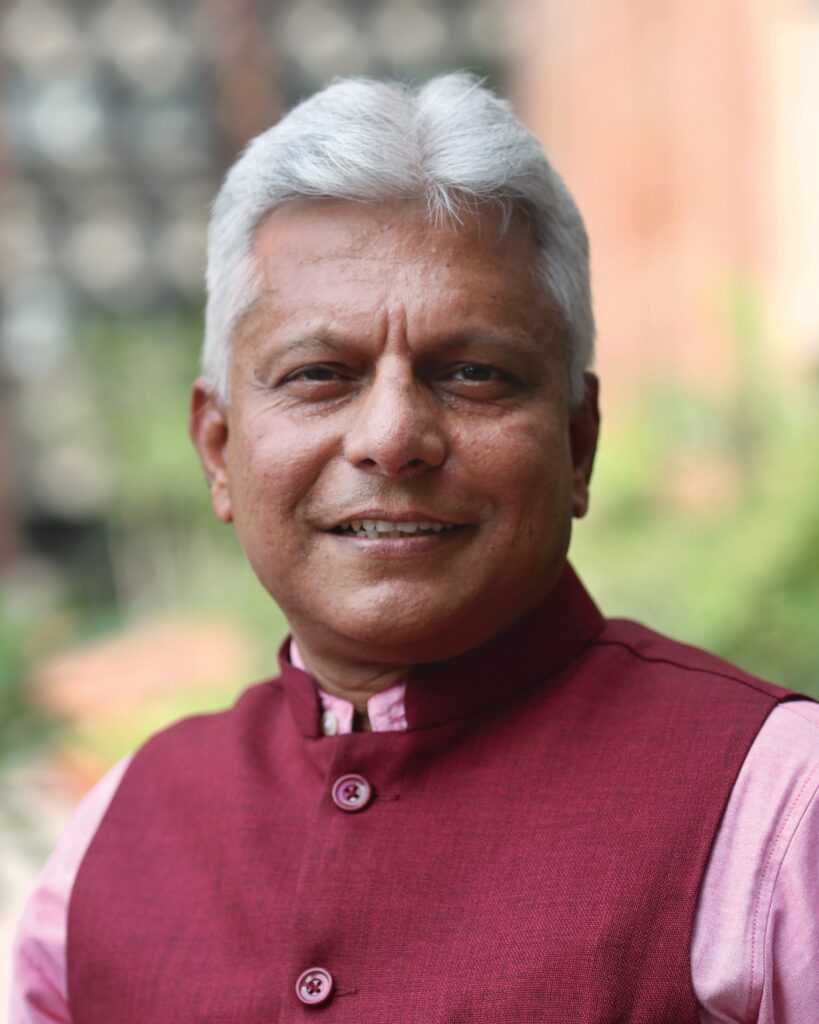
Debesh Lahiri
Commodore Debesh Lahiri (Retd), who served in the Indian Navy and has followed India’s submarine modernisation closely, lays out what the next generation of boats offers in concrete operational terms.
“The clear advantages that lie in the next-gen submarines are three. One is the stealth part of it. Second, submarines are defined by their endurance how long can they stay submerged without having to sur-face. And the third is the kind of lethality that they possess in terms of their ability to deliver ordnance,” Lahiri tells Biz@india.
Lahiri says that the need is absolutely urgent. “Even if we sign the deal now, it will take a finite number of years before the entire deal is completed, because it takes time to build submarines. It is not some-thing which will happen in a jiffy,” says Lahiri.
Also Read: Forces face moral dilemma over Artificial Intelligence in defence
According to the request for proposal, the first submarine must be delivered in seven years after signing the contract with 45 pc indigenous content, followed by one each year until the programme reaches 60 рc localisation. All six will be built at MDL’s Mumbai shipyard.
This is not the first time India and Germany have collaborated on submarines. TKMS’s predecessor company, Howaldtswerke-Deutsche Werft (HDW), supplied the Indian Navy’s Shishumar-class Type-209 submarines in the 1980s. Two were built in Germany and two were assembled at MDL in Mumbai.
Lahiri recalls that experience as foundational. “We have a very good experience in the India-German submarine partnership. Two of the SSK submarines were built in India under licence. So our relationship in so far as submarine partnership is concerned is pretty old,” he notes that in terms of submarine technology specifically, the partnership pool has always been narrow.
Project 75(I) is, in many ways, the continuation of that earlier story at a far larger scale.

Anupam Jha
Anupam Jha, a strategic operations specialist who has tracked the programme closely, describes what the collaboration means in practice.
“TKMS provides the submarine design, engineering expertise and technology transfer. MDL is responsible for construction, integration, testing and delivery in India,” Jha tells Biz@india.
On the strategic stakes, Jha says the deal would do more than add hulls to the fleet. “This contract would strengthen India’s underwater warfare capability, reduce dependence on foreign built submarines and deepen India-Germany defence cooperation. In practical terms, this partnership positions MDL as the prime Indian builder and TKMS as the technology partner for the next generation of Indian Navy conventional submarines,” says Jha.
To boost its submarine fleet, India has also launched a programme to build nuclear-powered submarines with Russian assistance. The INS Arihant and INS Arighat, both nuclearpowered ballistic missile submarines, place India in a small club of nations capable of designing, building and operating such vessels. A third such submarine is due for commissioning soon. Though India has a higher local content contribution, of about 70 pc, it still remains dependent upon foreign assistance for manufacturing them.
Similarly, in the diesel-powered vessels also, India remains reliant significantly on foreign help in building them. Modern underwater warfare demands ultra-quiet propulsion, advanced hydrodynamic shaping, acoustic dampening and sensors precise enough to track a vessel across hundreds of kilometres of ocean.
Also Read: Indian Air Power: Flying High Despite Low Budgets, Slow Induction
“Stealth capability determines the submarine’s ability to be in areas which is of importance to us, without being detected by enemy sensors. And underwater endurance with air-independent propulsion, the endurance of the submarine has increased drastically. Both for warfare and for surveillance, stealth and underwater endurance is extremely important,” says Lahiri.
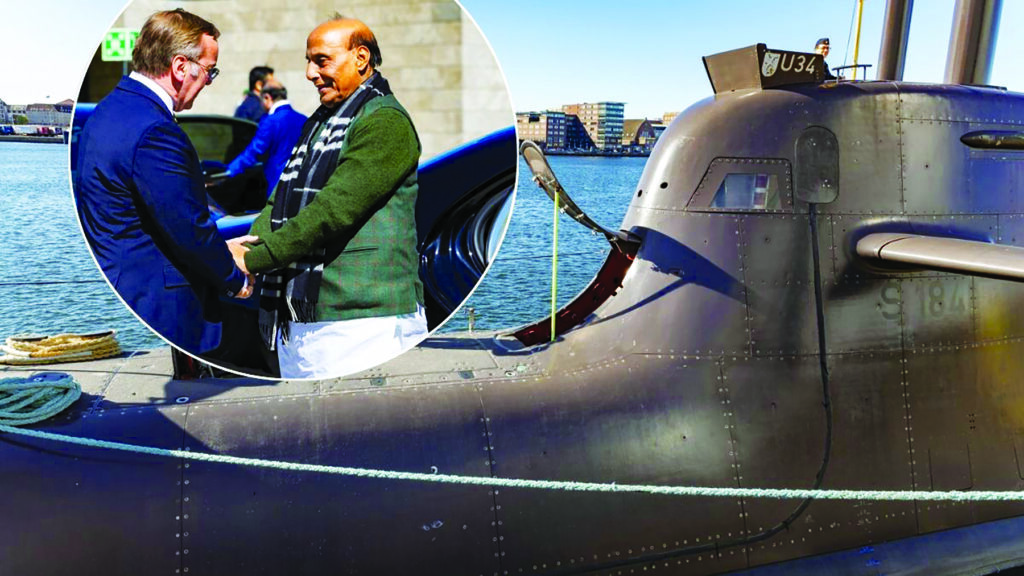
Deliveries are projected to begin in the early 2030s, roughly seven years after final signing
Jha makes the same point from a technology perspective. “The reactor is no longer India’s biggest hurdle. The real challenge is achieving the level of acoustic stealth possessed by submarines operated by the United States, Russia, France and the United Kingdom. In submarine warfare, the quietest submarine often wins. India has made major progress in nuclear propulsion, but closing the stealth gap remains the next technological frontier,” says Jha.
In terms of building self-reliance, Lahiri says that if the technology transfer is handled well, the benefits will outlast the contract itself. “If we get the licence and the technology is transferred to us, then it will not only increase our defence preparedness, but it will also improve our indigenous capability. We already have indigenous capability in building submarines, but this will only strengthen and improve it,” says Lahiri.
Project 75(I) arrives ata moment when India can no longer treat submarine modernisation as a long-term work in progress. With China adding submarines roughly every six months and Pakistan already operating AIP-capable boats in the Arabian Sea, the pressure is immediate. The TKMS deal fills the most urgent gap six quiet, longendurance submarines assembled on Indian soil. But what travels with the hardware matters just as much: the engineering methods, the production knowledge and the supply chain depth that will determine what MDL builds next. India has already shown it can design its own warships, build a nuclear submarine and commission a domestically made aircraft carrier. The gaps that remain marine propulsion, select sensors and weapons are real but narrowing.