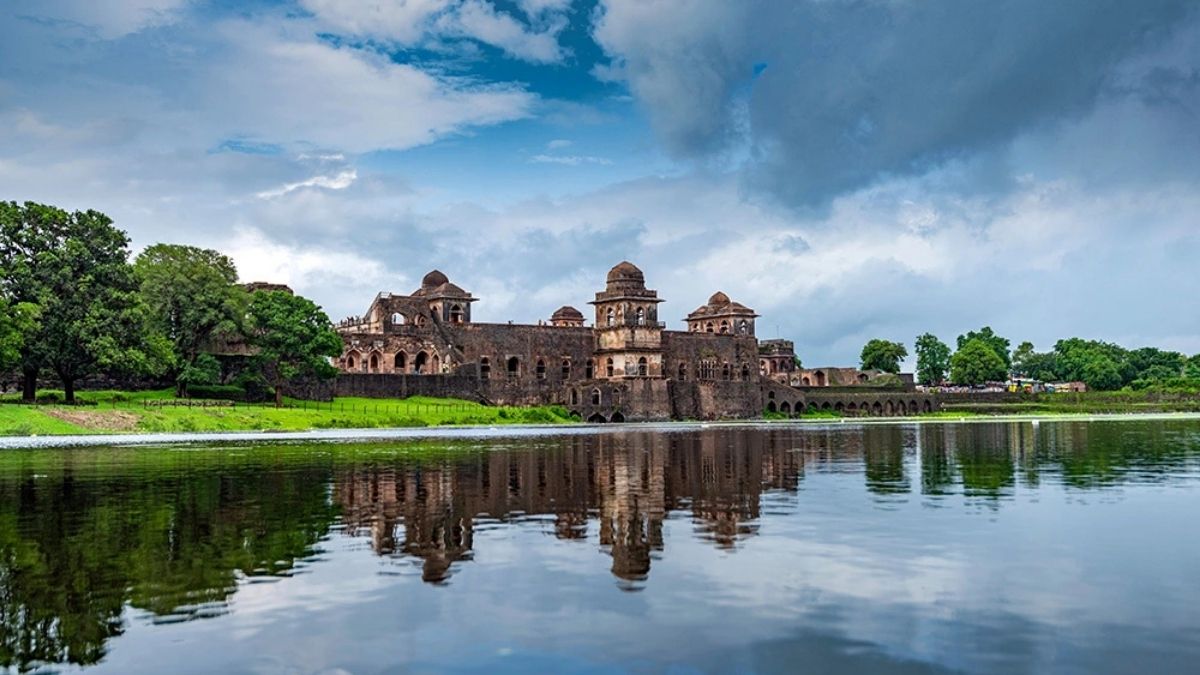
Mandu is renowned for its architectural gems, serene lakes and historic monuments (Photos: MP Tourism)
Nestled atop the Vindhya ranges in Madhya Pradesh at an altitude of about 600 metres, Mandu is a historic fortified city known for its magnificent Afghan-era architecture, scenic plateau setting and the legendary love story of Baz Bahadur and Rani Roopmati. Once the capital of the Malwa Sultanate, the city is home to grand palaces, pavilions, mosques, tombs and water reservoirs that showcase a rich blend of history, romance and engineering, making it one of India’s most remarkable yet underexplored heritage destinations.
Mandu is renowned for its remarkable collection of palaces, pavillions, mosques, tombs and water structures spread across a vast plateau overlooking the Nimar plains. Despite its architectural significance and rich cultural legacy, Mandu remains relatively unknown compared to the better-promoted heritage destinations of Rajasthan.
The city is enclosed by extensive fortification walls stretching over 45 km and was strategically built on a naturally protected plateau surrounded by steep ravines and forests. This elevated setting provided security to its rulers while also offering spectacular views across the surrounding countryside.
Today, the landscape remains one of Mandu’s greatest attractions, particularly during the monsoon when clouds drift through the monuments and the region transforms into a lush green paradise.
Mandu is inseparable from the legendary love story of Baz Bahadur, the last independent ruler of Malwa and Rani Roopmati, a gifted singer and poet. Their romance continues to shape the city’s identity centuries later and attracts visitors interested in both history and folklore.
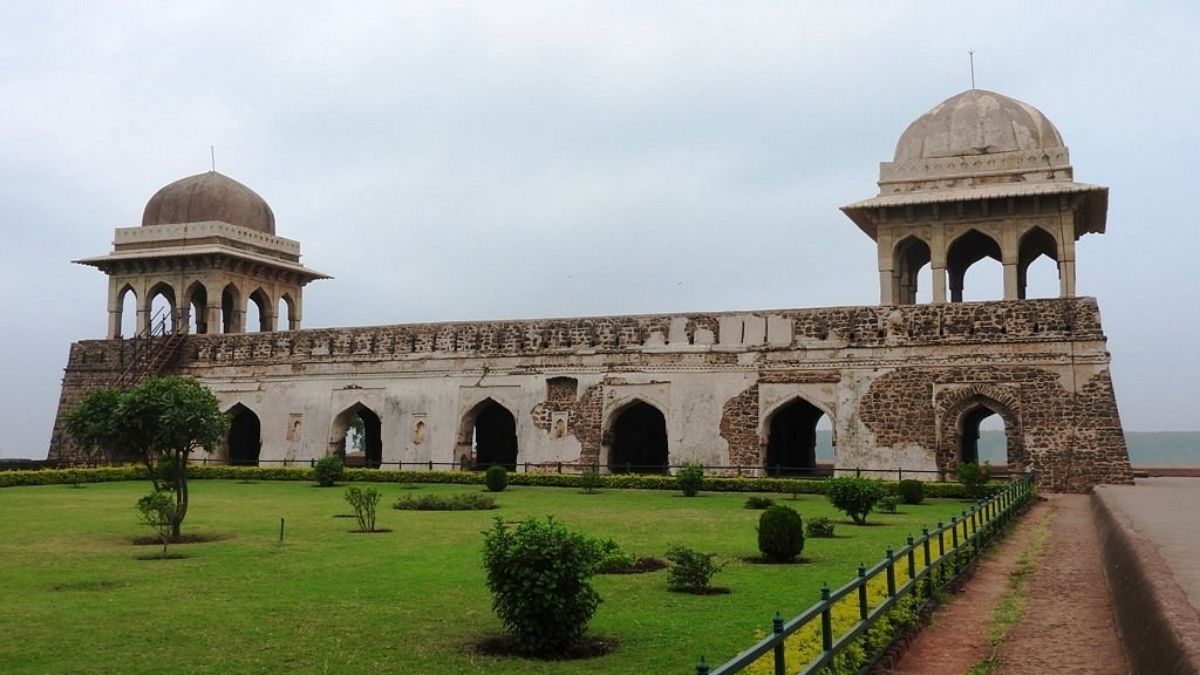
Roopmati Pavilion, standing as Mandu’s most iconic symbol of history, romance and panoramic beauty
One of the most iconic sites linked to this story is Roopmati Pavillion, situated on the southern edge of the plateau. Built as a watchtower and retreat, it offers sweeping views of the Nimar plains and the distant Narmada Valley.
Also Read: Sagar: The beautiful heartland of Madhya Pradesh
According to local tradition, the pavillion allowed Rani Roopmati to gaze upon the sacred Narmada River, which she revered deeply. The site remains one of the most popular viewpoints in Mandu, especially during sunrise and sunset.
Below the pavillion lies Baz Bahadur’s Palace, an elegant structure known for its spacious courtyards, terraces and excellent acoustics. Surrounded by hills and reservoirs, the palace reflects a blend of Mughal and Rajput influences and provides insight into the lifestyle of Mandu’s last ruler.
The city’s most recognisable monument is Jahaz Mahal, or the Ship Palace. Built between two artificial lakes, the palace appears to float on water when the reservoirs are full, creating the illusion of a ship sailing across the landscape. Stretching over 120 metres in length, Jahaz Mahal was designed as a pleasure palace and remains one of the finest examples of medieval architecture in central India.
Another architectural landmark is Hindola Mahal, often referred to as the Swinging Palace due to its distinctive sloping walls. Believed to have functioned as an audience hall, the structure stands out for its massive proportions and unique design.
Religious architecture also plays a significant role in Mandu’s heritage. The Jami Masjid, inspired by the Great Mosque of Damascus, is among the finest examples of Afghan architecture in India. Constructed using red sandstone and marble, it features grand domes, imposing arches and a spacious courtyard that reflects the power and prosperity of the Malwa Sultanate.
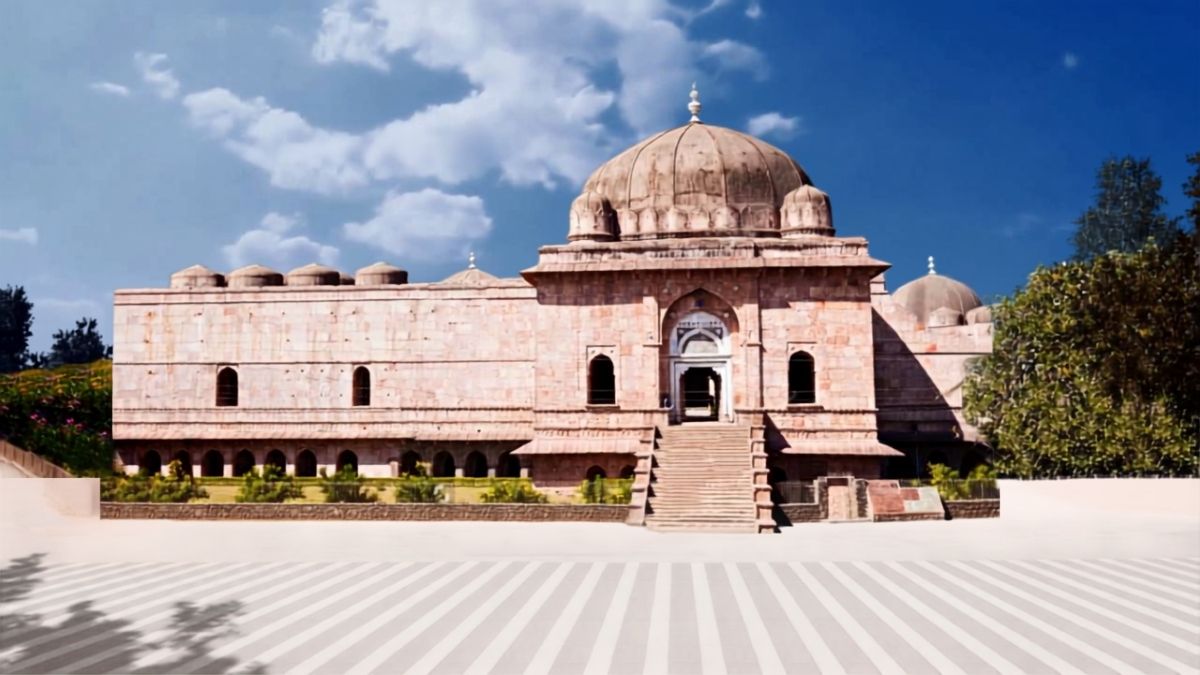
Inspired by the Great Mosque of Damascus, Jami Masjid remains an architectural masterpiece
Facing the mosque is Hoshang Shah’s Tomb, widely regarded as India’s first marble mausoleum. Architectural historians believe it influenced aspects of the design of the Taj Mahal, and records suggest that Shah Jahan’s architects studied the monument before beginning work on the Mughal masterpiece.
The ruins of Ashrafi Mahal, once a madrasa and victory tower complex, add another layer to Mandu’s architectural landscape. Though much of the structure has deteriorated over time, it remains an important reminder of the city’s educational and religious history.
Water management was one of Mandu’s greatest achievements. The city was designed around an advanced network of reservoirs, stepwells, tanks and channels that harvested rainwater and ensured a reliable supply throughout the year. Many of these water bodies continue to function today and contribute significantly to the city’s scenic beauty.
Also Read: Temples of Madhya Pradesh
Tourism in Mandu revolves around heritage exploration, photography and slow travel. Visitors can spend days wandering through palace complexes, mosques, tombs and gateways spread across the plateau. Guided heritage walks provide deeper insight into the city’s history, architecture and legends.
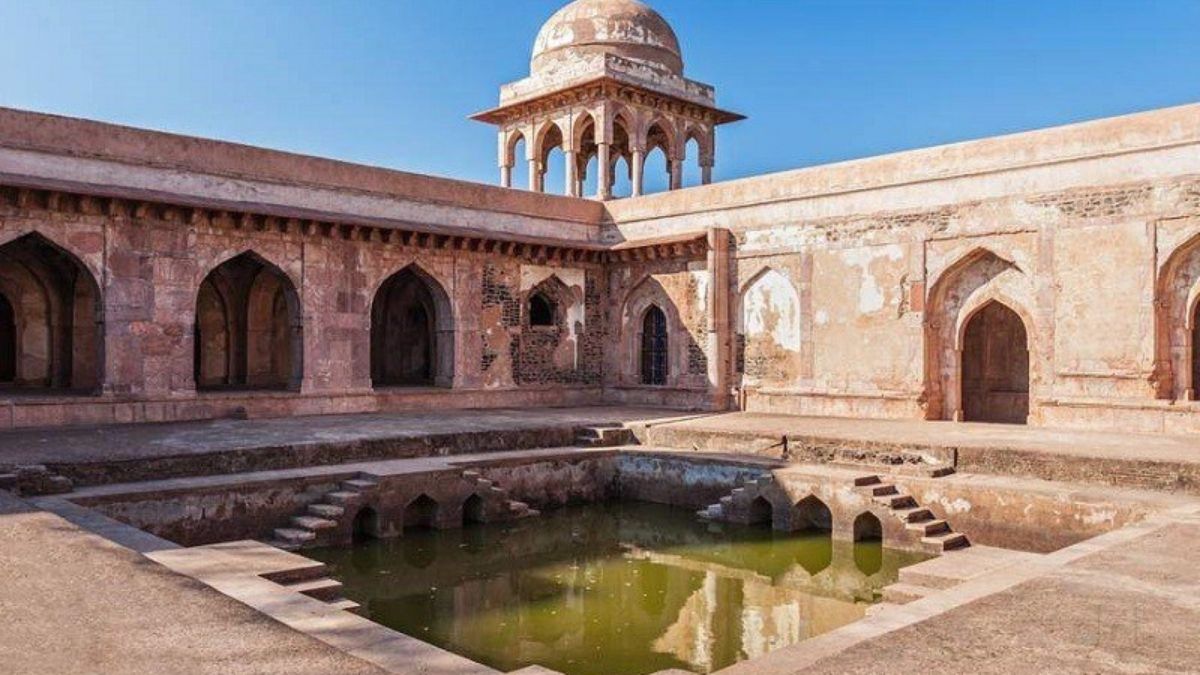
Baz Bahadur Palace in Mandu reflects a blend of Rajput and Mughal architecture
The destination is particularly popular during the monsoon season when mist-covered monuments, overflowing lakes and lush vegetation create a dramatic setting. The combination of historic ruins and seasonal landscapes makes Mandu one of central India’s most photogenic locations.
Cycling has also emerged as a popular way to explore the city. The relatively quiet roads connecting the monuments allow visitors to move at a leisurely pace while taking in the surrounding scenery. Nature walks, birdwatching and outdoor photography are also common activities, particularly around the lakes and forested areas.
Food forms an important part of the visitor experience. Mandu reflects the culinary traditions of both the Malwa and Nimar regions of Madhya Pradesh. Popular dishes include Dal Bafla, Bhutte Ka Kees, Poha, Jalebi, Malpua and Mawa Bati. Many local eateries serve traditional vegetarian meals prepared using locally sourced ingredients. Visitors can also explore the nearby food culture of Indore, often regarded as one of India’s leading destinations for street food.
Cultural life in and around Mandu remains closely linked to the traditions of the Malwa region. Folk music, storytelling and local crafts continue to preserve aspects of the city’s heritage, while periodic cultural programmes organised by tourism authorities bring additional attention to its historical significance.
One of the major tourism events associated with the destination is the Mandu Festival, organised by Madhya Pradesh Tourism. The festival showcases music, dance, local handicrafts, cultural performances, adventure activities and heritage walks against the backdrop of the city’s historic monuments. It offers visitors an opportunity to experience both Mandu’s architectural heritage and its living cultural traditions.
Each season offers a different perspective on Mandu. Summers are relatively pleasant compared to many parts of central India due to the city’s elevated location. The monsoon is widely considered the best time to visit, when lakes fill, waterfalls emerge and greenery covers the plateau. Winter brings clear skies, comfortable temperatures and ideal conditions for sightseeing and photography.
Tourism infrastructure in Mandu includes heritage hotels, guesthouses and resorts, many of which are located close to the principal monuments. While facilities remain modest compared to India’s major heritage cities, this has helped preserve the destination’s relaxed atmosphere and sense of authenticity.
For now, Mandu remains one of India’s most underrated heritage destinations. Combining Afghan-era architecture, advanced medieval engineering, breathtaking landscapes and one of the country’s most enduring love stories, it offers travellers a chance to experience a historic city where history, nature and romance continue to coexist across a remarkable cultural landscape.