
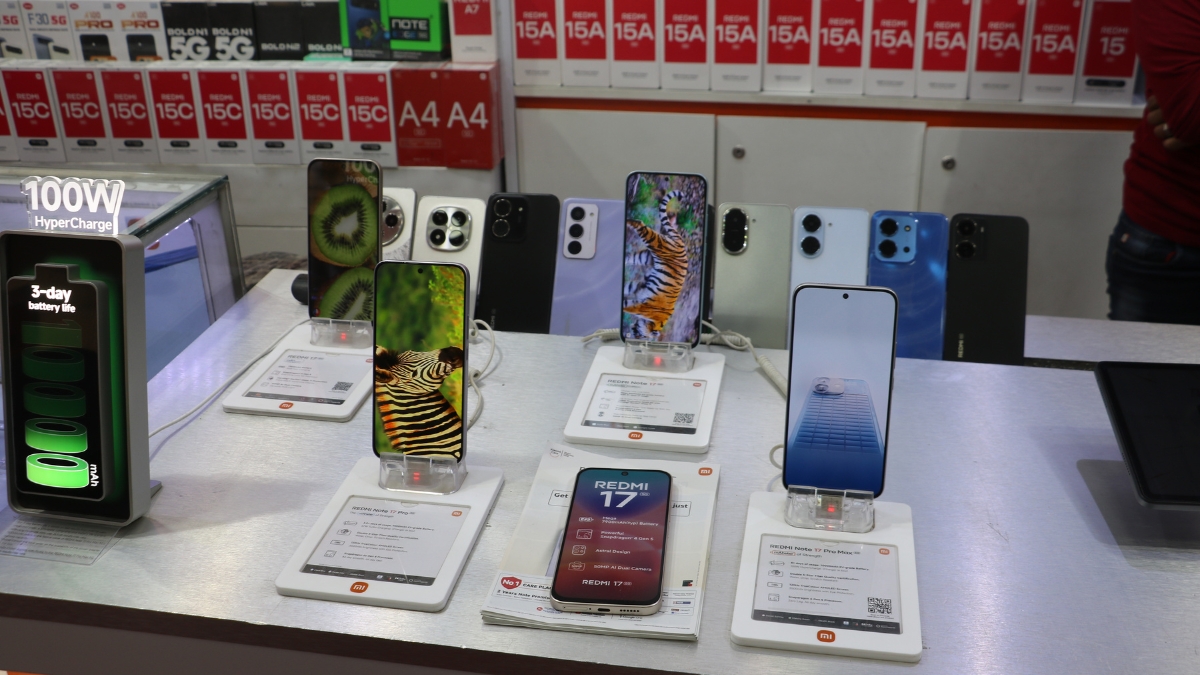
India’s smartphone sales face a festive slowdown as rising prices and financing constraints curb demand (Photos: Media India Group/Sunil Yadav)
India’s economic growth is facing an uncomfortable test in the smartphone market. While the government claimed that a growth rate of 7.8 pc for the national Gross Domestic Product (GDP) in the first quarter of the 2026-27 financial year, smartphone sales are weakening as rising device prices, expensive components and financing constraints make consumers reconsider purchases. This raises a question that headline growth figures cannot answer on their own, if the economy is expanding, why are consumers delaying the replacement of devices they use every day.
The pressure extends beyond India. Global smartphone shipments fell 20 pc year-on-year (YoY) in the third quarter of this calendar year, reaching their lowest level for a third quarter since 2012, according to preliminary estimates released by market intelligence firm Counterpoint Research on October 12. The firm attributed the decline to a shortage of memory chips, rising component costs and supply constraints affecting manufacturers.
India’s festive market is also expected to record a decline in volumes. Counterpoint Research projects a 12 pc fall in smartphone sales volumes during the 2026 festive season, even as the overall market value rises 5 pc because of higher average selling prices.
For a country whose economic performance is increasingly presented through strong growth numbers, these trends expose a gap between aggregate output and the ability of consumers to absorb rising prices. GDP measures the value of economic activity across the economy; it does not establish that every household has experienced a corresponding increase in disposable income or purchasing power.
Kailash Lakhyani, Founder and Chairman of the All India Mobile Retailers Association (AIMRA), an apex advocacy body representing over 1,50,000 mainline mobile and electronics retailers across India, says that the disconnect was evident in the spending decisions of customers visiting mobile phone shops.
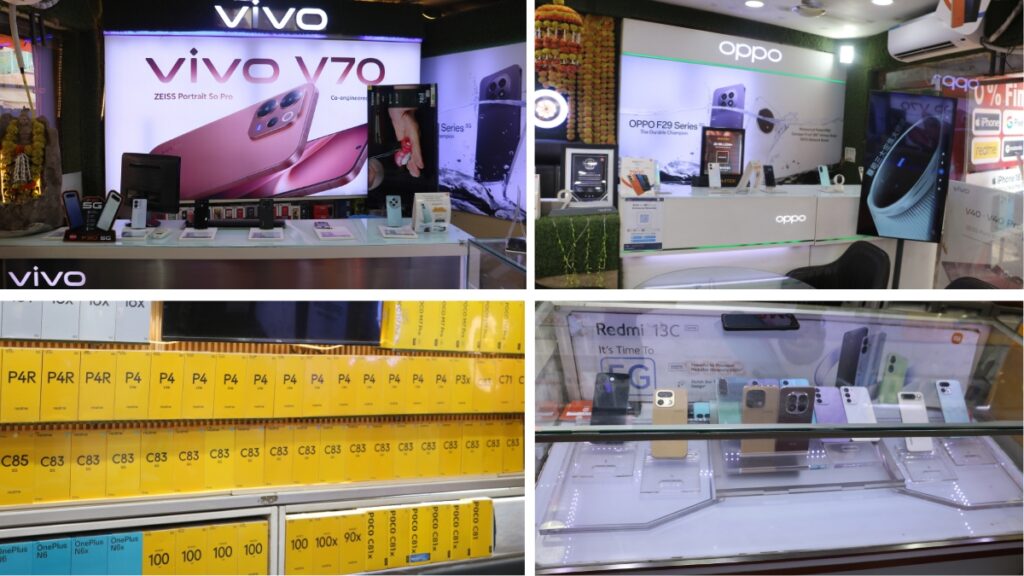
Rising smartphone prices and higher component costs are putting pressure on consumer spending, with buyers delaying upgrades despite India’s strong GDP growth
“While macroeconomic indicators reflect growth, ground-level discretionary consumer spending is facing extreme stress. Rising Bill of Materials (BOM) costs and component inflation have pushed retail prices beyond the reach of average consumers. As a result, end-users are forced to compromise on lower device specifications and are substantially delaying their replacement cycles stretching upgrades from the earlier 2-3 years to 3-4 years and at this rate, easily beyond 5 years. Instead of buying new units, budget-conscious consumers are opting for refurbished devices, second-hand handsets, or simply repairing their existing phones,” Lakhyani tells Media India Group.
The concern is not that GDP growth and declining smartphone sales cannot occur simultaneously. Rather, the market raises questions about how growth is distributed, whether income gains are keeping pace with the cost of living and whether consumers have enough financial headroom for purchases beyond their immediate needs.
Also Read: Mobile retailers pushback against MDR with ‘No UPI Day’ on October 2
The Ministry of Statistics and Programme Implementation reported that real GDP grew 7.8 pc in April-June this year, compared with 6.9 pc in the corresponding quarter a year earlier. The government also reported 7.1 pc growth in household consumption expenditure during the quarter.
The government has highlighted manufacturing, services and investment as contributors to economic growth. Yet the smartphone market shows why the headline numbers need to be considered alongside indicators of affordability, consumer credit and retail demand.
In July, the government reported that industrial production had increased 6.7 pc, while credit to industry and services had also expanded. The smartphone slowdown also puts the government’s consumer-demand narrative under scrutiny. If festive discounts and financing schemes cannot persuade customers to replace ageing devices, policymakers and manufacturers need to examine whether the problem is simply a temporary supply shock or a broader affordability issue.
A significant part of the current price pressure originates in the global memory-chip market. Dynamic Random Access Memory (DRAM) and NAND, the two main types of semiconductor memory used in modern devices, differing primarily in volatility, speed, and function flash storage are essential smartphone components, and rising prices have increased manufacturers bills of materials. Strong demand from artificial intelligence infrastructure projects has added pressure to available supplies, according to Counterpoint Research.
Manufacturers have responded by raising prices, adjusting product portfolios and prioritising profitability over shipment volumes. These decisions may protect company margins, but they can also price consumers out of the market.
Lakhyani called for government intervention, saying that memory manufacturers were exploiting the shortage.
“Crucially, AIMRA urges the Government of India and international stakeholders to intervene. A regulatory body or the World Trade Organisation must step in to halt this artificial memory price inflation. The actual production cost of memory chips has not escalated, rather, dominant memory manufacturers backed by massive AI advance orders for the next 2–3 years are engaging in daylight robbery and extortion under the guise of AI demand. This cartelisation is crippling the smartphone retail ecosystem, and we fear other component suppliers could soon adopt similar predatory tactics, entirely devastating Mainline retailers and burdening consumers,” he says.
Lakhyani accused memory-chip manufacturers of taking advantage of rising demand from the AI industry to increase prices, pushing up smartphone costs and putting pressure on retailers and consumers. He called on the Indian government to intervene, saying that the rising cost of components was making smartphones less affordable and threatening the survival of small retailers.
Retailers face a festive-season squeeze
For India’s brick and mortar retailers, the slowdown is already affecting sales. Lakhyani says mainline retail sales volumes were projected to decline by 15 pc to 20 pc during the festive season, with entry-level and mid-range smartphones facing the greatest pressure.
He estimated that the average selling price across multi-brand retailers stocking major smartphone brands was INR 35,000–37,000, although the figure varies by brand. Higher prices may support the total value of sales, but declining volumes reduce the number of transactions available to cover shop operating costs.
Also Read: 70 pc Indian students use mobile-first fintech for cross-border payments: Beacon
“Mainline retailers reported an alarming 40 pc to 50 pc decline in footfall during September due to intense price pressure. For the ongoing festive days, footfall has returned to normal levels as consumers actively walk into stores; however, conversions remain heavily constrained. Today, 70 pc to 80 pc of mainline sales rely entirely on consumer finance and EMIs. Due to steeper price tags and tighter lending criteria leading to loan rejections, many shoppers leave without making a purchase, causing an initial 20 pc drop in volume over the opening days,” says Lakhyani.
The dependence on consumer finance creates another obstacle. Customers may enter a store intending to buy a handset through equated monthly instalments (EMIs), but a rejected loan application or a higher upfront payment can stop the transaction. Retailers cannot resolve this problem through discounts alone if customers cannot secure the financing needed to complete a purchase, says Lakhyani.
Rajesh Kumar, a mobile retailer in Lajpat Nagar, Delhi, says the festive season has failed to deliver the sales recovery retailers had anticipated, with customers continuing to hold back purchases despite the usual October demand surge.
“This is the first time we have seen such a decline in sales during the festive season. We expected sales to pick up in October, as they usually do during this period, but even now, demand continues to fall. Rising smartphone prices are making customers think twice before buying, and it is concerning to see that even the festive season has failed to bring the expected recovery,” Kumar tells Media India Group.
Also Read:
More cautious stocking can limit the risk of unsold devices, but it also reflects uncertainty about whether demand will recover before the festive season ends. For small retailers, lower volumes and higher inventory costs can put pressure on cash flow, particularly if weak sales continue after Diwali.
Lakhyani warned that smaller mainline retailers could be forced to shut down if declining volumes and squeezed margins persist. He also expects handset prices to rise by another 10 pc to 15 pc after Diwali.
Counterpoint Research’s forecast of a 12 pc decline in Indian festive-season smartphone volumes, alongside a projected 5 pc increase in market value, captures the contradiction, consumers may be spending more on each device even as fewer devices are sold.
