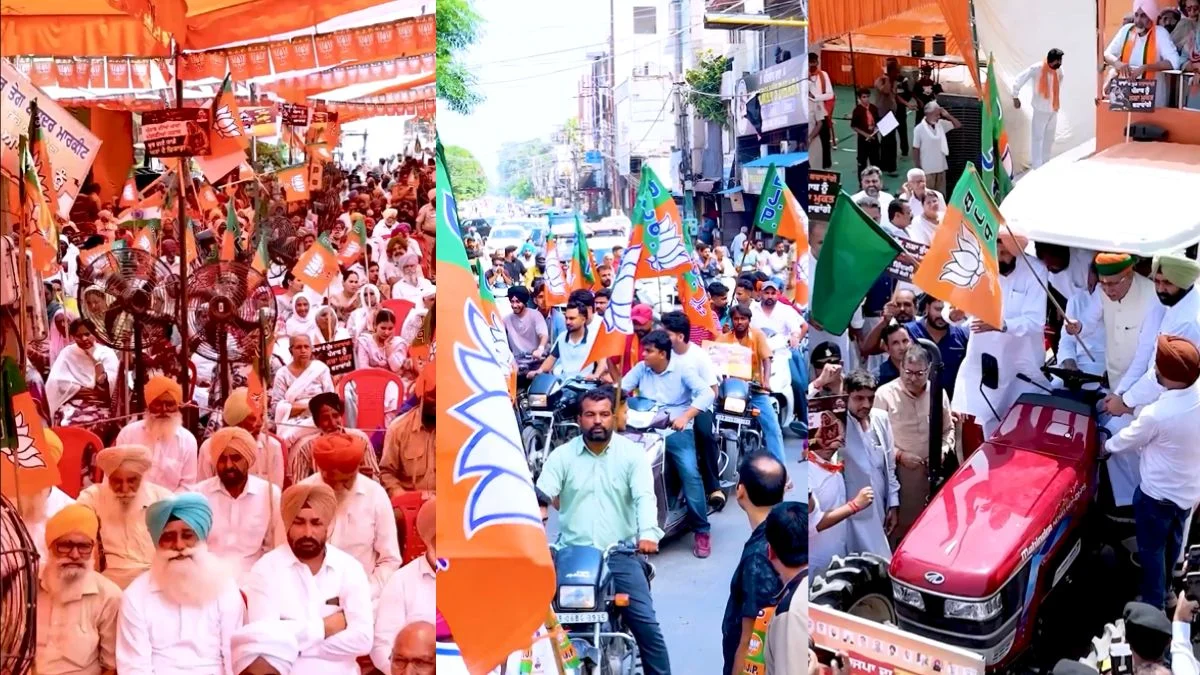
Bharatiya Janata Party is stepping up outreach to SC voters (Photo: BJP Punjab X)
Even though the assembly elections in Punjab are still months away, political activity in preparations for the polls has already heated up with regular visits by prominent leaders of all the leading parties in their bid to get a headstart in the race.
One of the most active on the ground currently in the Bharatiya Janata Party (BJP), which has never won the election on its own and has traditionally depended on a tie-up with the Shiromani Akali Dal (SAD).
In the run-up to the elections, the BJP has zeroed into the Scheduled Castes, that account for 31.94 of total population in Punjab, as a focus group of electors. Its campaign, centred on welfare schemes, organisational meetings and engagement with religious and community institutions, raises a central question. Can the party convert its latest outreach into electoral support when its record on representation and its treatment of Scheduled Caste leaders remain contested.
The BJP’s state executive committee met in Sangrur on October 17 to discuss its election strategy and strengthen its organisation. The party reviewed its campaign against drugs and prepared a chargesheet against the ruling Aam Aadmi Party (AAP), accusing the government of failures in law and order, welfare delivery and employment.
It also highlighted central government schemes, including PM Kisan, Stand Up India and PM Ajay, and raised questions about pending Scheduled Caste scholarship funds, vacancies under reserved categories and the leasing of panchayati land reserved for Dalits. These issues form part of the BJP’s effort to challenge AAP’s governance record while trying to expand its own presence in Scheduled Caste dominated areas.
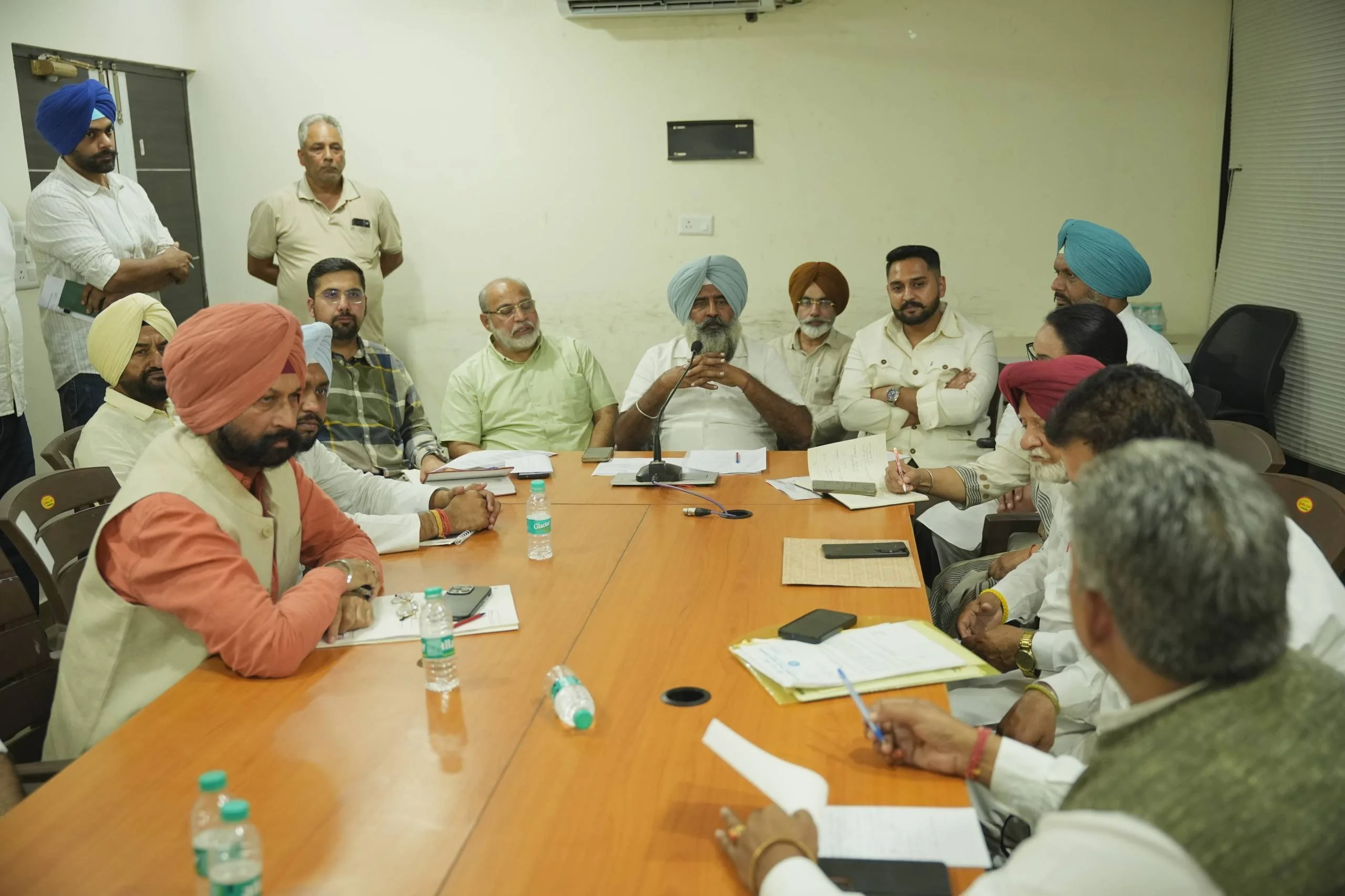
Congress Party President S Pargat Singh held a meeting with office-bearers of all frontal organisations to discuss preparations for the 2027 Punjab Assembly elections on Thrusday (Photo: Congress Punjab X)
However, the concerted push by the BJP to eat into SC votes has also put the party’s own record in spotlight. A few months ago, Harpal Singh Cheema, the Finance Minister of Punjab, accused the party of sidelining former Union ministers Vijay Sampla and Som Parkash during a visit by BJP national president Nitin Nabin. Cheema alleged that the two Scheduled Caste leaders were made to stand among the audience while other leaders occupied the stage. The BJP rejected the charge as politically motivated. The allegation remains contested, but it has raised questions about how the party treats its own Dalit leadership while seeking support from the wider community.
Also Read: Truck drivers from Punjab, Haryana hit as US cancels over 28,000 licences
The controversy adds to broader debates about caste representation and remarks by political leaders. In 2025, reports of insensitive comments about Dalits and reservation prompted concerns within the BJP about the impact of such statements on its outreach.
Aditya Rathi,
Aditya Rathi, a political analyst based in Uttar Pradesh says that the Scheduled Caste electorate would be a major factor in the election, but parties should not treat it as a uniform vote bank.
“The Scheduled Caste electorate will be one of the most important factors in determining the outcome of the 2027 Punjab Assembly elections. However, it should not be treated as a single, politically uniform vote bank. Punjab’s Dalit electorate comprises several communities with distinct political preferences and local priorities, which means that every major party will need a differentiated strategy to secure its support,” Rathi tells Media India Group.
Rathi adds that the BJP would need to do more than meetings and welfare announcements to convert outreach into votes.
“BJP’s outreach could help it expand its presence among Dalit voters, but translating that outreach into electoral gains will require credible local leadership, sustained grassroots engagement and a convincing agenda on social mobility, employment and welfare,” says Rathi.
The AAP government is attempting to retain support by promoting its welfare programmes and development record. Its campaign, “Mann da Munafa”, involves constituency in charges and party workers visiting households, explaining government initiatives and seeking feedback. In Jalandhar, party representatives have highlighted savings from free electricity, ration support, pensions and children’s education.
The Punjab Budget for 2026 to 2027 also announced the Mukh Mantri Mawan Dhiyan Satikar Yojana, providing monthly assistance of INR 1,500 to eligible Scheduled Caste women and INR 1,000 to women from other eligible categories, with a budgetary outlay of INR 93 billion The scheme addresses a key promise on financial assistance to women and gives AAP a concrete measure to present to voters. Its electoral impact will depend on implementation and how beneficiaries assess the delivery of benefits.
However, the BJP has accused the state government of delays in Scheduled Caste scholarships, vacancies under reserved categories and problems concerning land leasing.
Rathi says the election would be shaped partly by voters who have not firmly decided which party to support.
“A significant section of the electorate enters an election with relatively firm political preferences. The decisive contest, therefore, is often for the undecided voters, who assess the government’s performance, welfare delivery and its response to public concerns. These voters are more likely to ask questions about employment, education, law and order, and the delivery of promises, whether at the state or the Centre level. Welfare schemes can help AAP retain support, but their electoral impact will depend on how voters perceive their implementation and the overall governance record. AAP may also benefit from a five-cornered contest, as the division of votes among multiple parties could work in its favour in several constituencies. However, this advantage will depend on the strength of the competing candidates and the distribution of votes at the constituency level,” says Rathi.
Congress is attempting to rebuild its organisation while retaining its traditional Dalit support base. Former Punjab Chief Minister Charanjit Singh Channi has been appointed chairperson of the party’s campaign committee for the 2027 elections, placing him at the centre of its election planning.
At the organisational level, Congress is adopting a booth level model in which workers, called booth sevaks, will maintain direct contact with voters assigned to them. The party has also planned public meetings and yatras across all 117 constituencies to mobilise its cadre and collect public feedback. Its campaign is expected to address drugs, law and order and rural employment, while its leadership seeks to strengthen coordination ahead of the election.
Rathi says that Congress would have to balance its Dalit support base with its Jat Sikh leadership and voter base.
Also Read: Punjab Day commemorated at Tamil Nadu Raj Bhavan
“Congress is attempting to balance its Dalit support base with its Jat Sikh leadership and voter base. Charanjit Singh Channi remains an important Dalit face for the party, while Congress also has several prominent Jat Sikh leaders. However, the absence of a clearly projected chief ministerial face could become a strategic question as the election approaches,” says Rathi.
The Shiromani Akali Dal (SAD) has moved into an active campaign phase, with party president Sukhbir Singh Badal leading door to door outreach across all the 117 constituencies. The party is seeking suggestions for its election manifesto, with consultations involving its Scheduled Caste and Backward Class wings as well as plans to engage farmers, traders, young people and government employees.
The SAD has also announced a statewide bus yatra from November 10 and a major rally in December. Its campaign has focused on drugs, farming, unemployment, law and order, river waters and development. A separate women-led anti-drug campaign is intended to bring the issue into household level discussions.
“The Shiromani Akali Dal is trying to protect its core Panthic support base, but Amritpal Singh and Akali Dal Waris Punjab De have emerged as a significant challenge in this space. Sukhbir Singh Badal’s challenge is to retain the party’s traditional supporters while restoring its wider political appeal,” says Rathi.
The Bahujan Samaj Party (BSP), meanwhile, has its own claim to Dalit political representation through its Ambedkarite and Bahujan politics. Its decision to contest independently makes it a potential competitor for voters whom Congress, AAP and the BJP are also trying to attract. Any future understanding between the BSP and SAD could alter the contest, but its impact would depend on whether an alliance materialises and whether supporters of the parties transfer their votes.
The BJP is also seeking to expand its appeal among Hindu voters and sections of the Jat Sikh, Backward Class and Dalit electorate. AAP is competing across these groups, Congress is relying on its existing social coalition and Channi’s profile, while the SAD is seeking to restore its wider base.
Rathi says that the opposition’s challenge in Punjab is not merely to criticise the government, but to consolidate its traditional voter bases while expanding its appeal to new sections of the electorate.
“BJP, meanwhile, is seeking to consolidate Hindu voters while expanding its appeal among other communities, including sections of the Jat Sikh, backward-class and Dalit electorate. AAP is also competing for support across these groups. The opposition has a credible opportunity, but its success will depend on leadership clarity, grassroots mobilisation and its ability to avoid fragmentation of its own support,” says Rathi.
These pre-election exercises are a good indication that the elections next year will be hotly contested. But some last-minute pre-poll alliances could yet be formed, notably between the SAD and the BJP, which had been in an alliance for several decades until 2020 when the SAD pulled out over the BJP’s aborted bid to push through three farm bills which drew nationwide opposition from farmers and social activists.