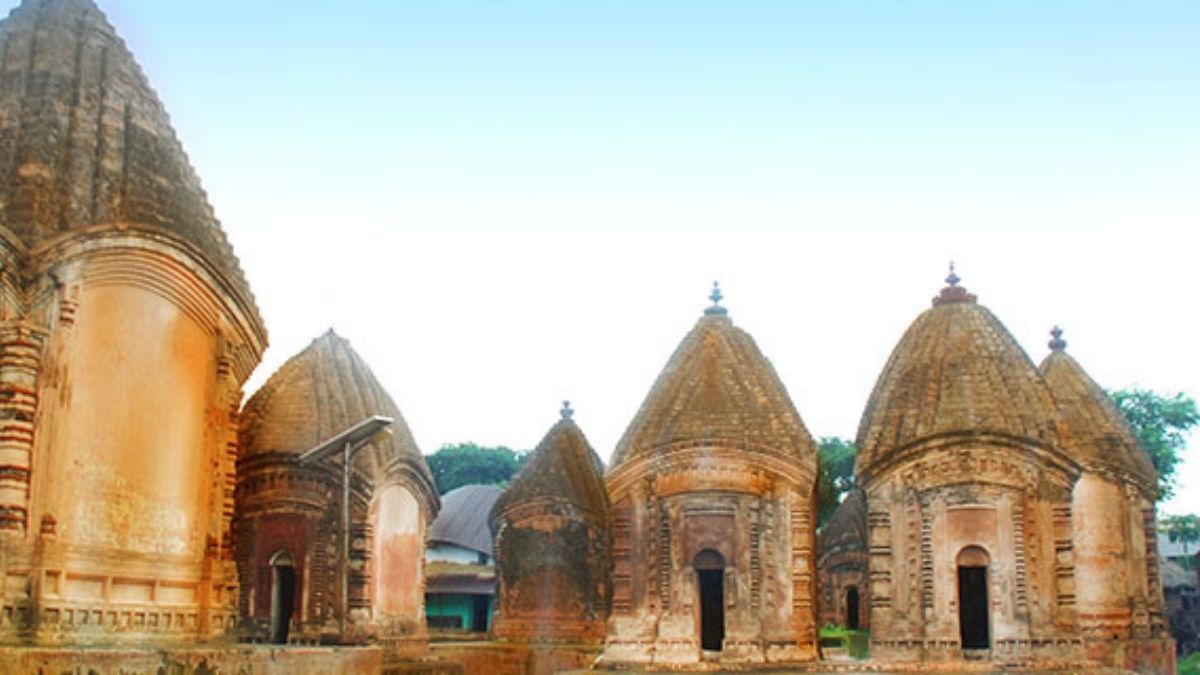
A cluster of centuries-old terracotta temples showcases the distinctive roof designs and brick architecture of Maluti village in Jharkhand (Photos: Archaeological Survey of India)
Home to a cluster of 72 terracotta temples, Maluti, a small village in Shikaripara block of Dumka district in Jharkhand, preserves centuries-old architectural and religious heritage. Once the centre of the Nankar Raj, the village has emerged as a lesser-known heritage destination, attracting visitors with its intricate temple carvings, historical legacy and religious traditions.
Its history dates back to the 15th century, when it became the centre of the Nankar Raj, a tax-free kingdom associated with the Bengal Sultanate.
According to local historical accounts, Basanta Roy, a Brahmin who returned a hawk belonging to Sultan Alauddin Husain Shah, was rewarded with a fiefdom. The word baj, meaning hawk, became associated with the name Baj Basanta and the royal family that later ruled Maluti.
The rulers were known for their religious devotion and supported the construction of temples instead of palaces. As the royal family divided into four branches, each reportedly built its own shrines, creating the cluster of temples that defines the village today.
The main attraction of Maluti is its 72 terracotta temples, that originally numbered 108. Built mainly with bricks and terracotta, most date from the 17th and 18th centuries and reflect the influence of Bengal’s traditional temple architecture.
Also Read: Top 5 must-visit tourist destinations in Jharkhand
The structures feature different architectural forms, including char-chala temples with four sloping roof sections, do-chala structures with two sloping roofs and rekha deul temples with rising curved towers.
Their exterior walls feature detailed terracotta panels depicting episodes from the Ramayana and Mahabharata, Hindu deities, mythological figures and scenes from everyday life. These carvings offer a glimpse into the religious beliefs and artistic traditions of the period.
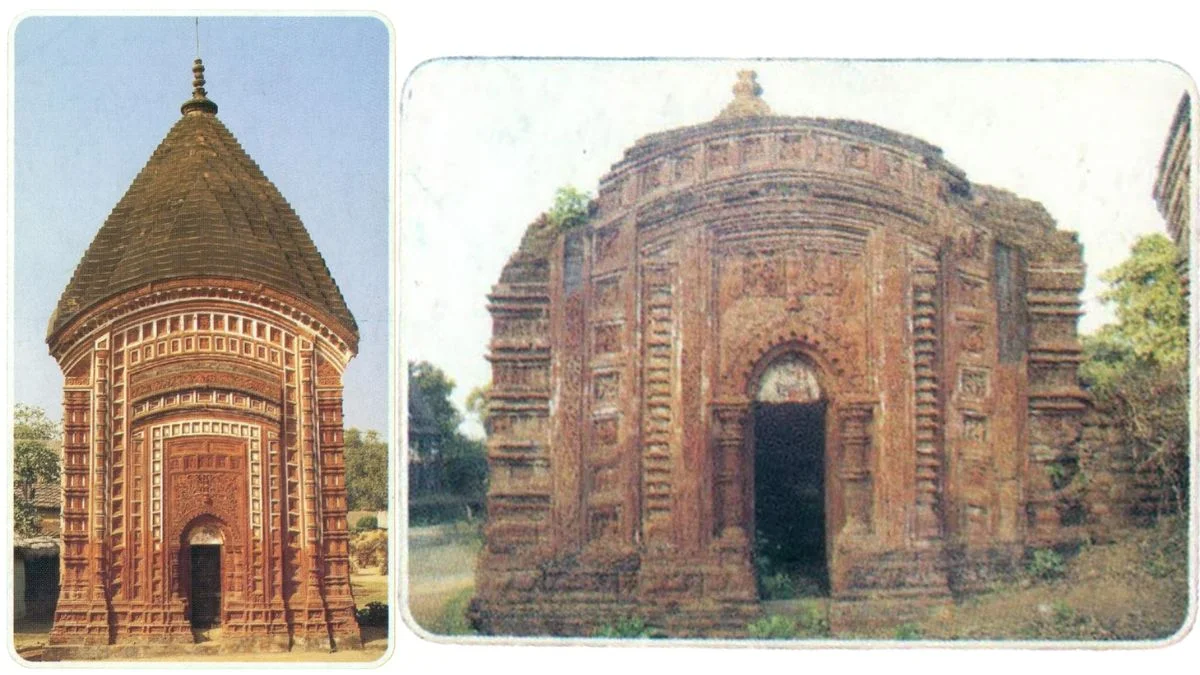
Intricate terracotta carvings adorn the historic temples of Maluti, reflecting the region’s rich architectural heritage
Unlike destinations centred around a single monument, Maluti offers an opportunity to explore several temples within one village. Architecture enthusiasts, researchers and heritage photographers can examine their different designs, brickwork and decorative details.
Among Maluti’s religious landmarks, the Maulikshya Temple is particularly important. Dedicated to Goddess Maulikshya, the presiding deity of the former Basanta royal family, the shrine remains an important centre of worship.
One of its distinctive features is the representation of the goddess through a carved stone head rather than a conventional full-bodied idol.
Local traditions associate Maulikshya with Goddess Tara of Tarapith in West Bengal and consider her Tara’s elder sister. The shrine is also linked to Bamakhyapa, a renowned Shakta saint believed to have worshipped Maulikshya before pursuing his spiritual journey at Tarapith.
These religious connections make Maluti relevant to pilgrims interested in Shakta traditions and the worship of the Divine Mother.
Also Read: Dhokra: Keeping generations of craftsmanship alive in Bastar
Maluti’s cultural identity is closely connected to the worship of Goddess Maulikshya and Lord Shiva. Several surviving temples are dedicated to Shiva, while Kali Puja is among the important religious observances associated with the region.
Beyond the temples, the village offers opportunities to experience rural life in the Santhal Pargana region. Visitors can walk through its traditional lanes, observe agricultural surroundings and interact with residents to learn about local history and customs.
For nature-based experiences, Massanjore Dam on the Mayurakshi River offers views of a large reservoir surrounded by hills and greenery. These destinations can be included in a wider itinerary exploring Jharkhand and neighbouring West Bengal.
October to March is suitable for visiting Maluti, when cooler weather allows comfortable exploration of the temples. The Kali Puja period can also offer an opportunity to experience local religious traditions.
The village is approximately 55 km from Dumka and around 20 km from Rampurhat in West Bengal. Both places offer road access to Maluti, while Rampurhat is a convenient railway connection.
Dumka itself is about 350 km from Bihar’s capital Patna and about 400 from Ranchi, the capital of Jharkhand, both of which offer regular daily air services to several major Indian cities. Visitors can arrange local taxis to reach the village. Since accommodation facilities are limited, Dumka can serve as a practical base.