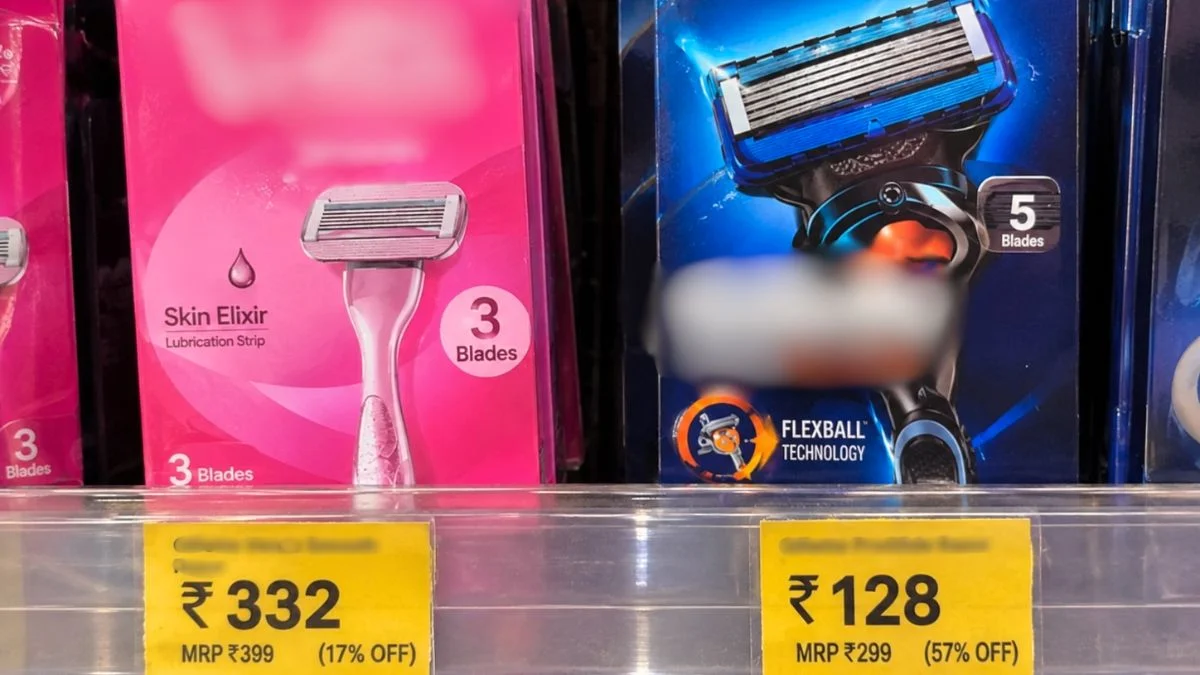
Concerns against this ‘pink tax’ have been raised and most companies deny that they practice any price differentiation (Photo: Media India Group/Anushka Roy Choudhary)
Despite making pledges for being inclusive and gender-neutral, companies in India, and in other nations, continue to practice differentiated prices for products aimed at women, making their everyday products more expensive than a similar product for men, be it soaps and lotions to razors and deodorants.
While concerns against this ‘pink tax’ have been raised around the world and most companies deny that they practice any price differentiation, women buyers in their neighbourhood shops or on ecommerce platforms continue to pay a significant pink tax on their purchases.
While India does not yet have a comprehensive government study quantifying the pink tax across consumer products, official documents have acknowledged concerns around gender-related costs. In December 2024, the Ministry of Women and Child Development recognised that the high recurring cost of sanitary napkins could contribute to what is commonly referred to as the ‘pink tax’. The government also highlighted measures such as exempting sanitary napkins from GST and making
unbranded pads available at Re 1 each.
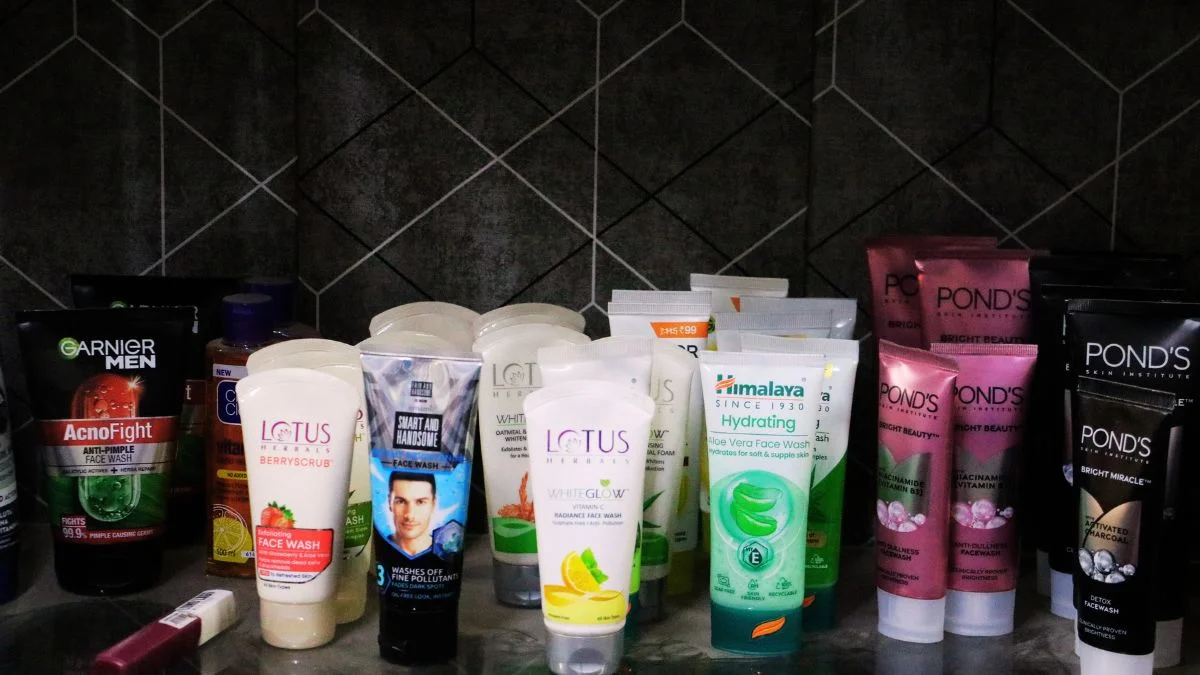
A product designed for women may come in pink packaging, carry floral motifs or be labelled “for her” (Photo: Media India Group/ Sunil Yadav)
Beyond the packaging: How brands price products differently
Considering them to be more impulsive buyers and also ones that control household budgets, companies have long exploited women by charging them extra for female-oriented products.

Kirti Sharma
“Pink tax or the ‘cost to pay to purchase women’s products’ has never been officially levied, as the government does not get revenue from it like other taxes. It is a hidden gender-based pricing practice by companies and is built directly into the retail price set by brands,” says Kirti Sharma, Associate Professor of Finance, Great Lakes Institute of Management, Gurgaon.
According to Sharma, the practice combines price differentiation with market segmentation, allowing brands to charge different prices based on consumer perceptions rather than necessarily reflecting differences in product functionality.
The distinction often begins with packaging and advertising. A product designed for women may come in pink packaging, carry floral motifs or be labelled ‘for her’, creating the perception that it offers something specifically for women and is different from same products for males. However, more often than not the actual utility is the same.
“Once a product becomes a preferred choice, its price can be easily manipulated to include intangible benefits which at times may be valued more by a woman than the product itself,” Sharma explains.
She illustrates this through the example of two razors with similar functionality being sold in blue and pink packaging at different prices. “It is viable for companies to charge a different price for the same razor when it is sold in a blue packaging versus a pink one,” she says.
The everyday cost of gendered marketing
For content creator Himika Ghoshal, this price difference is not merely a marketing observation but something encountered while purchasing everyday essentials.

Himika Ghoshal
Ghoshal says that even basic products such as razors and face washes can cost more when marketed towards women.
“Even if you see a simple razor or face wash, women’s products are at least INR 50-100 higher, even for basic items. Not considering how much more women have to spend on their menstrual healthcare products, makeup and clothes. Everything is more expensive for women,” Ghoshal says.
The difference, according to Ghoshal, is not always accompanied by better quality. She points to men’s razors as an example, saying that despite being cheaper, some have offered better performance than products marketed towards women.
“I have tried men’s razors, and the quality is vastly better. So not only do men get cheaper products, but also better quality,” Ghoshal says.
Beyond pricing, Ghoshal believes that the way women’s products are advertised reinforces expectations around physical appearance and beauty. While advertisements for women frequently focus on makeup, shapewear and products designed to conceal perceived insecurities, men’s grooming products are often positioned around functionality.
“With women’s ads, it is always about shapewear, makeup and how to hide your insecurities. When advertised that way, it sets very wrong beauty standards for women, but also points out how inherently patriarchal the capitalist system is,” Ghoshal says.
When household expenses take priority over women’s needs
The financial implications become particularly significant for women who do not have an independent source of income. While working women may encounter the additional cost across their regular purchases, homemakers often have to accommodate personal-care expenses within household budgets that already prioritise the needs of other family members.

Ratna Sinha
Ratna Sinha, a homemaker, says she first learnt about the pink tax through her daughter, who explained how products marketed specifically towards women could be more expensive than similar products for men. Having noticed these differences herself, Sinha questions why consumers should pay different prices for products that serve the same purpose.
For Sinha, however, the issue goes beyond comparing prices. She says she rarely spends on personal-care or grooming products because household requirements take priority. With no independent income, she often cuts down on her own expenses to manage the family’s needs.
“I barely buy some personal-care stuff. Women who don’t earn and are not independent, and have no income source, are reliant on their husband’s income and have to manage all the household requirements. I cut down my expenses just to manage my family’s expenses. To be honest, I don’t really spend anything on my personal care or grooming myself,” Sinha says.
She believes that homemakers’ financial needs are often overlooked because they do not earn a regular salary. “Our family has always overlooked our requirements and needs just because we don’t earn or are not independent,” she adds.
As women continue to navigate income disparities and rising household expenses, the question remains whether buying everyday essentials should come at an additional cost simply because they are marketed ‘for her’.
Also Read: Women bikers on road to freedom
Raising awareness key for fairer pricing
According to marketing professionals, addressing the pink tax requires greater transparency in pricing, stronger consumer awareness and accountability from brands. Sharma says awareness of the issue has increased over the past decade, as price differences between products marketed ‘for men’ and ‘for women’ have become more visible, alongside the wider push for diversity, equity and inclusion (DEI).
“The awareness about pink tax has grown significantly over the last decade as the price gap between ‘for men’ and ‘for women’ became more pronounced and DEI was propagated strongly. Hence, many NGOs and legal bodies are lobbying to get this eliminated,” she says.