
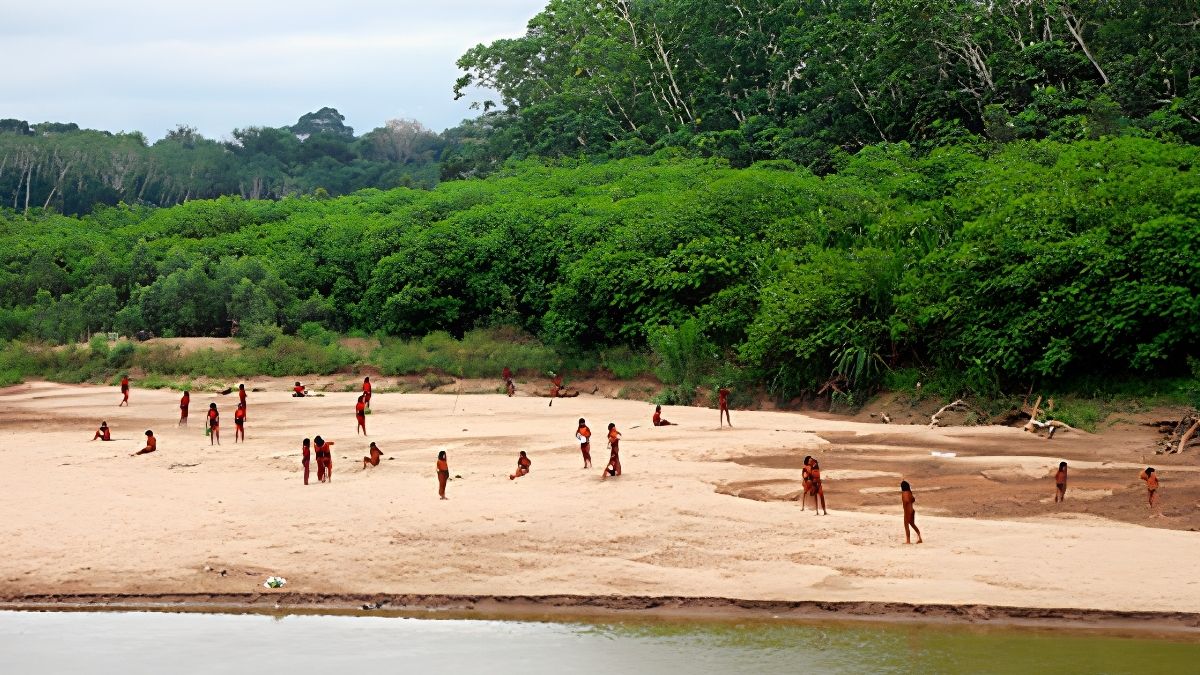
The Peruvian government's rejection of a proposal to expand the Mashco Piro reserve has raised concerns over logging, forest destruction and the survival of the uncontacted Indigenous community (Photos: Survival International)
Amid growing concerns over the increasing encroachment of logging companies into Indigenous territories, the Peruvian government has blocked a proposal to grant additional protection to the ancestral forest of the Mashco Piro, potentially exposing the community to invasions by outsiders and extractive industries.
In a press statement, Survival International, a London-based human rights organisation, says the decision was taken by the government commission responsible for protecting the territories of Indigenous peoples living in isolation. The commission rejected a report it had approved 10 years ago, which recommended declaring the territory an Indigenous reserve, restricting access by outsiders and expanding the existing Mashco Piro reserve.
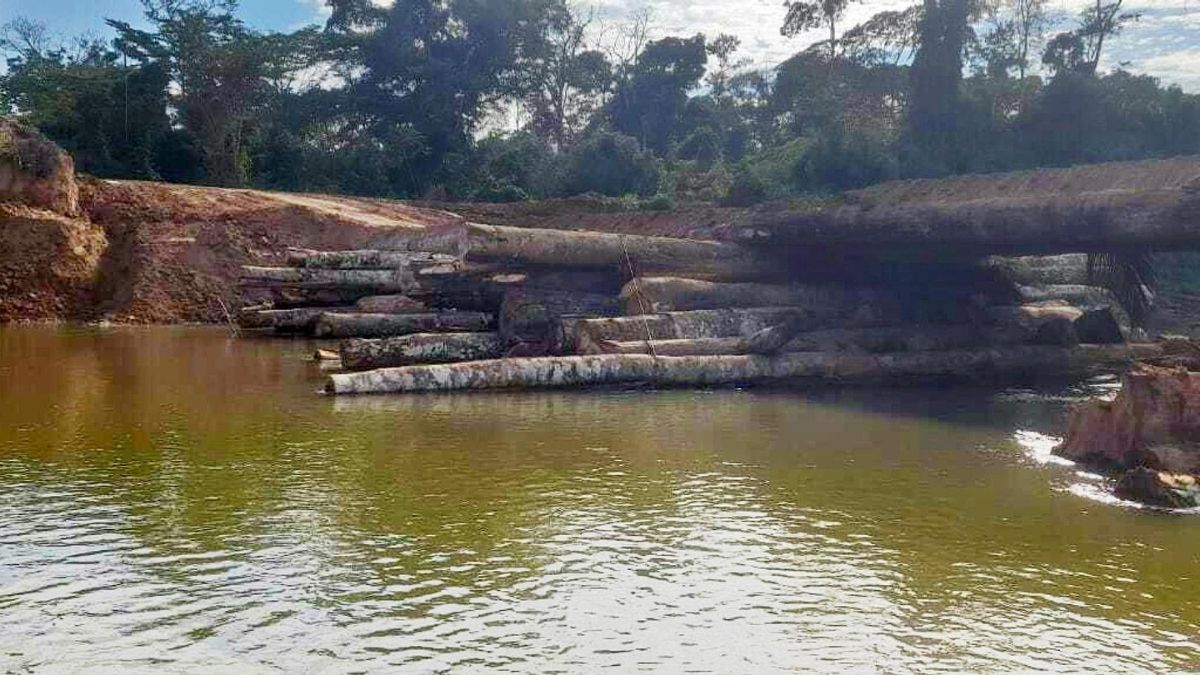
An illegal bridge built by logging company Maderera Canales Tahuamanu inside Mashco Piro territory to facilitate access for bulldozers in August 2025
The Native Federation of the Madre de Dios River and its Tributaries (FENAMAD) criticised the ruling, warning that it undermines the protection of Indigenous communities whose survival depends on the effective defence of their ancestral territories.
An illegal bridge being built by logging company Maderera Canales Tahuamanu inside Mashco Piro territory in August 2025 to transport bulldozers further into the forest
The decision could allow greater access to the territory for loggers and other commercial operators. Invasions of uncontacted Indigenous territories can have fatal consequences, as these communities often lack immunity to common infectious diseases. Deforestation also threatens their access to food, medicines and other forest resources.
The latest development comes amid increasing pressure from logging activities in Madre de Dios, where sightings of Mashco Piro people have become more frequent in recent years as loggers move closer to their territory. Violent confrontations in 2024 resulted in the deaths of at least two loggers, while the number of Mashco Piro casualties remains unknown.
Also Read: Survival International protests against Adani sponsorship of London Science Museum
One of the companies operating in the region, Maderera Canales Tahuamanu (MCT), faced action from the Forest Stewardship Council (FSC) following pressure from Indigenous organisations FENAMAD and AIDESEP, along with Survival International. The FSC initially suspended the company’s certification before terminating it in 2025. However, local reports indicate that logging activities have continued despite the loss of certification.
The Madre de Dios Territorial Reserve was established in 2002 to protect the forests inhabited by the Mashco Piro, Yora and Amahuacapeoples. However, large sections of their ancestral territory remained outside the protected area and were subsequently allocated as logging concessions.
Following pressure from Indigenous organisations, the Peruvian government agreed in 2016 to expand the reserve. The latest decision has now effectively abandoned that proposal.

Caroline Pearce
The rejection is also the third recent instance in which the government commission has refused to establish reserves for uncontacted Indigenous communities. In October, it blocked the proposed AtacuariIndigenous Reserve in the Loreto region, while in September 2025 it rejected the proposed Yavari-Mirim Indigenous Reserve, which would have been the largest-ever reserve for uncontacted peoples in Peru.
“This is an appalling and disastrous decision that effectively puts a For Sale sign over the Mashco Piro’s territory. The Fujimori government has shown where its priorities lie with big business and the exploitation of Indigenous territories, even where it may well cost Indigenous people’s lives. We will fight this decision alongside the Indigenous organisations in Peru who are defending their uncontacted relatives,” says Caroline Pearce, Executive Director of Survival International.
