
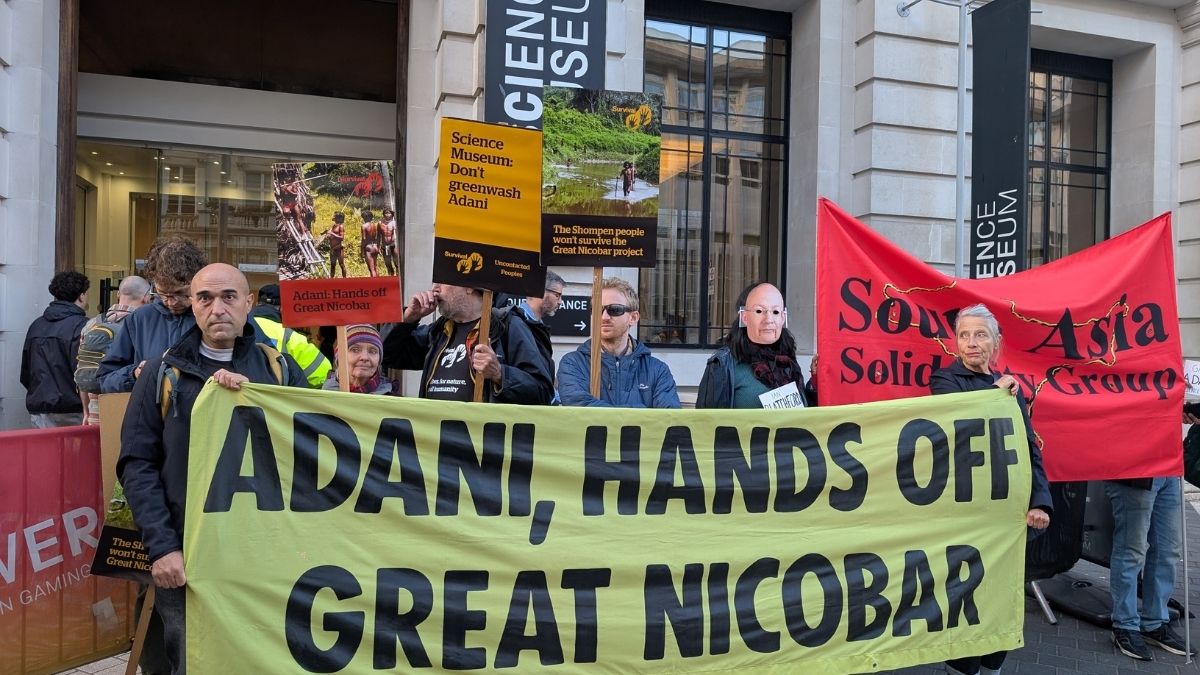
Protesters urge the Science Museum to drop Adani’s sponsorship, warning that the Great Nicobar project threatens the Shompen people (Photos: Survival International)
Amid growing concerns over the impact of the proposed Great Nicobar mega-project on Indigenous communities, Survival International, a London-based human rights organisation, has staged a protest outside London’s Science Museum, urging it to stop accepting sponsorship from the Adani Group over its controversial mega-port project, which campaigners warn could threaten the survival of the uncontacted Shompen people.
In a press statement, Survival International says protesters gathered outside the museum’s main entrance, chanting slogans against the conglomerate’s founder and chairman, Gautam Adani, and the museum’s director, Ian Blatchford.
The protest took place four years after India’s Ministry of Environment granted Stage 1 forest clearance to the Great Nicobar project. It also marked five years since the Adani Group began sponsoring the Science Museum.
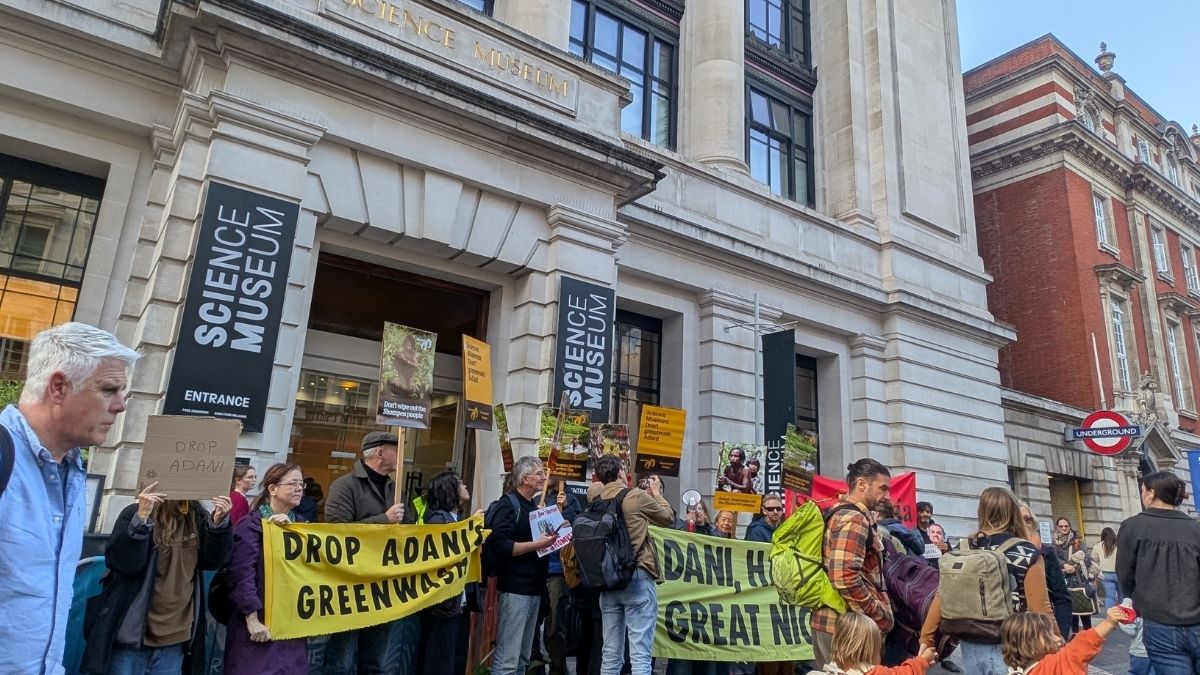
Demonstrators hold banners opposing Adani’s involvement in the proposed Great Nicobar mega-port
The Indian government plans to transform Great Nicobar Island into what it describes as the ‘Hong Kong of India’, with a proposed mega-port, military base, industrial park, shopping malls, theme parks, casino and a city comparable in size to Las Vegas.
The Adani Group has formally registered its interest in developing the port, which is a key component of the proposed project. The conglomerate is among the entities seeking to participate in the development.
According to Survival International, 39 leading genocide scholars warned in 2024 that the project could be a “death sentence for the Shompen, tantamount to the international crime of genocide”. The proposed development is expected to cause extensive damage to the island’s rainforests and the river systems on which Indigenous communities depend.
Caroline Pearce, Executive Director of Survival International, said the project could destroy the Shompen’s homeland and criticised the museum for continuing to accept sponsorship from the conglomerate despite warnings about its potential impact.
Also Read: Richard Gere to launch Survival International report on uncontacted tribes

Caroline Pearce
“The world has been warned. If the Great Nicobar project goes ahead, we will witness the genocide of the Shompen and the devastation of their island,” Pearce said.
She added that the museum’s continued association with the Adani Group could help improve the conglomerate’s public image despite concerns over human rights and environmental damage. She urged the institution to prioritise the Shompen community over corporate sponsorship.
Praveen Kumar of India Labour Solidarity said large-scale corporate projects on Indigenous land in India often involve forest clearance, disregard for community consent and the loss of traditional livelihoods.
Protesters holding Placards outside London’s Science Museum demanding an end to Adani’s sponsorship over the proposed Great Nicobar project
He called on the Science Museum to end its association with the Adani Group and support the rights of Indigenous communities whose land and survival could be affected by development projects.
According to Survival International, the Shompen are nomadic hunter-gatherers who have lived on Great Nicobar Island for up to 10,000 years. An estimated 300 Shompen live on the island, most of whom remain uncontacted.
The organisation says around 95 pc of Great Nicobar is covered in rainforest. The island is also home to 11 species of mammals, 32 species of birds, seven species of reptiles and four species of amphibians found nowhere else.
The proposed project is expected to involve the felling of around 10 million trees, raising concerns about the destruction of the Shompen’s habitat and the island’s unique biodiversity.
The statement adds that the protest was supported by several organisations, including South Asia Solidarity Group, Hindus for Human Rights, India Labour Solidarity, London Mining Network and Money Rebellion.
