
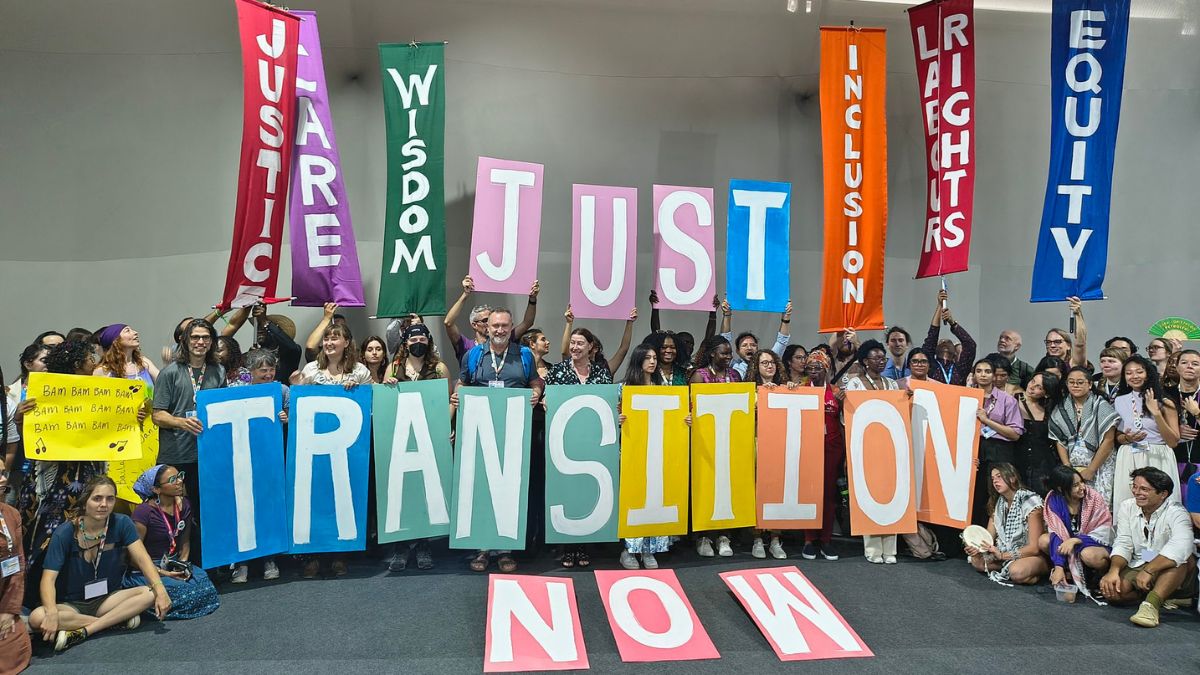
The representatives called for greater ambition in the ongoing negotiations, emphasising that the Just Transition Mechanism must deliver concrete support
Climate leaders from around the world have criticised the Australian leadership of the ongoing climate change summit, COP31, currently underway in Türkiye for weakening commitments to the Just Transition Mechanism that is aimed at ensuring that the developing nations receive the necessary financial and technical support for making their transition towards meeting the carbon emission targets.
In a press statement, Climate Action Network (CAN) International, a collective of global environmental activists, says that Australia’s Prime Minister had missed an opportunity to establish a clear direction for the climate summit, particularly in the absence of announcements on climate finance and references to fossil fuels.
Also Read: 90 pc nations miss UN climate deadline: Climate Action Network

Denise Cauchi,
Denise Cauchi, CEO of CAN International, called on Australia to take greater responsibility as President of Negotiations, raising concerns over the first draft of the proposed Belém-Antalya Just Transition Mechanism. She said the framework lacked the resources and institutional strength needed to support communities and workers.
“We need a strong institution that can respond to requests for matchmaking and resource mobilisation, and that ensures meaningful participation of civil society in decision-making. Communities need a seat at the table,” she said.
She added that assigning responsibilities to a mechanism without providing the necessary resources would leave workers and communities without practical assistance.
Ife Kilimanjaro, Executive Director of US Climate Action Network, also warned that the proposed mechanism risked becoming a bureaucratic exercise rather than delivering tangible outcomes.

Ife Kilimanjaro
“A just transition must deliver secure jobs and new opportunities for workers and communities. Instead, the current draft risks handing us more meetings, more reports and another website, things we already have, but nothing that pushes the work forward,” Kilimanjaro said.
Also Read: Climate Action Network seeks climate justice for Africa at CoP 27
Meanwhile, Laura Restrepo Alameda of Climate Action Network Latin America (CANLA) cautioned against electrification strategies that continue to rely on fossil fuels and extractive industries while overlooking Indigenous rights and environmental justice.

Laura Restrepo Alameda
She argued that a fair transition should prioritise decentralised renewable energy systems, community participation and access to energy as a human right rather than treating it as a commercial commodity.
“Latin America will not accept a transition built on fossil gas, voluntary loopholes or neocolonial extractivism,” she said.
The representatives called for greater ambition in the ongoing negotiations, emphasising that the Just Transition Mechanism must deliver concrete support, financing and participation for communities affected by the shift towards cleaner energy.
