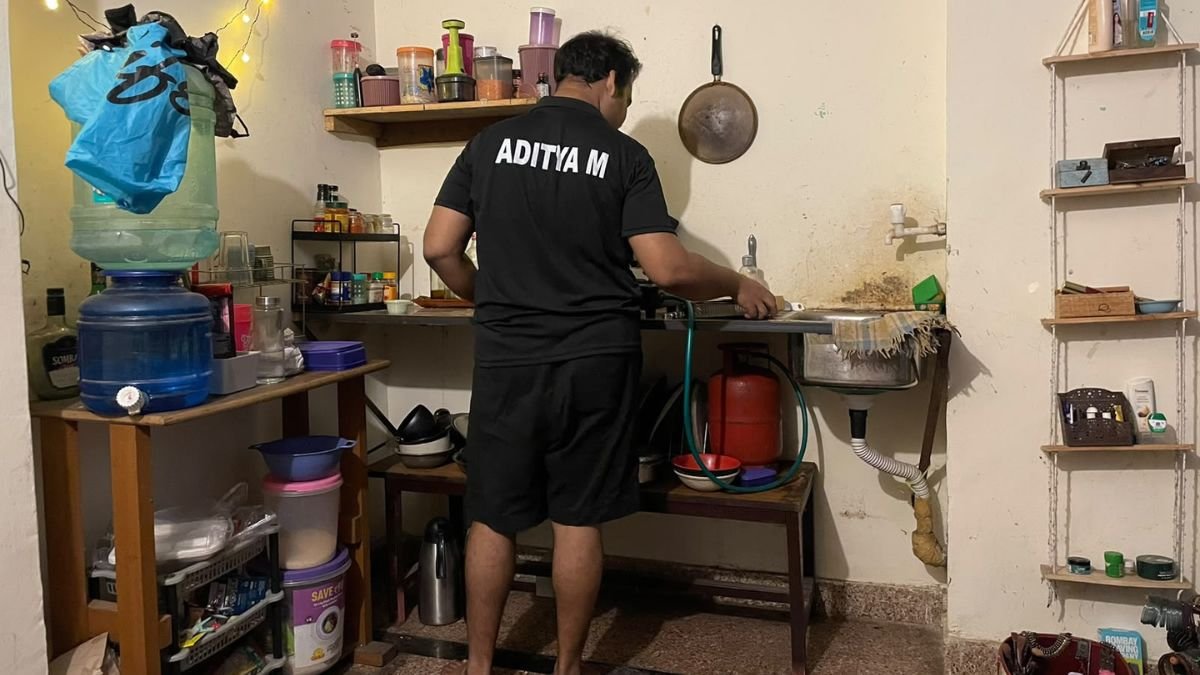
The financial responsibilities of living independently extend well beyond monthly rent (Photo: Media India Group/Anushka Roy Choudhary)
Moving to a major metropolis in India, notably Mumbai, Delhi or Bengaluru, is often seen as an important step towards adulthood for young people migrating from smaller cities. For students and young professionals, the capital offers opportunities for education, employment and financial independence. However, the reality of establishing a life in the city is increasingly shaped by the cost of accommodation and the compromises young people must make to afford it.
From security deposits and brokerage charges to electricity bills, food and transportation, the financial responsibilities of living independently extend well beyond monthly rent. For those at the beginning of their careers, managing these expenses on limited salaries can leave little room for savings or other necessities.
A September 2026 survey of 117 students living in Paying Guest accommodation in Satya Niketan, a middle-class locality in SouthWest Delhi conducted by student and civil society organisations, found that monthly rents ranged from INR 5,000-30,000. The average rent for a room shared with another person, with two meals, was approximately INR 14,000. The survey also recorded complaints about inadequate maintenance, including cracks in walls, faulty cooling systems and delayed repairs, alongside irregular water supply, with several students reporting dirty or brown water. Students also raised concerns about electricity charges of INR 11–15 per unit, as against the standard cost of INR3-8 per unit charged by the power distribution company.
Rising rents, housing discrimination and the psychological burden

Suyasha. S
Suyasha S is Fundraising and Communications Lead at Carers Worldwide India, a non-profit organisation which provides financial support to the unpaid family caregivers of specially-abled individuals across India. Originally from Shimla, Suyasha came to Delhi in 2015 to pursue higher education at Delhi University, and began working in 2020.
Pointing to poor ventilation, inadequate natural light, dampness, mold and maintenance issues in rental properties, Suyasha believes that rising rents have not necessarily translated into better housing conditions.
“I think one of the biggest problems is that rents are going up but the quality of housing hasn’t necessarily improved. In fact, in many cases, you are paying a lot more for substandard accommodation,” Suyasha tells Media India Group.
For her, the challenge is not limited to the economics of living alone, but also connected to identity and personal safety. As a queer, fem-presenting person, she said finding accommodation involves balancing affordability with the safety of the neighbourhood.
“Safety is another big concern, particularly for women and queer people. As a queer, fem-presenting person, finding a house is harder for me because I need to find something that fits within my budget and also ensure the neighbourhood feels safe for me,” she says.
Also Read: Working part-time makes us independent & responsible: Indian diaspora students
A higher salary doesn’t guarantee financial independence
Mahasweta Ray, a social worker at Pratham Education Foundation, a charity working in providing access to education, says that earning a relatively higher salary does

Mahasweta Ray
not necessarily guarantee financial independence in Delhi and its neighbouring urban areas.
From Assam, Ray moved to Delhi in 2025 and drawing from her own experience, Ray says she earned more than INR 50,000 but still struggled to meet her needs while living in a shared apartment and managing rent, commuting, groceries and field-related expenses.
“Yes, they can, but they have to share their space with three people. I earned more than INR 50,000 and still couldn’t meet my needs living in a shared flat with commuting, field expenses, groceries, rent,” Ray tells Media India Group.
She adds that unlike educated professionals like her, many domestic workers in Noida, most of whom are migrants, live in cramped housing or slum settlements. For women living alone, concerns about personal safety further complicate the search for accommodation.
According to Ray, rising demand and increasing housing costs have also encouraged landlords to offer substandard rooms at higher prices in areas such as Patel Nagar and Satya Niketan.
Also Read: GenZ worst hit as mental well-being declines in India, says study by Sapein Labs
Seeking independence on a small salary

Jrin Varkey Jayan
Jrin Varkey Jayan, a Senior Account Executive at High Hopes Communication Consultancy, moved to Delhi earlier this year from Dhanbad in Jharkhand, identifies the mismatch between salaries and rental costs as one of the biggest barriers to independent living in Delhi. According to him, young professionals entering the workforce have to account for rent, security deposits, brokerage and everyday expenses, making it difficult to find accommodation that is both affordable and comfortable.
“When you are starting your career, your salary is usually limited, but rent, security deposits, brokerage and other living expenses take up a significant portion of your income,” Jayan tells Media India Group.
“Honestly, I think it would be very difficult for someone to survive on a salary of INR 25,000. It may be possible if someone chooses shared accommodation, manages their expenses very carefully and lives away from expensive localities. But living independently is not just about paying rent. You have to account for food, transportation, electricity, internet, medical expenses and other everyday needs,” says Jayan.
He points out that expenses such as food, transport, electricity, internet and medical costs left little room for savings or personal spending. Emphasising that affordability should not come at the cost of safety, privacy and dignity, he adds, affordability should not simply mean finding the cheapest available place. Jayan added that having to compromise on hygiene, personal space and basic security increased the actual cost of accommodation beyond the rent being paid. On the question of financial independence, he believes parental support continues to play a significant role in helping young people like him establish themselves in the city.
“Having family support can make a significant difference, whether it is helping with rent, security deposits or unexpected expenses. Without that cushion, becoming financially independent takes considerably longer,” he added.
Accommodation at the cost of social lives
For Alka Singh, a Media Business Studies student at the Indian Institute of Mass Communication (IIMC), a leading media training institute in Delhi, who hails from

Alka SIngh
Indore in Madhya Pradesh, living in a shared apartment is a financial necessity rather than a preference.However, her experience also reflects the compromises students make to remain within their budgets.
“The accommodation is extremely overcrowded, and the only window opens directly into someone else’s space, making proper ventilation almost impossible. Sanitation is another major concern, as garbage is often scattered around, creating a foul smell and attracting insects. Maintenance is also very poor, and basic living conditions are often neglected,” Singh tells Media India Group.
She says nearly 70 pc of her budget goes towards decent accommodation. After paying rent and other housing-related expenses, little is left for food, daily necessities and social activities.The financial pressure, she added, affects not only students’ social lives but also their emotional well-being.
“Living independently in Delhi can sometimes feel quite depressing and emotionally exhausting. Being confined to a room with extremely poor ventilation affects my overall well-being. Stepping outside does not necessarily provide relief, as the surroundings are often crowded, polluted, and filled with garbage,” she says.
Singh believes that independent living in Delhi is increasingly becoming a privilege for those with financial resources, while students from less financially secure backgrounds are forced to compromise on safety, comfort and basic living conditions.