
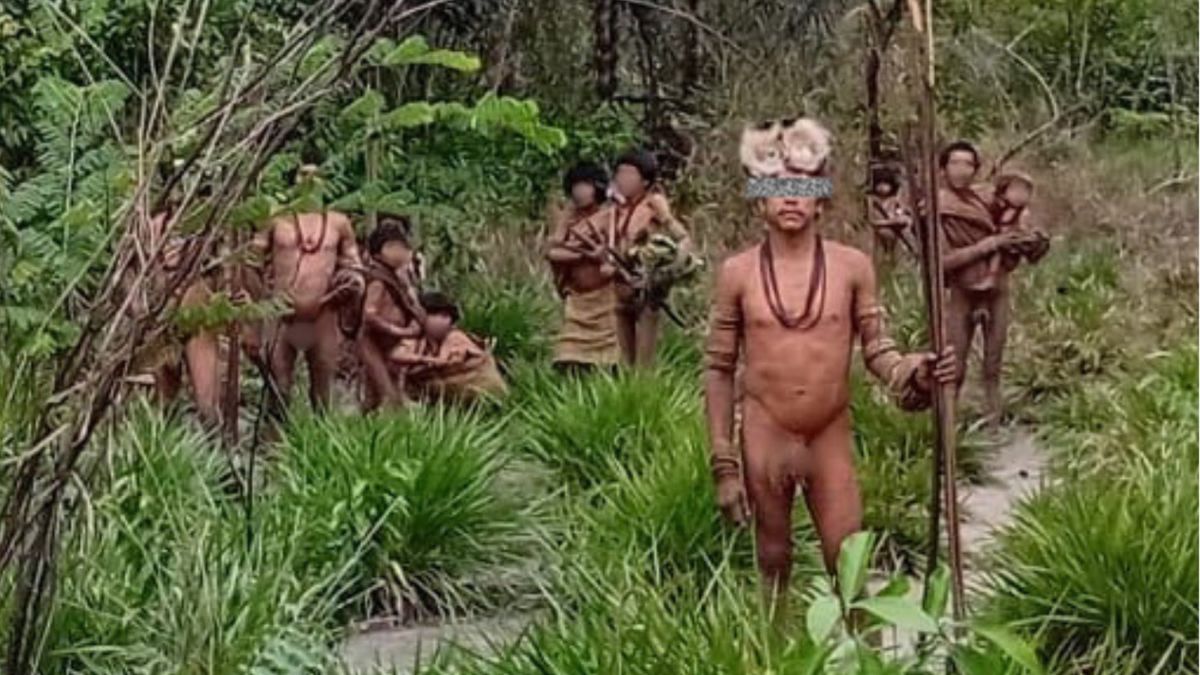
The Awá’s forest territory faces growing invasions, threatening their food supply and traditional way of life (Photo: Survival International/Guajajara)
In a recent incident that highlights the growing impact of deforestation of the Amazon basin, around 20 members of the Awá Indigenous people, a hitherto uncontacted hunter-gatherer community, in Brazil and contacted government officials for food.
The rare encounter that occurred in the Arariboia indigenous territory on Monday has highlighted the growing pressure on the Awá, whose survival and traditional way of life depend on the forest, as deforestation, fires and land invasions threaten their ancestral lands, says Survival International, a London-based human rights organisation, in a press statement.
The Awá approached the government while looking for yams and the encounter was filmed by neighbouring Guajajara (Tenetehar) Indigenous people, who support the government station approached by the Awá, adds the statement.
In recent years, illegal loggers, hunters and cattle ranchers have increasingly invaded Arariboia, putting pressure on the Awá, who depend on hunting and gathering for survival. The encroachment has raised concerns over the shrinking forest areas available to the community and the growing threats to its way of life, the statement adds.
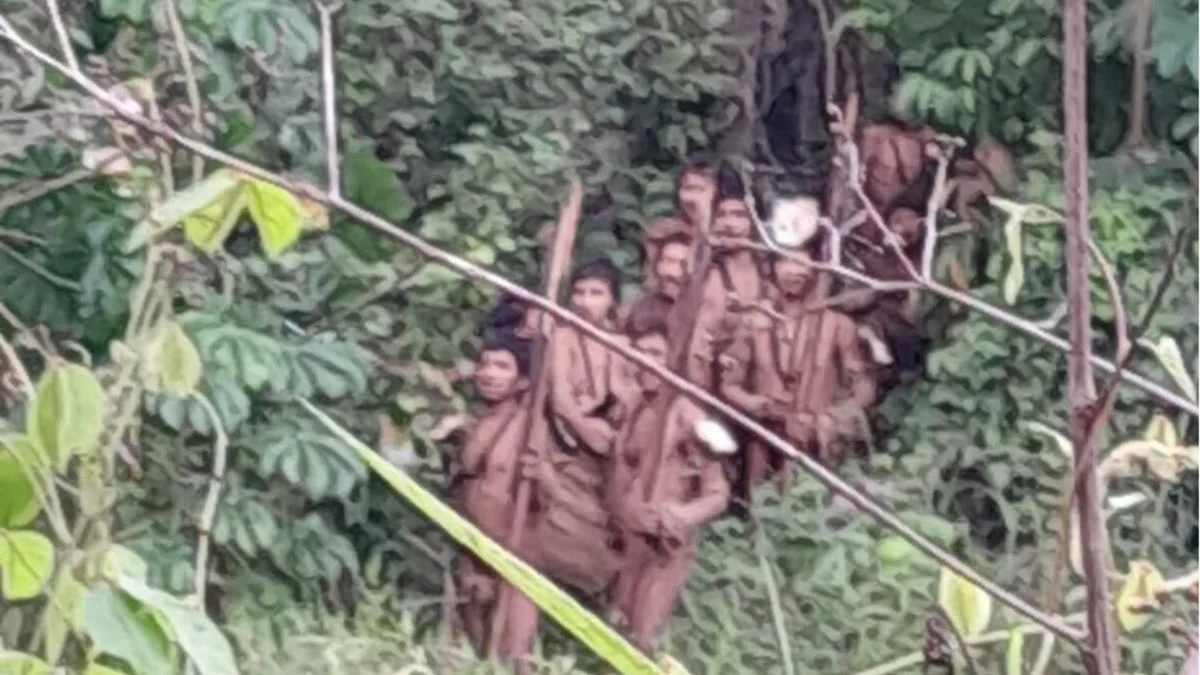
A group of uncontacted Awá people approached a government post in November 2026
Survival International has campaigned for decades for the protection of Awá territories, that was the subject of an unprecedented campaign by the organisation between 2012 and 2014, when the community was described as “Earth’s most threatened tribe”.
The Guajajara Forest Guardians have also been fighting illegal loggers and cattle ranchers invading Arariboia, amid concerns over the failure of authorities to adequately protect the territory. Several guardians have lost their lives in recent years while defending the forest shared with the uncontacted Awá.
The guardians said climate change, fires, deforestation and land encroachment were directly affecting the Awá lands and their way of life, which depends entirely on hunting and gathering. They called on the authorities to take immediate action in consultation with Indigenous organisations to safeguard the community’s lives, health, safety and dignity.
Coordenação das Organizações e Articulações dos Povos Indígenas do Maranhão (COAPIMA), an Indigenous peoples’ organisation, has also stressed the importance of protecting uncontacted Indigenous peoples, respecting their autonomy and safeguarding their territorial rights.
Survival International Director Caroline Pearce said the encounter highlighted the dangers posed by continued invasions of forests inhabited by uncontacted Indigenous communities, warning that the Awá were under extreme pressure as intruders encroached from all sides, leaving them surrounded by destruction.
She called on the Brazilian government to commit the necessary resources to protect Arariboia from illegal loggers and ranchers operating in defiance of the law.
The forest guardians have urged authorities to act in direct consultation with Indigenous representatives, stressing the need to protect the forest and the rights of the Awá and Tenetehar communities.
