
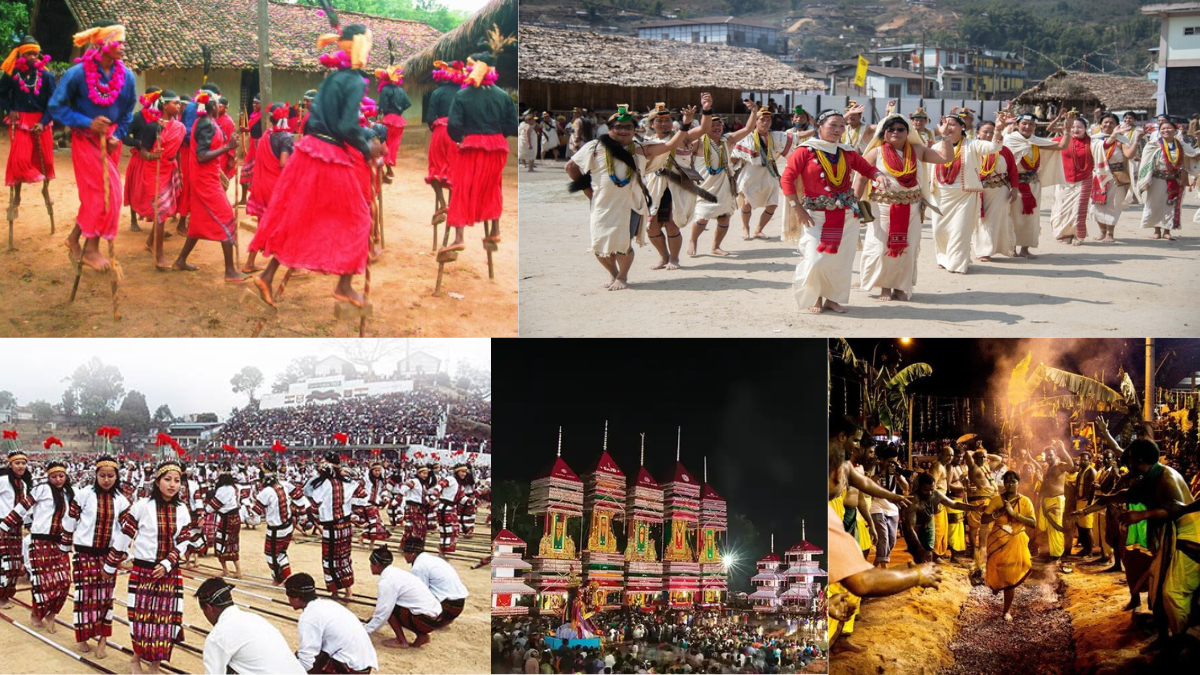
These five unconventional Indian festivals highlight India's cultural diversity outside of the typical tourist route
With innumerable festivals honouring the traditions of each season, area and community, India’s cultural tapestry is as diverse as it is colourful. While well-known Indian holidays like Diwali, Holi and Durga Puja frequently garner the most attention, many lesser-known customary celebrations are still hidden treasures just waiting for inquisitive tourists to find them. These five unconventional Indian festivals highlight India’s cultural diversity outside of the typical tourist route and are steeped in rich customs and distinctive regional flavours.
Madai Festival: Chhattisgarh’s tribal cultural extravaganza
From December to March, the Gond tribe and other communities in Chhattisgarh celebrate the Madai Festival, an enthralling tribal celebration. The itinerant nature of Madai, which starts in Bastar and travels through districts like Kanker, Narayanpur and Kondagaon, is what really sets this festival apart. As communities assemble in expansive open fields to take part, each site provides a new explosion of cultural vibrancy.
A spiritual procession and worship of the ruling goddess mark the start of the festival. Worshippers show their profound respect by paying their respects in stoic silence. After the solemn ceremonies, folk dances, songs, drama and communal feasts honouring the tribal way of life lighten the mood.
Nyokum Yullo: Arunachal Pradesh’s festival of harmony
Celebrated by the Nyishi tribe of Arunachal Pradesh, Nyokum Yullo is much more than a festival, it is a profound invocation of the natural world and spiritual forces that nurture the community. The name itself conveys ‘land and togetherness’, highlighting the festival’s emphasis on unity with nature and among people.
Held to mark a successful harvest and to invoke blessings for prosperity and harmony, the festival’s centrepiece is a bamboo prayer structure called ‘Yugang’, where sacrificial animals like Indian bison, pigs and chickens are offered. The absence of idols underlines the festival’s animistic roots, focusing on nature’s spirits rather than anthropomorphic deities. Attendees don vibrant traditional attire, and the rituals include rhythmic folk dances and music that express the Nyishi identity. Nyokum Yullo serves as a living testament to Arunachal Pradesh’s tribal heritage and their symbiotic relationship with the environment.
Mim-Kutt Festival: A Mizo tradition
The Mizo people of Mizoram celebrate an intriguing cultural event called the Mim-Kutt Festival. This festival, which has its roots in agricultural beliefs, is devoted to fostering community ties while evoking prosperous harvests. Through a variety of customs, folk tunes, and dances that highlight the community’s unity, Mim-Kutt honours the abundance of nature.
In addition, the festival serves as a social event that brings the villages of Mizoram together for a festive celebration that includes traditional dress, music, and communal meals. Mim-Kutt is renowned for maintaining traditional farming practices that stress sustainability and reverence for the environment, which are fundamental to Mizo culture and honour the land.
Chettikulangara Bharani: Kerala’s devotional festival
Chettikulangara Bharani, a remarkable celebration in Kerala, is renowned for its ecstasy and fervent devotion. This festival, which is held at the Chettikulangara Devi Temple, honours the fierce goddess Durga through a special fusion of rituals, music, and community involvement.
The festival’s centrepiece is the ritualistic dance known as ‘Kuthiyottam’, which is performed by young boys after they have fasted and performed penance for days. Melodic devotional songs that invoke the blessings of the deity are called ‘bharani’ or bhajans, and they are enjoyed by devotees. Large crowds attend the festival to see the powerful demonstration of faith and tradition, and the atmosphere is charged with spiritual intensity.
Thimithi Festival: Tamil Nadu’s firewalking ritual
Draupadi, the heroine of the Indian epic Mahabharata, is the focus of the dramatic and breathtaking Thimithi Festival, which is mostly observed in Tamil Nadu. In order to show their faith and ask for the goddess’ blessings, devotees walk barefoot across a bed of hot embers as part of the festival’s firewalking ritual.
Over the course of several days, the festival is characterised by communal prayers and the recitation of epic tales. Participants frequently fast and pray in preparation for the firewalk, which is a symbolic act of devotion, bravery, and purification. This stirring demonstration of faith, which combines religion, mythology, and folklore in a distinctively South Indian cultural expression, draws spectators from a wide range of backgrounds.
