
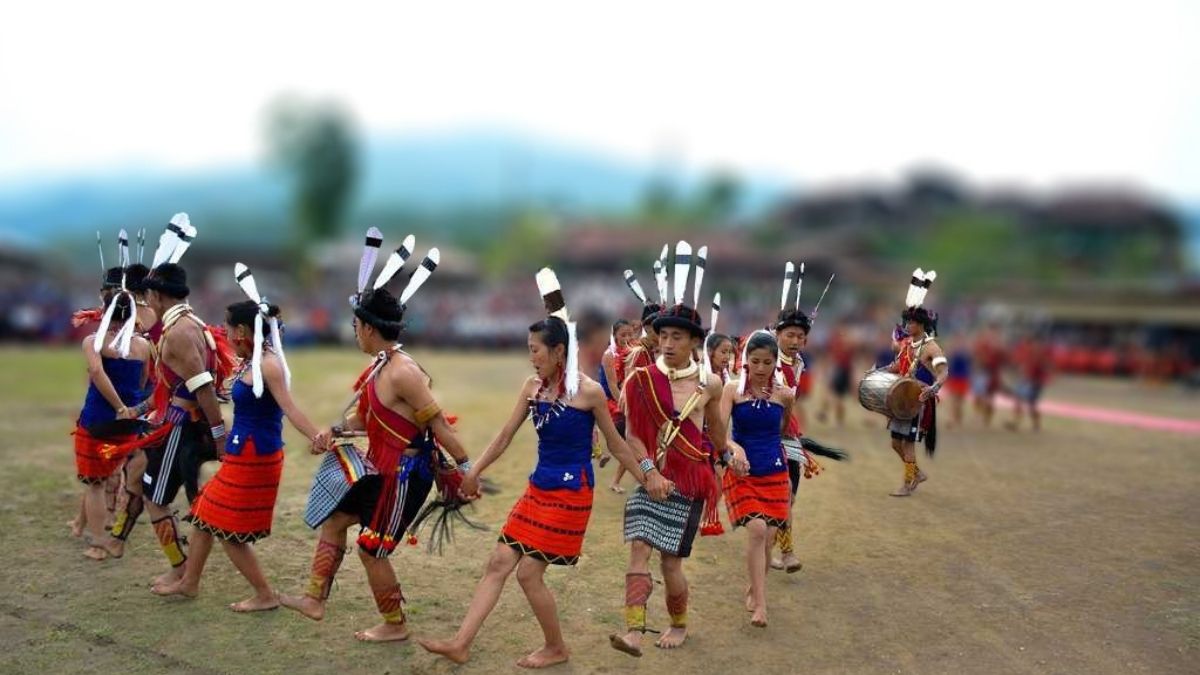
Moatsu blends agricultural ritual, communal feasting and oral traditions in celebration of harvest, community bonding and Ao Naga identity (Photos: Utsav)
Bringing together Ao Naga villages across Nagaland’s Mokokchung region along with families, elders and community members, the Moatsu Festival is an annual spring celebration held in early May that marks the end of the sowing season and brings people together in collective rest, feasting and cultural expression through songs, dances and traditional rituals.
Unlike purely religious celebrations, Moatsu functions as both a seasonal and social festival. It preserves indigenous cultural traditions while reinforcing collective participation, kinship networks and generational memory through shared rituals and performances.
Though primarily centred in Nagaland’s Mokokchung region, the influence of Moatsu extends across urban Ao Naga communities in places such as Dimapur and the state capital Kohima, where migrant families continue to observe the festival as a marker of cultural identity and continuity.
Rooted deeply in the agrarian traditions of the Ao Naga tribe, the festival also reflects the community’s strong oral culture and village-based social structure. While many Ao Nagas today follow Christianity, Moatsu continues to survive as a cultural celebration that preserves indigenous customs, performance traditions and ancestral practices.
Origin and agricultural foundation
Moatsu originates from the traditional agricultural cycle of the Ao Nagas. Historically, villagers spent weeks clearing forests, preparing land, burning fields for jhum cultivation, sowing seeds and repairing homes and community spaces before the onset of monsoon rains.
Once these physically demanding tasks were completed, communities entered a short period of rest and celebration. Moatsu emerged from this transition, functioning as a communal acknowledgement of labour, cooperation and hope for a successful harvest season.
The festival reflects how agriculture shaped not only the economy of Ao society but also its cultural and social organisation. Collective farming practices, shared labour and village cooperation remain central to the spirit of the celebration.
Over time, Moatsu evolved into a broader cultural institution that preserves social unity, oral traditions and indigenous identity while maintaining its agricultural roots.
Also Read: Hornbill Festival: A goldmine of Nagaland’s culture
Ritual structure, symbolism and cultural meaning
Moatsu is deeply embedded in Ao Naga traditions of collective participation, storytelling and ceremonial gathering. While not tied to a single mythological narrative, the festival symbolises renewal, social harmony and gratitude following the completion of agricultural work.
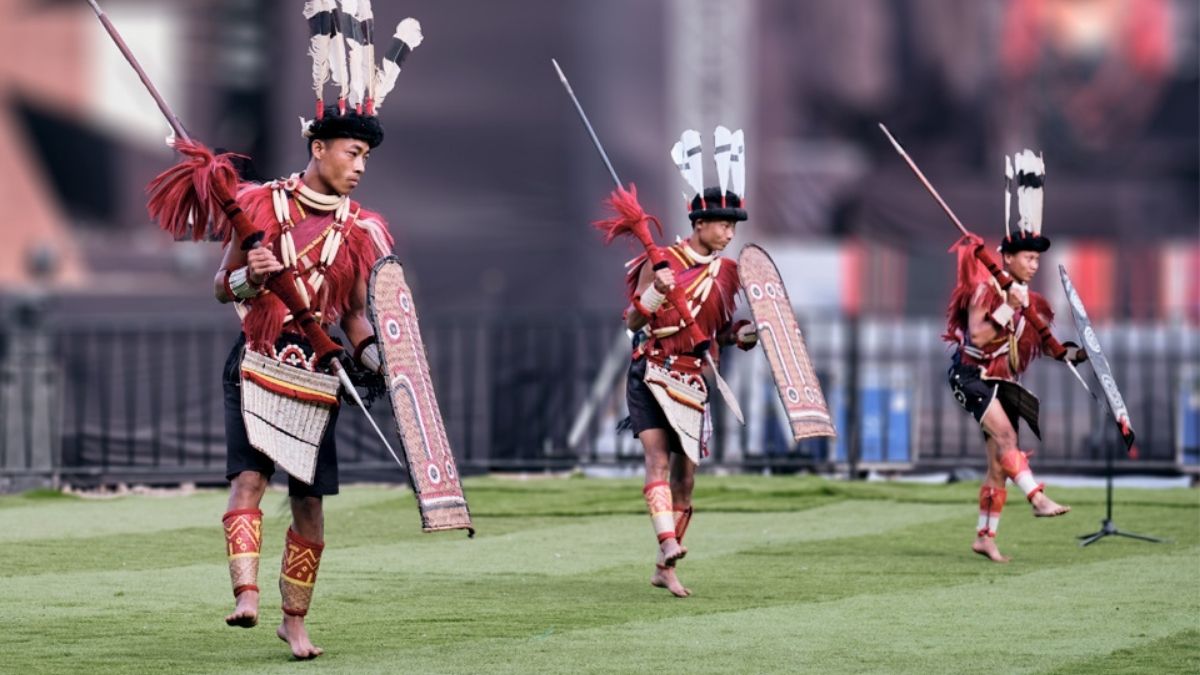
Villagers gather around ceremonial fires sharing food, songs and stories during the ritual
The celebration represents a period where physical labour gives way to community interaction, cultural expression and ritual bonding. It reflects values such as cooperation, hospitality, courage and respect for elders, which remain central within Ao society.
The festival also functions as an important space for preserving oral heritage. Songs, chants and stories performed during Moatsu carry memories of migration, ancestry, village history and clan traditions across generations.
The ceremonial use of fire, food and shared gatherings symbolises purification, continuity and social equality. Community feasts reinforce kinship ties, while collective participation strengthens village identity and solidarity.
Moatsu serves multiple cultural purposes. It celebrates agricultural life while preserving indigenous customs, reinforces intergenerational connections and sustains traditional art forms through performance and participation.
Also Read: Exploring North East India’s music festivals
Key elements of the festival
Moatsu is marked by a series of communal rituals and performances that combine celebration, oral tradition and ceremonial symbolism. Folk songs and warrior dances form a major part of the festivities, often performed in traditional attire featuring handwoven shawls, bead ornaments and ceremonial accessories.
The Sangpangtu ceremony remains one of the defining features of the festival. Villagers gather around large ceremonial fires where food, meat and rice beer are shared collectively. Elders narrate stories, discuss community matters and perform songs that preserve ancestral memory and cultural identity.
Music and rhythmic performances create the atmosphere of the festival. Traditional instruments, chants and coordinated dances transform village spaces into centres of communal celebration and cultural expression.
Feasting during Moatsu typically includes a range of traditional Ao Naga foods prepared at the household and village level. Common dishes include smoked pork cooked with bamboo shoot, rice served in various forms, boiled or fermented leafy greens, local herbs and chutneys, and simple meat preparations using chicken, pork or beef depending on availability and custom.
A key feature is rice beer, locally brewed and shared during gatherings as part of hospitality and communal bonding. Other traditional elements often include fermented bamboo shoot preparations and seasonal forest produce that reflect the agrarian and foraging traditions of the Ao community.
Games, informal competitions and social gatherings are also organised during the festival, allowing younger generations to participate in community traditions while strengthening relationships within the village structure.
Each element of Moatsu reflects the interconnected relationship between agriculture, memory, ritual and social identity within Ao Naga culture.
Preparation and community participation
Preparation for Moatsu begins well before the festival itself and involves extensive community coordination. Villagers complete agricultural responsibilities in advance, while families prepare food, ceremonial clothing and gathering spaces for celebrations.
Elders play an important role in guiding rituals, maintaining oral traditions and overseeing cultural practices associated with the festival. Youth groups participate in rehearsals for folk performances, dances and songs, ensuring the continuation of traditional knowledge.
Women contribute significantly through food preparation, weaving traditional attire and organising ceremonial arrangements, while men often coordinate communal activities and performances.
The festival atmosphere is shaped by continuous interaction, music, storytelling and shared meals, creating an immersive environment centred on participation rather than spectatorship.
Unlike highly commercialised cultural festivals, Moatsu retains a strong village-centred structure where collective involvement remains more important than formal display.
Also Read: Humayunpur: Where Delhi meets North-East, one meal at a time
Community identity and shared cultural values
Moatsu reflects several characteristics that remain central to Ao Naga society. Agricultural dependence, collective labour and strong clan-based relationships continue to shape the identity of communities that celebrate the festival.
The celebration reinforces social equality through communal eating and shared participation. Respect for elders, oral transmission of knowledge and preservation of ancestral customs remain deeply embedded within the festival’s structure.
Communities participating in Moatsu also share a strong tradition of oral culture, where songs and storytelling function as repositories of historical memory and identity.
The festival demonstrates how indigenous traditions continue to survive within a modern and increasingly urbanised society. Even among younger Ao Nagas living outside traditional villages, Moatsu remains an important cultural connection to ancestry and community belonging.
Rather than functioning only as entertainment, the festival acts as a cultural bridge between generations, reinforcing continuity through participation and shared memory.