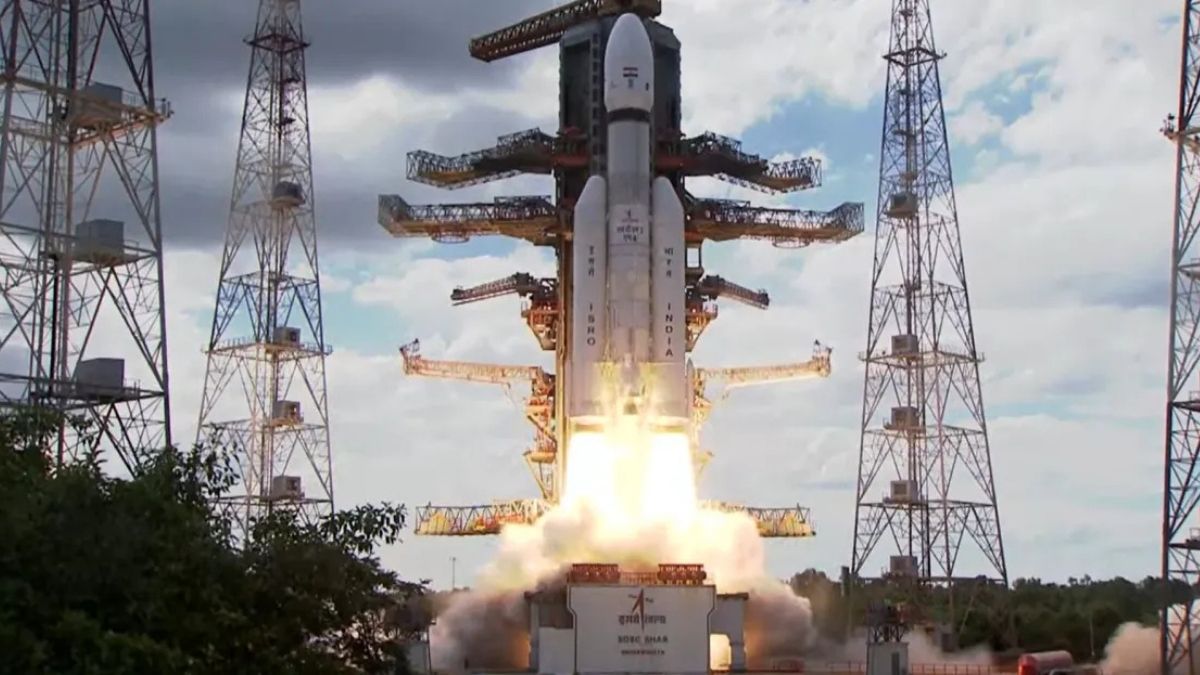
India’s Chandrayaan-3 was launched on July 14, 2023, aboard the LVM3 from the Satish Dhawan Space Centre in Sriharikota (Photo: ISRO)
On July 18, Skyroot Aerospace, a private firm successfully launched Vikram-1, a a four-stage small satellite launch vehicle, marking the country’s first space launch by a private firm from Sriharikota, a launch-pad owned and operated by the Indian Space Research Organisation (ISRO), the national spatial agency and which has single-handedly put India amongst the handful of countries with their own independent and well-developed space programmes.
Skyroot Aerospace’s successful orbital launch was welcomed by many, including the government, which hailed it as an example of its drive to expand the space sector in the country.
While the government was still cheering Skyroot, another news came and which should have sent alarm bells ringing all over the government. That ISRO was facing an unprecedented exodus of scientists, raising serious concerns over the future of the country’s flagship space programme.
Encouraged by policy reforms that opened the sector to private participation, space startups are aggressively hiring experienced ISRO scientists by offering significantly higher salaries, faster career growth and greater research freedom. However, critics argue that while the government has invested heavily in building a commercial space ecosystem, it has failed to protect the scientific workforce that built India’s space capabilities, risking the erosion of decades of institutional knowledge and expertise.
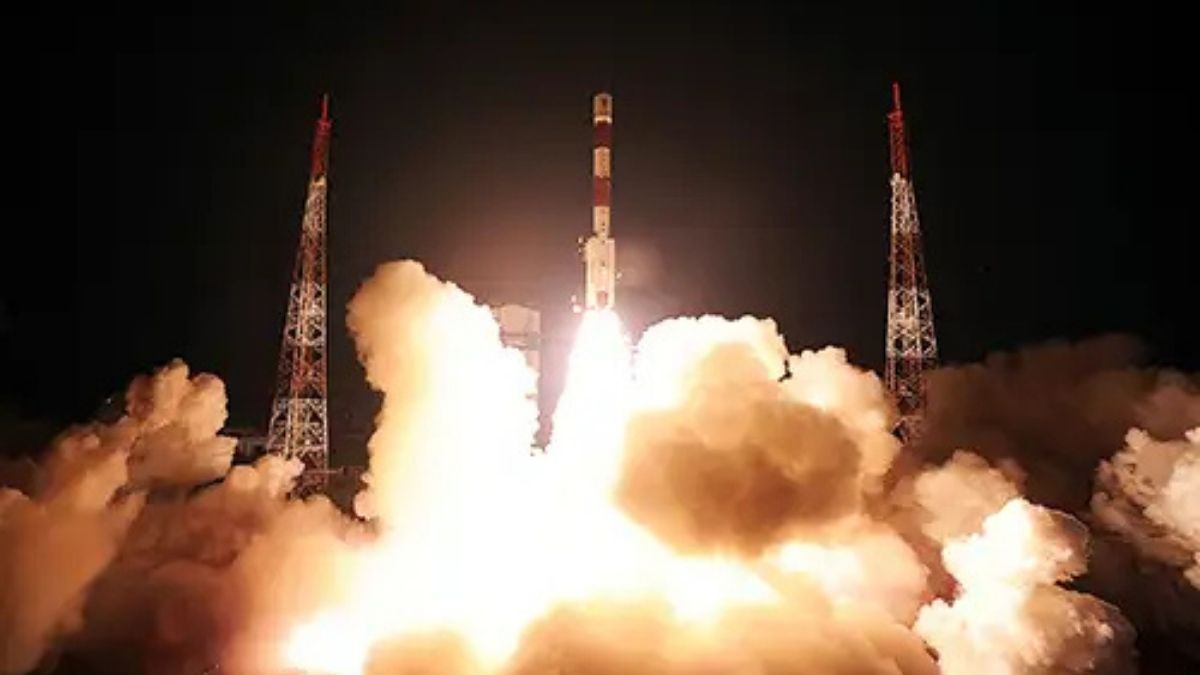
PSLV-C22 carrying IRNSS-1A, India’s first dedicated navigation satellite, also lifts off from the Satish Dhawan Space Centre, Sriharikota, on July 1, 2013 (Photo: ISRO)
Also Read: ISRO successfully launches high thrust cryogenic engine
According to reports, nearly 100-120 scientists and technical personnel have resigned or opted for voluntary retirement from ISRO in recent months alone. Around 80 of them belonged to the U R Rao Satellite Centre (URSC) in Bengaluru, responsible for building India’s satellites, while over 20 resigned from the Vikram Sarabhai Space Centre (VSSC) in Thiruvananthapuram, the country’s principal launch vehicle development centre.
The latest resignations represent the sharpest phase of a growing brain drain that has steadily intensified over the past decade.
Government data shows that 289 scientists resigned between 2012 and 2017, followed by another 381 between 2018 and 2022. After the Indian Space Policy 2023 came into force, another 38 scientists left between 2023 and mid-2024.
Overall, nearly 700 scientists are estimated to have exited ISRO between 2012 and 2024, with 2026 witnessing the most concentrated wave so far.
Unlike previous years, the latest departures have disproportionately affected ISRO’s most strategically important centres. Historically, the Vikram Sarabhai Space Centre and the Space Applications Centre recorded the highest attrition, while the U R Rao Satellite Centre experienced relatively lower turnover. That trend has now reversed, with URSC emerging as the worst affected centre, signalling that even India’s core satellite development capability is no longer insulated from the pull of private industry.
Also Read:ISRO to test kerosene as a flight fuel by 2021
The departures are not limited to junior scientists. Among those who resigned was Victor Joseph, Project Director of the LVM-3 launch vehicle that is expected to carry Indian astronauts under the Gaganyaan mission. Former ISRO Chairman Dr S Somanath, who led Chandrayaan-3 and Aditya-L1, recently joined private launch startup Agnikul Cosmos as an observer on its board, while Skyroot Aerospace itself was founded in 2018 by two former ISRO scientists.
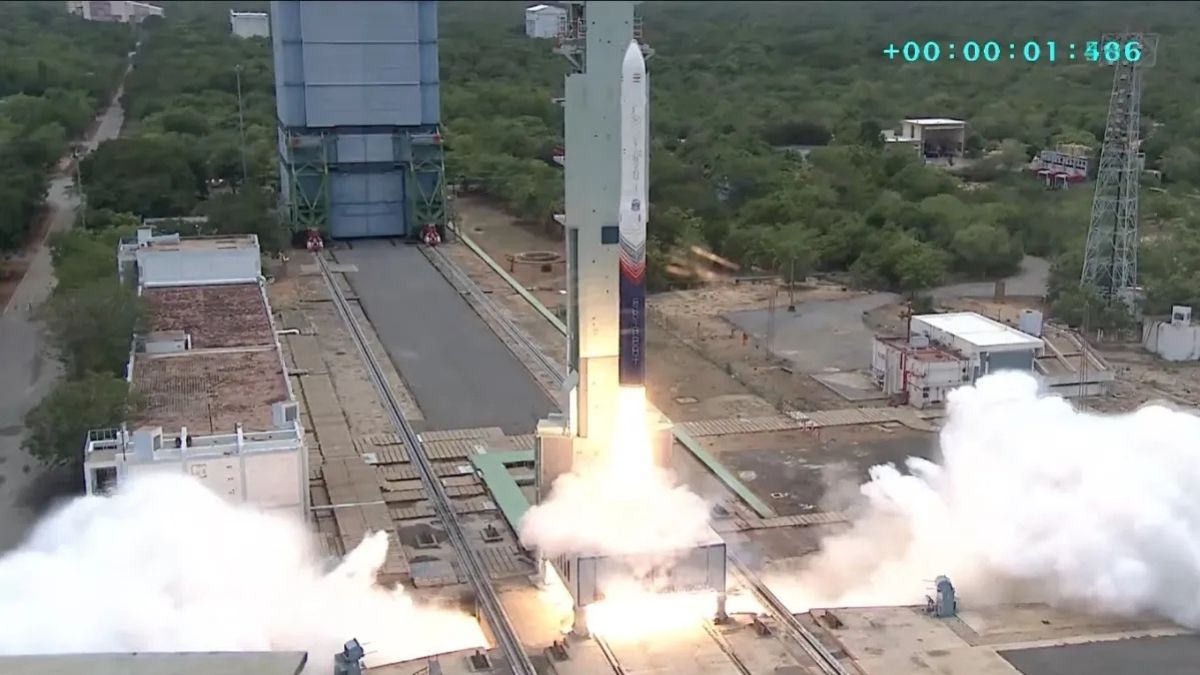
Skyroot Aerospace’s Vikram-1 rocket was launched from the ISRO-operated Sriharikota (Photo: Skyroot Aerospace)
Critics say the exodus was the direct consequence of government policy. The Indian Space Policy 2023 and the creation of IN-SPACe, which opened India’s space sector to private participation, leading to the emergence of over 400 space startups and attracting nearly USD 500 million in investments. Backed by venture capital funds and other investors, the newbies such as Skyroot Aerospace, Agnikul Cosmos, Pixxel, Bellatrix Aerospace, Dhruva Space and Digantara are now competing directly with ISRO for experienced talent, offering substantially higher salaries, employee stock ownership plans, quicker promotions and greater freedom to pursue innovative research.
While encouraging private participation was necessary to build a globally competitive space industry, experts argue that the government failed to introduce a parallel strategy to retain scientists within ISRO. No major reforms were undertaken to improve pay structures, accelerate promotions, modernise working conditions or create incentives for experienced researchers to remain in public service. As a result, the agency that nurtured India’s space programme has increasingly become a training ground, where the private companies motivated solely by profit, come and pluck talent at will.
The consequences extend beyond recruitment numbers. Space missions require years of specialised knowledge, continuity and experience. Scientists working on launch vehicles, satellites, propulsion systems and planetary exploration carry institutional expertise accumulated over decades, knowledge that cannot simply be replaced through fresh recruitment. Losing experienced personnel midway through strategic missions such as Gaganyaan raises concerns about project continuity, mentoring of younger scientists and the long-term technological capabilities of the organisation.
Also Read: Lifting Off: 5 heaviest operational rockets powering global space race
The exodus comes even as ISRO continues to struggle with manpower shortages. According to information tabled in the Lok Sabha by Union Minister Jitendra Singh, the organisation has a sanctioned strength of 18,142 employees but faces vacancies of 2,613 posts, including 1,636 vacancies in scientific and technical positions. Recruitment has been initiated for many of these posts, but hundreds remain unfilled.
The government has dismissed suggestions of an institutional crisis. Singh has maintained that “many have gone, many have come”, while ISRO Chairman V Narayanan has described the departures as normal organisational attrition. However, the Department of Space itself appeared to acknowledge the seriousness of the situation by issuing a July 14, 2026 order withdrawing the powers of ISRO centre directors to approve resignations of Group A scientists working on critical missions. Such cases must now receive final approval from the Department of Space, indicating growing concern over the loss of experienced personnel.
Ironically, the success of India’s private space industry continues to depend heavily on ISRO. Skyroot’s Vikram-1 mission relied on ISRO’s launch facilities, testing infrastructure, safety systems and technical support, demonstrating that the commercial ecosystem being promoted by the government still rests on capabilities painstakingly built by the national space agency over decades.