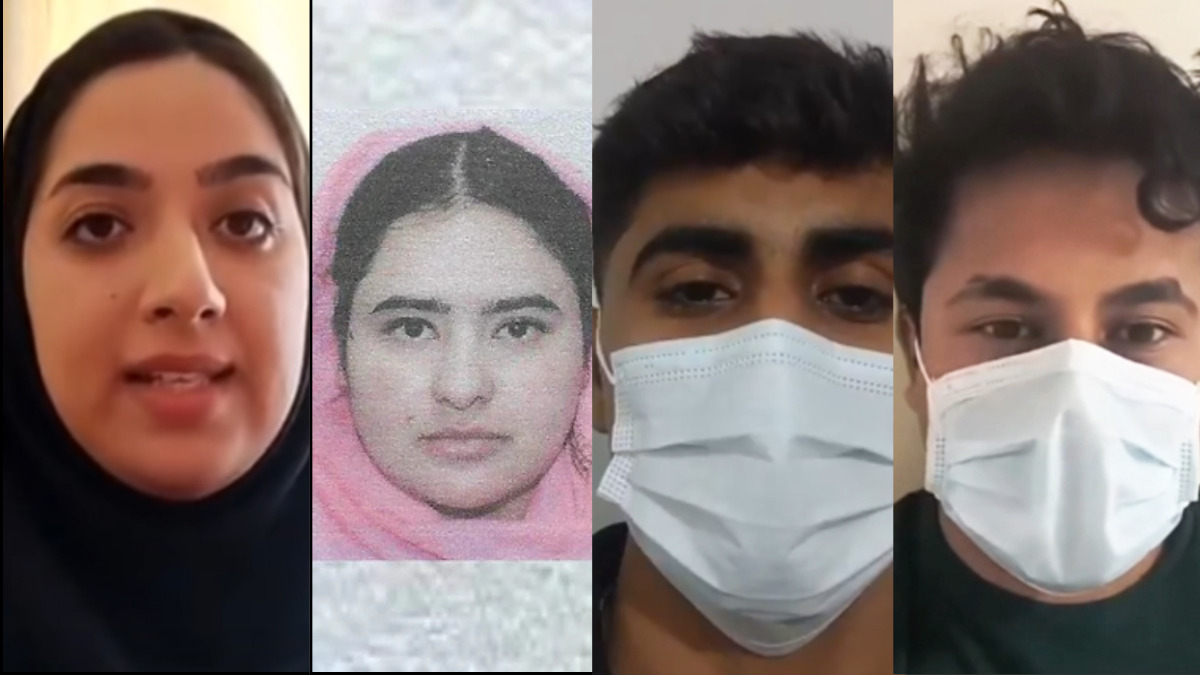
Indians mainly students who remain stranded in Iran say they have not had any news on when or if they can be safely brought back to India
Ever since the United States and Israel began unprovoked attacks on Iran, news headlines and social media in India have been entirely focussed on the fate of the millions of Indian diaspora who live in the Gulf Cooperation Council (GCC) countries and the thousands of visitors who have been stuck in the region.
However, away from the media glare and perhaps the government’s attention, too, there are thousands of Indians, mainly students, who have been stranded in Iran as well and they say they are feeling completely abandoned as they remain clueless about their fate, in the absence of any news about starting rescue flights to help them return to India.
While evacuation efforts have begun from several Gulf hubs, those inside Iran say there is still no clarity on when or how they will be brought home. For many students and their families in India, each passing day without an evacuation plan has only deepened anxiety.
Also Read: Indian diaspora caught in crossfire of xenophobia
According to estimates, around 1,200 Indian students are in Iran, most of them pursuing medical education at universities across cities such as Tehran, Qom, Urmia and Shiraz. Many of these students are from Jammu and Kashmir, with others from states such as Kerala, Karnataka and Uttar Pradesh.
With the conflict intensifying and airspace restrictions tightening across the region, these students now find themselves trapped in a country witnessing regular airstrikes and retaliatory attacks.
Families back home say communication with their children has also become increasingly difficult due to internet disruptions in several parts of Iran.
“We have barely been able to speak to her. Yesterday, she managed to call for just a minute or two. She was crying on the phone and said they could hear blasts nearby. The line kept breaking and before we could even ask properly about her safety, the call got disconnected. Since then we have not heard from her again. Our parents are extremely worried my mother has been crying constantly and none of us have been able to sleep for days. Every time the phone rings, we panic hoping it is her. We keep watching the news and it only makes us more scared,” Altaf Khan, brother of Sobiya Khan, an Indian student currently studying MBBS in Iran, tells Media India Group.
Students themselves describe living in constant fear as explosions and sirens have become part of daily life.
At the Urmia University of Medical Sciences in Iran’s West Azerbaijan province, final-year MBBS student Ayesha Mir says nights have become especially terrifying.
“I am here at Urmia University of Medical Sciences and I am in the last year of my MBBS. The situation here is getting worse. The internet is barely working sometimes it doesn’t work at all. We are completely cut off. We don’t have proper internet access and we are hearing bomb explosions almost every 15 minutes. It is very bad here. Honestly, I don’t know whether we will survive the war or not,” Mir tells Media India Group.
For many students, the crisis is compounded by the fact that they had initially been advised to leave Iran shortly before the conflict escalated but were unable to do so because of academic restrictions.
“Our mental health is very disturbed. A few days before the war started, there was an advisory asking us to leave Iran. But our university didn’t cooperate. They told us that if we left, we would fail. So we stayed. Now we are locked here. Universities, hospitals everything has been closed for the past 15 days,” she says. Despite the fear, Mir adds that students have remained in contact with the Indian Embassy in Iran.
“We are very thankful to the Indian embassy. We are in direct contact with them. Whenever we have confusion or fear, they pick up our calls. But right now they are also helpless because the airspace is closed from every side. We are not able to evacuate. We just hope things get better,” she adds.
The absence of a safe evacuation corridor has become the biggest obstacle. Much of Iran’s airspace has either been restricted or remains unsafe for civilian flights as the confrontation between the United States, Israel and Iran continues to escalate.
Also Read: Indian diaspora concerned over Bulli Bai, Sulli Deals and Haridwar hate assembly
Meanwhile, thousands of kilometres away, families in Kashmir and other parts of India remain glued to television screens and social media, desperately searching for updates.
For them, the crisis is not a geopolitical confrontation unfolding on distant maps, but a deeply personal fear about the safety of their children.
As the conflict enters its seventh day, many students say they feel increasingly forgotten amid the global focus on the broader regional crisis and evacuation efforts in Gulf countries.
“We see news about people being rescued from other places, but our brother and sisters are still stuck there. Every day we wait for an announcement about evacuation flights, but nothing happens. All we want is to come back home safely,” Khan adds.
Until the government finds a way to evacuate them, hundreds of Indian students across Iran continue to wait caught between closed airspace, an escalating war and the hope that help will arrive before the situation worsens.
Amid growing anxiety among families, the Jammu & Kashmir Students Association (JKSA) has also urged the Government of India to take immediate steps to ensure the safety of Indian students stranded in Iran. In a statement, the Association appealed to Prime Minister Narendra Modi and External Affairs Minister S Jaishankar to facilitate the relocation of Indian students, including hundreds from Jammu and Kashmir, to safer locations until a full-scale evacuation operation can be launched.
JKSA National Convenor Nasir Khuehami said the continuing airstrikes and escalating hostilities have created widespread panic among students, many of whom have reported severe fear, uncertainty and distress while remaining trapped in conflict-affected areas.
The Association said several universities in affected regions have advised students to vacate campuses as a precaution, but airspace disruptions and security restrictions have made it nearly impossible for them to travel or find safer accommodation. It urged the Centre to coordinate closely with the Ministry of External Affairs and the Indian Embassy in Tehran to relocate students to safer zones until evacuation flights become possible.
Meanwhile, parents in Srinagar and other parts of Jammu and Kashmir have also appealed to the government to ensure the safe return of their children studying in Iran, particularly in cities like Tehran that have witnessed repeated strikes, calling for urgent intervention to bring them back home.
Though evacuation flights have begun in the GCC, the anxiety level of the Indian communities there has not come down. Indians working across the Gulf say the escalating conflict has created an atmosphere of constant fear and uncertainty.
In Kuwait, 29-year-old Waseem Ahmed, who works at a hotel in Kuwait City, says the past few days have been deeply unsettling for him and his wife.
“We came here hoping to build a stable life. I got this job in a hotel and everything was going well. I even brought my wife here just a month ago after our marriage because I thought the Gulf would be a safe place for us to start our life together,” Ahmed tells Media India Group.
“But now the atmosphere has completely changed. We hardly step outside the house. Every few minutes we hear sounds that feel like blasts or loud explosions somewhere far away. The tension in the air is very real. My wife gets scared every time she hears a loud sound. She keeps asking me what will happen to us,” he says.
Ahmed adds that the uncertainty surrounding flights and travel restrictions has only increased their anxiety.
“We want to return to India until the situation becomes normal. Safety is more important than anything right now. There is confusion everywhere and we are mostly relying on news updates and WhatsApp groups to understand what is happening,” he says.