
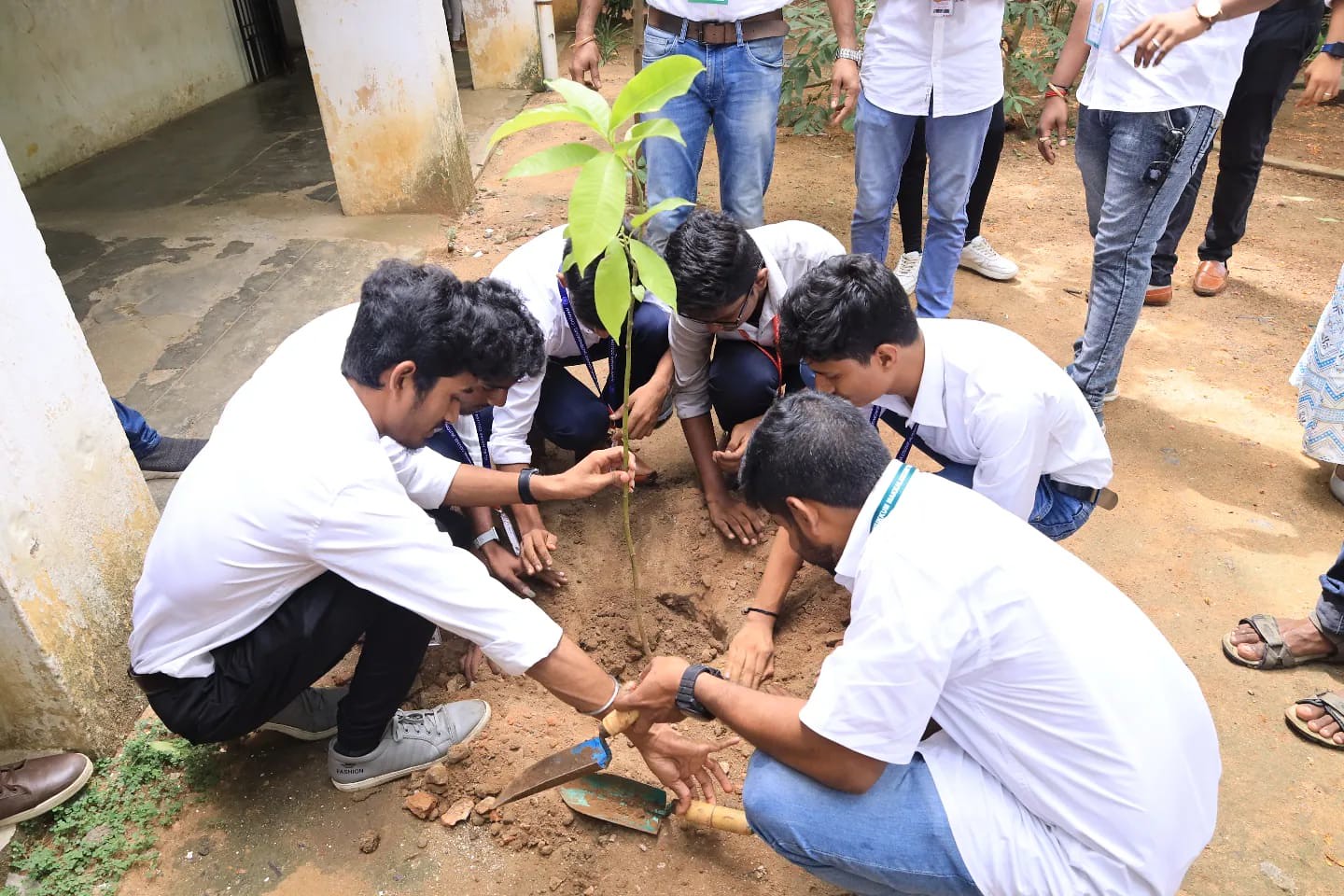
Across the country, particularly in urban and semi-urban areas, community service has grown into a vital mechanism for fostering social cohesion, empowerment and civic responsibility (Photo: Guru Nanak College)
Community service projects are organised efforts aimed at improving the well-being of neighbourhoods by addressing pressing social issues such as hunger, environmental degradation, education gaps and healthcare shortcomings. Typically led by local volunteers, schools and community organisations, these initiatives range from neighbourhood clean-ups and food drives to tutoring programmes and health awareness campaigns.
Across the country, particularly in urban and semi-urban areas, community service has grown into a vital mechanism for fostering social cohesion, empowerment and civic responsibility.
Data from recent surveys indicate that approximately 65 pc of schools now incorporate some form of community service into their curriculum or extracurricular activities. This reflects a growing recognition of the educational value of community engagement beyond classroom walls.
For example, in East Delhi, community groups have organised regular clean-up drives that have resulted in a noticeable reduction of litter in public spaces, improving environmental health and creating safer, more pleasant neighbourhoods. Food drives in various districts have helped distribute thousands of meals to underprivileged families, thereby directly helping in combatting local food insecurity. Health awareness campaigns focussed on hygiene, vaccination and nutrition have improved public health indices in several regions, highlighting the tangible impact of these projects on community resilience.
Volunteer-led tutoring programmes have shown promising outcomes in bridging educational disparities. In 2023, a report by the National Education Foundation, an independent organisation based in Washington DC, noted that students participating in peer tutoring or volunteer-led coaching sessions improved their academic performance by an average of 12 pc compared to non-participants.
However, while the immediate benefits of community service are clear, a more nuanced perspective reveals challenges that complicate these successes. One critical question remains largely unaddressed that is what becomes of this spirit of service and collaboration once individuals graduate from school or college? Does the sense of civic engagement dissipate as people transition into adulthood, or is it internalised and sustained as a lifelong value?
“While it is heartening to see students so dedicated during their school years, the enthusiasm often wanes after they move on. Many struggle to find the time or motivation amidst higher studies and work pressures. There is a lack of structured support or platforms for young adults to continue their involvement. We need to rethink how to keep this momentum going beyond formal education,” Bhupinder Sharma, a high-school teacher based in Delhi, tells Media India Group.
Reflecting the youth perspective, Riya Meena, a Grade XII student from Rajasthan tells Media India Group that she actively participates in local food drives and tutoring initiatives.
“Community projects have opened my eyes to the problems around me and given me a purpose. But I worry about what will happen after I finish school. It feels like all the energy could be lost without any clear way to continue helping others in the future,” Meena adds.
This gap highlights a systemic issue. While community service is often integrated into school programmes, there is scant structured encouragement or infrastructure for ongoing involvement once students graduate. The focus tends to be on short-term impact rather than sustainable, long-term engagement. Moreover, community organisations frequently rely on transient volunteer bases, making continuity and consistent impact difficult.
Research supports this concern. A 2022 longitudinal study by the Civic Engagement Institute found that nearly 70 pc of youth involved in community service during high school reduced their voluntary activities significantly within three years post-graduation. Barriers cited included lack of time, absence of supportive networks, and diminished opportunities for meaningful participation. Without strategic cultivation of civic habits, the initial enthusiasm triggered by school projects risks fading over time.
Another overlooked aspect is the socio-economic barrier many young adults face. For many, entering the workforce or pursuing higher studies leaves little room for unpaid community work. In areas where financial constraints are significant, prioritising personal economic stability often supersedes volunteering interests.
Furthermore, the impact of community service projects, as positive as it is, sometimes remains superficial without addressing core systemic challenges. Cleaning neighbourhoods or delivering meals, while commendable, do not substitute for broader policy attention on urban planning, social welfare or healthcare accessibility. Community service should complement, not replace, institutional responsibility.
“Schools and colleges must develop alumni networks focused on civic engagement, providing graduates with platforms and mentorship opportunities to continue their involvement. Local governments and NGOs need to create flexible, scalable volunteer programmes that integrate into community life beyond educational institutions. Awareness campaigns should highlight community service not as a temporary activity but as a lifelong commitment valuable to personal growth and societal progress,” Sharma adds.
Encouraging young adults to view community engagement as part of their identity could strengthen social capital and reinforce democratic participation.
“We should also introduce community service as a credit-earning activity in universities and professional institutes to incentivise participation. Recognition, skills development, and networking can motivate continued involvement,” says Sharma.
