
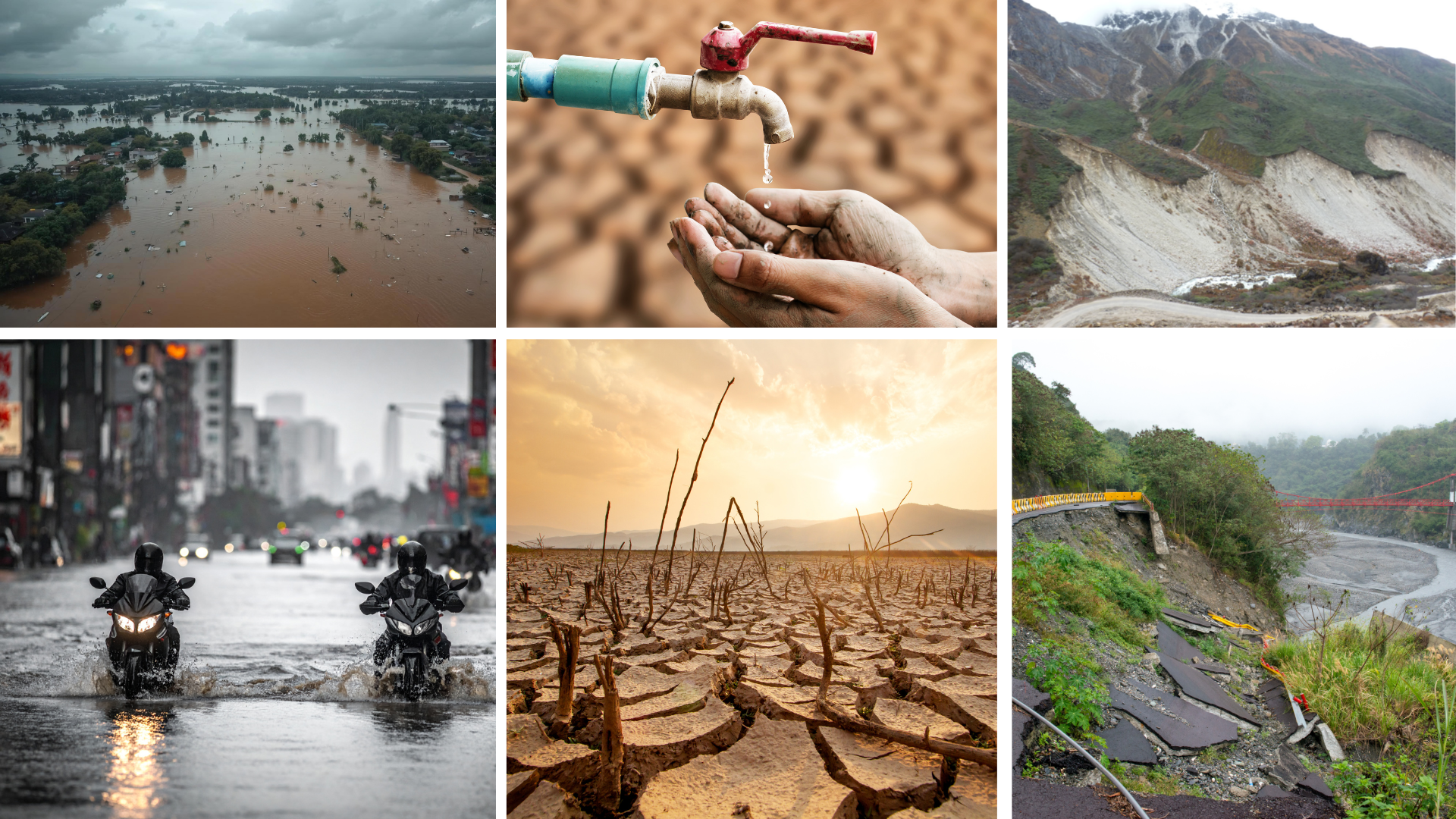
Climate-related disasters like floods, droughts and landslides caused heavy lives and economic toll
Extreme weather events continued to take a heavy human and economic toll across the world in 2025, with India and parts of Asia among the worst affected regions.
According to the UK-based NGO Christian Aid, climate-driven disasters such as heatwaves, floods, droughts, wildfires and storms caused losses running into over USD 120 billion globally in 2025, amongst the highest-ever.
The organisation’s Counting the Cost 2025 report highlights how extreme rainfall and flooding events dominated the list of costliest disasters, particularly in South Asia.
The report adds that, storms and flooding across South and Southeast Asia in November caused about USD 25 billion in damage and more than 1,750 deaths in Thailand, Indonesia, Sri Lanka, Vietnam and Malaysia. Flooding and extreme rainfall in China from June to August caused approximately USD 11.7 billion in economic losses and at least 30 deaths.
In India and Pakistan, flooding and extreme rainfall caused up to USD 6 billion in economic damage and were linked with more than 1,860 fatalities combined. It also affected more than 7 million people in Pakistan.
The report further states that typhoons in the Philippines caused over USD 5 billion in damage and displaced an estimated 1.4 million people.
Also Read: Cities in crisis: Climate change threatens future of urban India
India: rising impact of extreme weather
Besides Christian Aid, other organisations have also warned of high costs that India is paying due to extreme weather events, with a sharp rise in casualties, highlighting a worsening climate change.
According to the Climate India 2025 report by Centre for Science and Environment, a Delhi-based environment research centre, fatalities due to extreme weather in India increased by 48 pc with 4,064 reported across the country this year. The monsoon season alone accounted for 3,007 of these, making it the deadliest period of the year. It says that over the past four years, the number of lives lost to extreme weather in India has risen by nearly 50 pc. The report, based on nearly 1,500 days of daily monitoring, tracks seasonal trends in extreme weather events in India since 2022.
The report also says that the year 2025 also stood out for breaking long-standing climate records in India. January was the fifth driest month since 1901, while February emerged as the warmest in 124 years. September recorded the seventh-highest mean temperature, with minimum temperatures ranking fifth highest on record.
According to CSE, extreme weather events were observed on 99 pc of days during the first nine months of the year, including heatwaves, cold waves, lightning, storms, heavy rain, floods and landslides. These events collectively had a severe impact, claiming 4,064 lives, affecting 9.47 million hectares of crops and destroying 99,533 houses.
Also Read: Cement factories & climate change threaten saffron cultivation in Kashmir
It adds that the human and agricultural impact of extreme weather in 2025 varied sharply across Indian states. Madhya Pradesh recorded the highest number of fatalities at 532, followed by Andhra Pradesh with 484 and Jharkhand with 478. Maharashtra was the worst affected in terms of agriculture, with 8.4 million hectares of cropped area damaged, followed by Punjab at 0.26 million hectares and Uttar Pradesh at 0.21 million hectares.
Regionally, North-West India, which includes Punjab, Himachal Pradesh and Uttarakhand, experienced the highest frequency of extreme weather events and reported the largest number of fatalities at 1,342, followed by central India with 1,093.
Lightning, floods and landslides have emerged as major hazards in India. Lightning and thunderstorms alone claimed 1,456 lives, while heavy rainfall, floods and landslides accounted for 2,440 fatalities, reflecting the growing intensity of monsoon-related disasters.
