
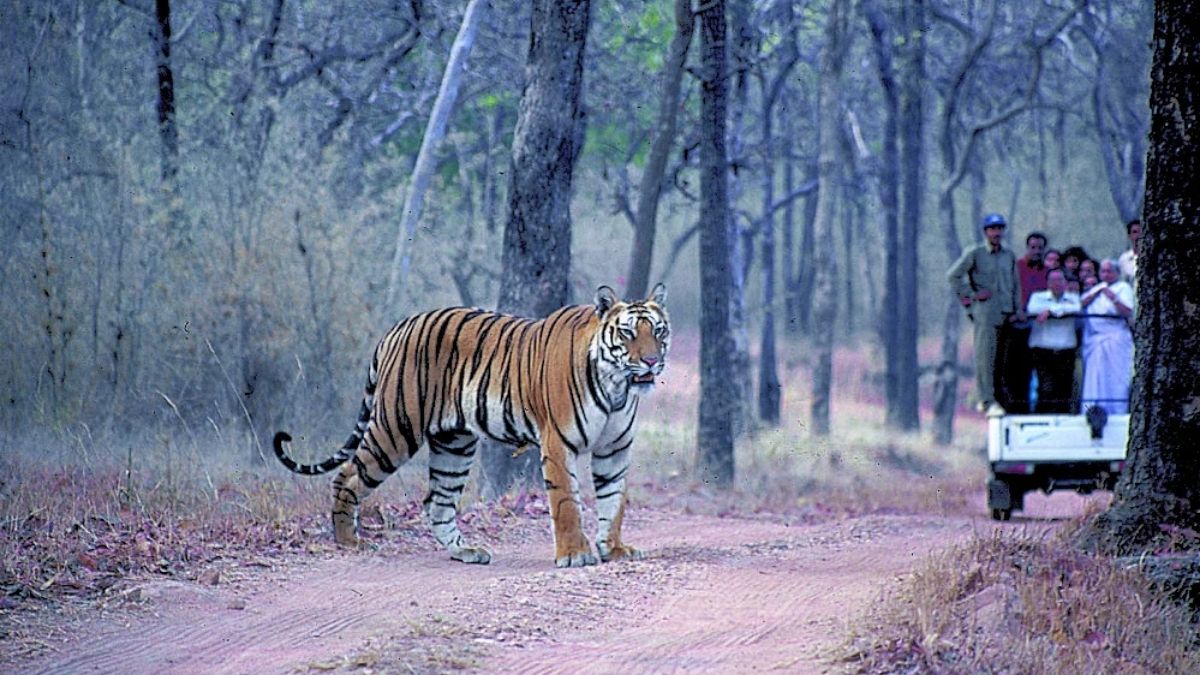
India ranks among the lowest performers in the Nature Conservation Index, reflecting ongoing challenges in biodiversity conservation efforts (Photo: Media India Group)
Amid rising climate risks and accelerating biodiversity loss worldwide, BioDB, a non-profit focussed on biodiversity data, in collaboration with the Goldman Sonnenfeldt School of Sustainability and Climate Change at Ben-Gurion University of the Negev in Israel, has released the Nature Conservation Index (NCI) 2025, introducing the Biodiversity Intactness Index (BII) to measure not only the extent of protected areas but also the ecological health and functional integrity of ecosystems.
India remains one of the worst performers in the world, ranking 172nd in a list of 180 countries, with a score of 46.5.
In a press statement, BioDB says that according to the latest findings BII evaluates the proportion of original biodiversity remaining within ecosystems compared to pre-industrial or pristine conditions. The report notes that while many countries have expanded protected areas, several ecosystems continue to suffer degradation due to invasive species, habitat fragmentation, pollution and wildlife loss, creating what the report terms as ‘paper parks’ that exist in policy but not in ecological reality.
It adds that the NCI 2025 evaluates countries through multiple pillars spanning land management, governance systems, threats to biodiversity and future environmental trends. The framework aims to help policymakers, conservationists and civil society organisations identify areas requiring immediate intervention while also promoting accountability and international collaboration.
As per the latest rankings, Estonia takes the top spot globally at rank 1 with a score of 69.9, followed by Denmark with a score of 68.7, Luxembourg at third with 68.4 and Australia at rank 4 with 67.1. Finland holds the 5th position with a score of 65.7, followed by Costa Rica at rank 6 with 64.9 and the United Kingdom at rank 7 with 63.4. Zimbabwe and New Zealand are placed at ranks 8 and 9 respectively, both receiving identical scores of 63.3, while Switzerland rounds out the top 10, with a score of 63.2, reflecting strong ecosystem protection, biodiversity governance and conservation policies.
Also Read: Nature Conservation Index (NCI) launched for biodiversity awareness
The report highlights the growing connection between biodiversity conservation and climate resilience, stating that healthy ecosystems such as forests, peatlands and wetlands function as critical carbon sinks that help slow atmospheric warming.
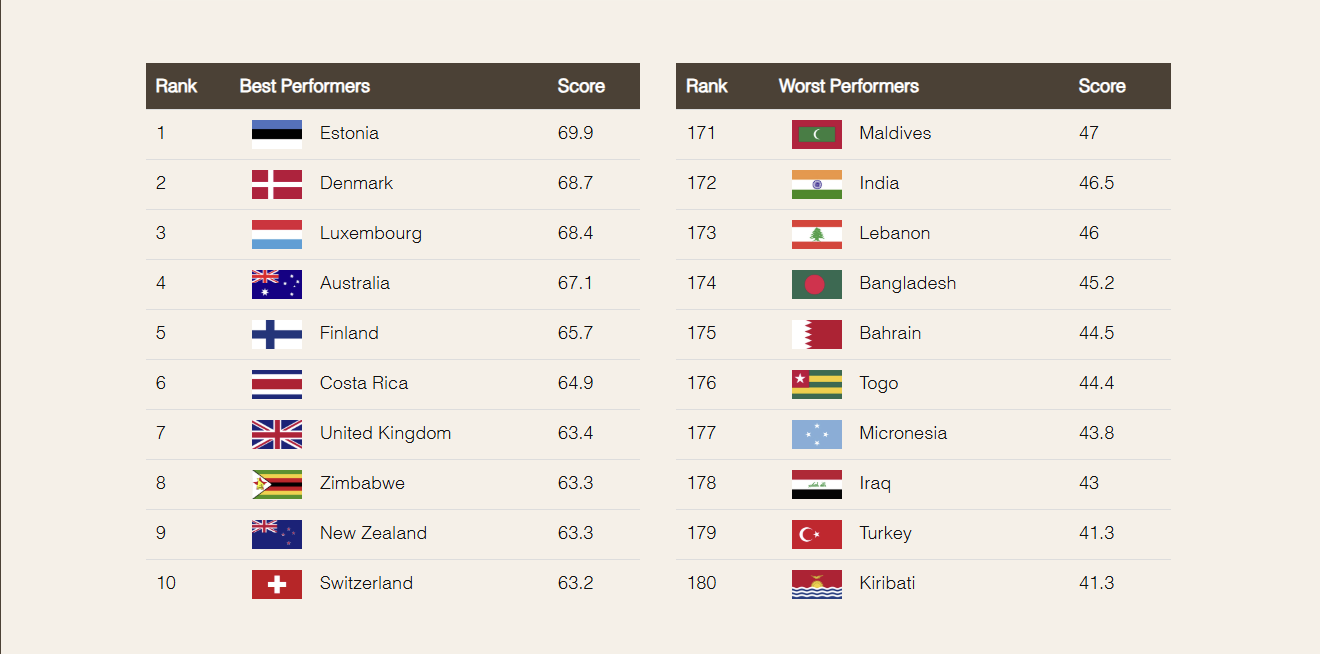
Nature Conservation Index 2025 highlights global differences in conservation performance
It further notes that biodiversity loss weakens ecosystem resilience against droughts, wildfires and extreme weather events, while climate change simultaneously accelerates habitat destruction and species decline.
The report positions nature conservation as a central pillar of global climate mitigation and sustainable development efforts. It also aligns with the Kunming-Montreal Global Biodiversity Framework and the international ‘30×30’ target under which nearly 200 countries have committed to protecting at least 30 pc of global land and oceans by 2030.
Among the lowest-performing countries, Maldives is positioned at rank 171 with a score of 47. Lebanon occupies rank 173 with a score of 46, followed by Bangladesh at rank 174 with 45.2, Bahrain at rank 175 with 44.5 and Togo at rank 176 with 44.4. Micronesia ranks 177 with a score of 43.8, while Iraq stands at rank 178 with a score of 43. Turkey and Kiribati anchor the bottom of the list, tied at ranks 179 and 180 respectively, both receiving a score of 41.3.
The report notes that many lower-ranked countries continue to face severe challenges linked to rapid urbanisation, industrial expansion, unsustainable land use, pollution, illegal wildlife trade and weak environmental governance frameworks.
The Nature Conservation Index 2025 further emphasises the need for strategic planning, measurable conservation outcomes and stronger international cooperation to effectively tackle the intensifying biodiversity crisis. The report identifies several global bright spots where innovative conservation approaches and restoration programmes are delivering positive ecological outcomes and can serve as models for other nations.
