

. As per data from January to September 2023, Delhi-NCR recorded an average Air Quality Index (AQI) of 167, the second-lowest in six years: CAQM
Indian statutory body, Commission for Air Quality Management (CAQM), that has the mandate to monitor air pollution in and around Delhi and the National Capital Region has reported a reduction exceeding 3.5 million metric tonnes of CO₂ emissions due to biomass co-firing by thermal power plants, accompanied by a significant decrease in stubble burning incidents.
In a press statement, CAQM says that since its establishment in 2020, it has overseen efforts to reduce emissions and stubble burning across Delhi-NCR and neighbouring states. As per data from January to September 2023, Delhi-NCR recorded an average Air Quality Index (AQI) of 167, the second-lowest in six years. In July 2025, the AQI stood at 79, the lowest for that month in 10 years. PM₁₀ levels fell by 15 pc compared to 2017-18, leading to the revocation of Graded Response Action Plan (GRAP) Stage III restrictions in early 2025.
It adds that measures targetting stubble burning in Punjab, Haryana, and Uttar Pradesh have resulted in fire counts in Punjab dropping from 71,304 in 2021 to 10,909 in 2024, and in Haryana from 6,829 to 1,315 in the same period, representing over 80 pc reduction in Punjab. Thermal power plants in Punjab have collaborated with farmers to use paddy straw as biomass fuel, reducing emissions and generating income.
CAQM says that the biomass co-firing mandate introduced in 2021 requires 11 thermal power plants in the NCR to co-fire between 5 pc and 10 pc biomass with coal. In June 2025, this requirement was extended to brick kilns in non-NCR areas of Punjab and Haryana, with a target of 50 pc co-firing by November 2028.
The commission says that as of mid-2025, 11 thermal power plants in the NCR and 71 plants nationwide have adopted biomass co-firing, saving 2.579 million MT and 3.477 million MT of CO₂, respectively. Approximately 1,650 industrial units in Delhi have shifted to cleaner fuels.
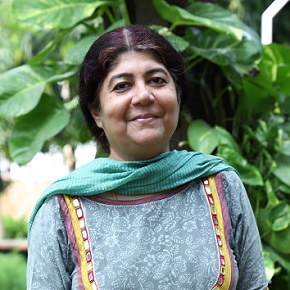
Ranjana Ray Chaudhuri
“CAQM’s impact in being able to address stubble burning and nudge incorporation of cleaner methods in areas such as thermal power generation has been a key step towards inculcating systematic changes. There has been a notable decline in stubble fires, PM levels, as well as AQI readings between 2021-2024. However, a long way still lies ahead of us. Particularly for thermal power plants Advanced combustion techniques are needed to reduce emissions, albeit retrofitting will be required and will come as an additional financial cost. The coal properties and current level of emissions in existing plants means that in addition carbon capture and storage (CCS) and waste energy recovery, integration with renewable energy are all strategies that have to be considered together, not as an either or strategy for reducing its contribution to rise in AQI. Large power plants and other Industries are continuous sources of emissions and that is why long-term strategies are required. Besides biomass supply chains need to be firmly established for all agri-residue so that nothing is wasted. The sugarcane industry is a true example of industrial symbiosis. CAQM may recommend baseline/ interim impact assessment to monitor positive impact on AQI because of the applied innovative interventions in thermal power plants,” says Ranjana Ray Chaudhuri, Associate Professor, Head, Department of Natural and Applied Sciences, Regional Water Studies, Advanced Studies, TERI.

Deepak Pareek
“By converting crop residue into biomass or biochar, farmers can unlock a powerful combination of economic and environmental gains. Biomass sales to industries like thermal power plants create new income streams, cut waste disposal costs, and replace polluting fossil fuels with renewable energy. Biochar production goes a step further, commanding premium prices in green markets while enriching soil, improving water retention, boosting yields, and locking away carbon to combat climate change. This shift turns agricultural byproducts from a liability into a driver of rural prosperity, sustainability, and climate action,” says Deepak Pareek, Agricultural Economist, Director, Global Trade, Indian Council for Food and Agriculture.
“CAQM’s steps to boost biomass pellet manufacturing, including torrefied pellets, through technology access, training, and subsidies have doubled co-firing in thermal power plants from 1.17 million tonnes in FY24 to 2.15 million tonnes by mid-FY26,” says Rajeev Sharma, environmentalist, former Vice Principal, DAV College, Hoshiarpur.
CAQM says that it has also tightened pollution control across sectors, introducing mandatory dust control procedures at construction sites, AI-based vehicle counting, drone surveillance, and citizen-led campaigns.
The statement says that CAQM model is being considered for replication in other cities with high pollution levels, such as Bengaluru, linking environmental regulation with economic activity through green jobs in biomass, clean fuels, and technology deployment.
