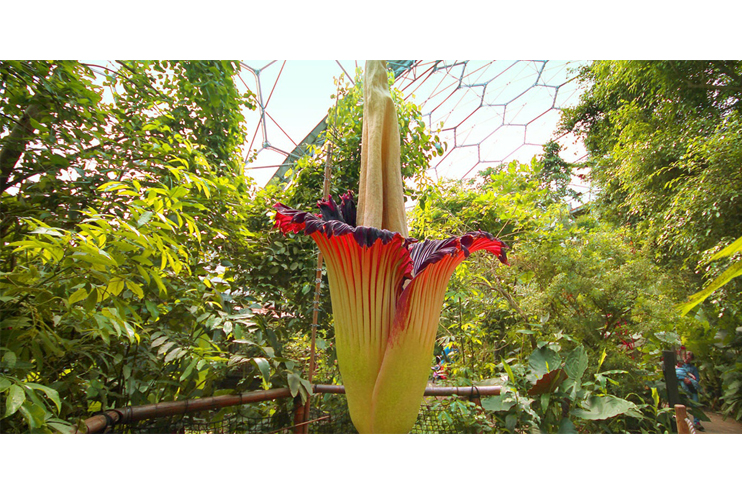

So far, 2016 seems to be a favourable year for the rare corpse flower that has bloomed at places all over the world. Recent bloom was at the Botanical Sanctuary in Kerala, India.
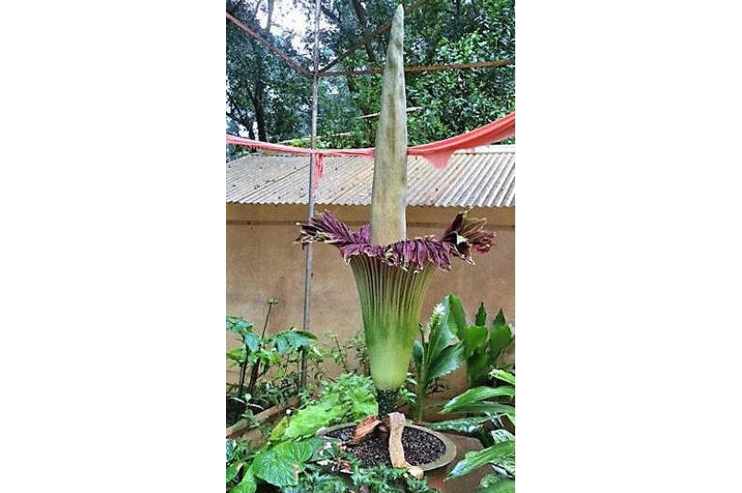

1. Kerala, India - July 18, 2016 : Fascinating appearance of the Corpse Flower in Kerala; first bloom since it was sowed nine years ago at Gurukula Botanical Sanctuary.
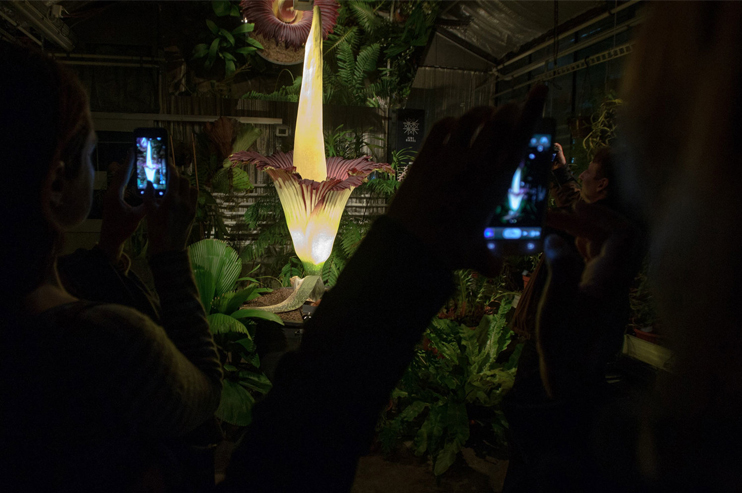

2. New York, United States - July, 2016 : The stinky stalk to bloom at New York Botanical Garden, after almost 80 years since a corpse flower bloomed at the sanctuary.
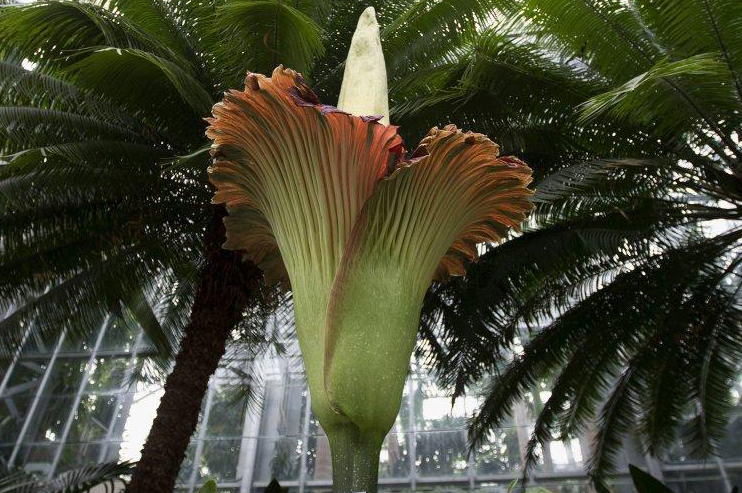

3. Texas, United States - May 1, 2016 : Titan Arum flowered at Moody Gardens in Galveston Island, Texas attracting a flock of people for a glimpse and sniff of the giant flower.
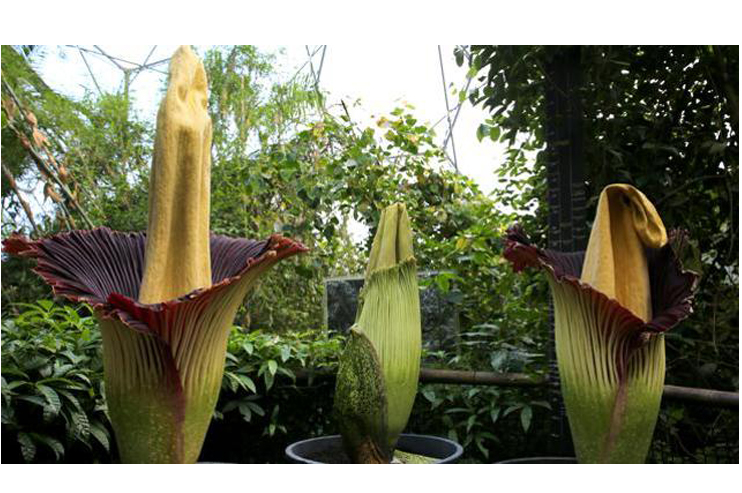
4. Eden Project, Cornwall, England, United Kingdom - May 2, 2016 : Two of the world’s biggest titan arums bloomed at the Eden Rainforest Biome in Cornwall, causing a sensation. There are three corpse flowers residing in the Biome.
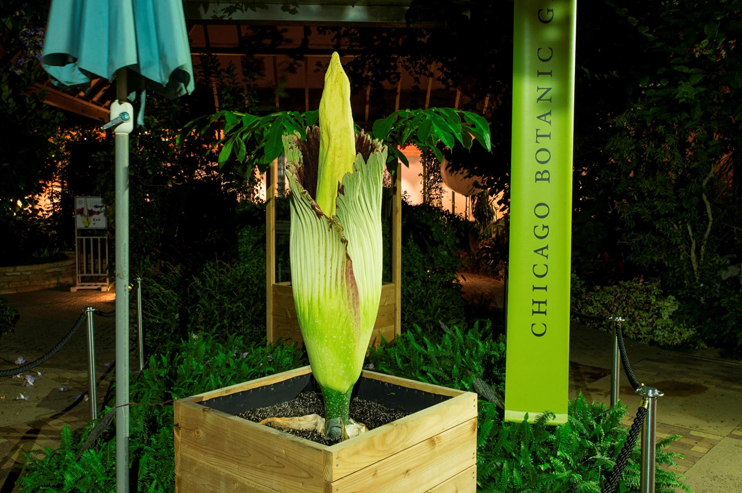

5. Chicago, United States - April 26, 2016 : A titan arum plant, named Sprout, bloomed at the Chicago Botanic Garden, and mellowed the notorious odour, which makes it unique.
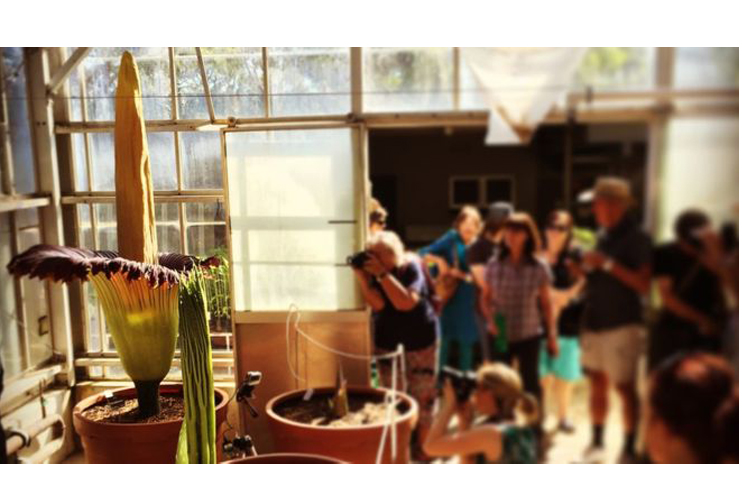

6. Adelaide, Australia - December 29, 2015 : A 2m-tall corpse flower, that has odour likened to rotten flesh, attracted thousands of people for a look of the spectacle at Mount Lofty Botanic Garden, Adelaide.
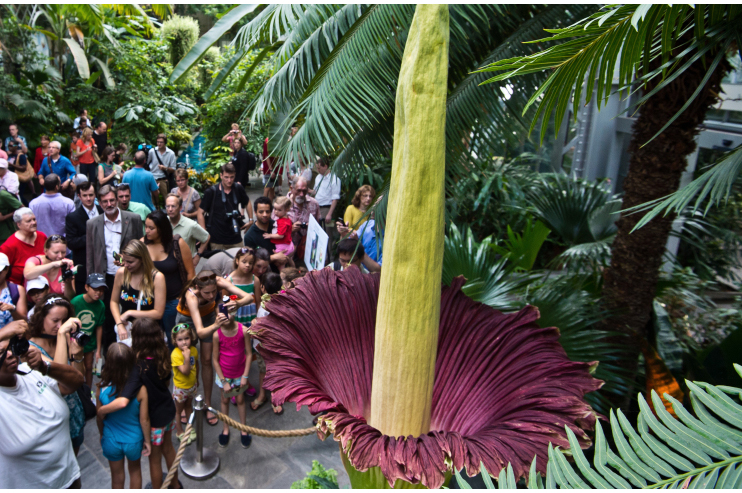

7. Denver, United States - August 19, 2015 : It became the most famous flower of Denver when the corpse flower bloomed at Denver Botanic Garden. The Garden received about 30,000 visitors in just 10 days - throughout the flower’s maturity process.


8. Tokyo, Japan - July 23, 2015 : The rare bloom of Titan Arum was displayed at the Jindai Botanical Gardens in the city of Chofu, Tokyo, Japan. The garden extended the opening hours to heed the hundreds of visitors coming to see the flower.
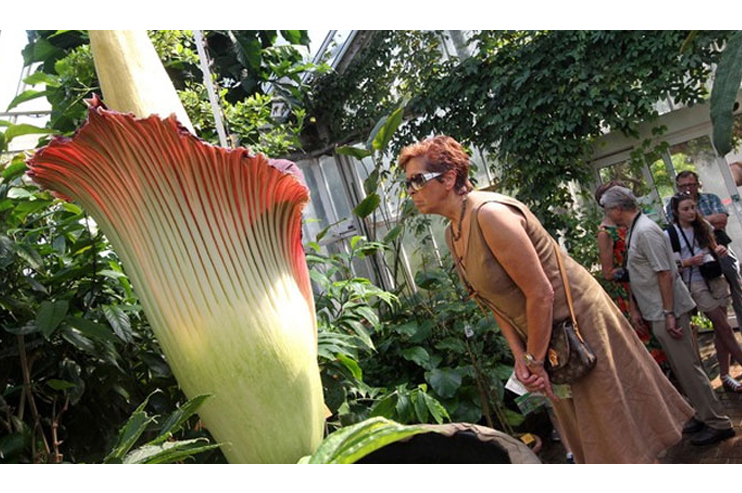

9. Brussels, Belgium, Western Europe - July 8, 2013 : Attracting 5,000 people to the National Botanic Garden of Belgium, ten times their usual draw, the corpse flower spreading its pungent aroma, was the attraction for a few days.
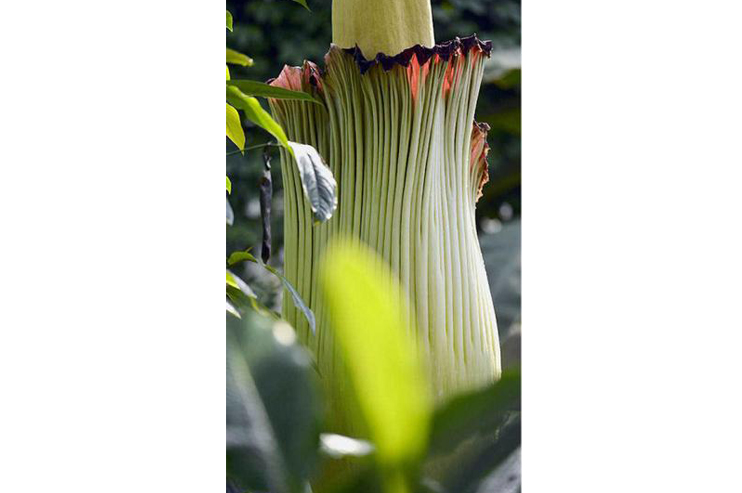

This beautiful, giant flower has a nauseating smell and attracts pollinators like dung beetles, flies, and other carnivorous insects, to ensure its survival as it cannot self-pollinate. It collapses after the pollination process completes. It blooms for merely few days.
World’s stinkiest flower, called so for its pungent smell resembling rotten flesh, bloomed at Gurukula Botanical Sanctuary and Garden in Alattil, North Wayanad, Kerala, India. It has grown out of a seed planted about nine years ago and stands tall at a height of almost two metres. Native to Sumatra, Indonesia, the flower lures in flies to get pollinated and its bloom lasts only 24 to 48 hours.
Amorphophallus Titanum, commonly known as the Corpse Flower or Titan Arum, planted at the Gurukula Botanical Sanctuary, established by a German, late Wolfgang Theuerkauf, has been growing there ever since nine years. Hundreds of visitors are flocking in to catch a whiff of the signature stink of the flower bud that may take years to form but only blooms for a day or two before collapsing to restart the cycle.
Classified as a ‘vulnerable’ species by the International Union for Conservation of Nature, the flower is the largest unbranched inflorescence in the world. It is uncommon in cultivation and blooms are even more rare. It also produces the largest leaf in the world reaching 15-20 feet high.
This plant was first discovered in Sumatra, Indonesia in 1878 by Italian botanist Odoardo Beccari, and it immediately received world-wide attention due to its massive size, appearance and the nauseating odour resembling rotten flesh. The flower is a mixture of tiny male and female flowers held out of sight at the base of the central phallus-like structure (spadix) and surrounded by a pleated skirt-like covering (spathe) that is bright green on the outside and deep maroon inside when opened.
It received its name ‘Titan Arum’ from the legendary Sir David Attenborough, who first used the name to refer to this magnificent tropical flower in the BBC series The Private Lives of Plants.
It emits a nauseating smell on flowering and for good reason. “It makes the pollinators (dung beetles and flesh flies) think there’s rotten meat somewhere to lay their eggs, and then that helps the corpse flower to get pollinated,” says Mo Fayyaz, the green-house and garden director at the University of Wisconsin’s department of botany, according to National Geographic. The flower, that cannot self-pollinate, actually heats up to human body temperature to allure pollinators.
The corpse flower has been in news for its recent blooming across the world at Chicago in April 2016, The UK in May 2016, Australia in December 2015 among others (slideshow).
Amorphophallus Titanum
Big Flower
Corpse Flower
flowers
free
Giant Flower Smell
Giant Flowers
Gurukula Botanical Sanctuary
India You
Indonesian Giant Flower
International Union for Conservation of Nature
Media India
Media India Group
MIG
Odoardo Beccari
Titan Arum

