Denial of bail to Umar Khalid & Sharjeel Imam by Supreme Court criticised
Denial spotlights deepening judicial crisis in India

Umar Khalid and Sharjeel Imam remain in jail awaiting the slow progress of a trial that has already consumed half a decade of their lives (Representative Image)
The denial of bail by the Supreme Court to student activists Umar Khalid and Sharjeel Imam who have been in jail for over five years has drawn sharp reaction from lawyers as well as international human rights organisations.
Umar Khalid and Sharjeel Imam remain in jail awaiting the slow progress of a trial that has already consumed half a decade of their lives (Representative Image)
Two days after India’s Supreme Court denied bail to student activists Umar Khalid and Sharjeel Imam, the decision continues to draw reactions from human rights lawyers, civil liberties groups and international watchdogs, intensifying debate over the prolonged pre-trial detention and the shrinking space for dissent in the country.
The ruling, delivered on Monday, in connection with the 2020 Northeast Delhi communal riots case, has become a flashpoint in a wider conversation about justice delayed, the use of stringent anti-terror laws and the constitutional promise of personal liberty.
Khalid and Imam, incarcerated for well over five years without the commencement of a full trial, were denied bail under the Unlawful Activities (Prevention) Act (UAPA), even as the same bench granted relief to five other co-accused. While the Supreme Court cited the seriousness of allegations and the material placed by the prosecution, the decision has triggered widespread criticism from legal experts and rights organisations, who says that continued incarceration without trial amounts to punishment before conviction and reflects a deepening crisis within India’s criminal justice system.
The ruling came nearly five years after their arrests, a period marked by repeated legal battles, international scrutiny and impassioned protest on university campuses, including Jawaharlal Nehru University (JNU), What has evolved into one of the most contentious legal battles of the decade raises complex questions about justice delayed, the threshold of evidence, the rights of the accused and how democratic societies respond to dissent.
Also Read: After half a decade without trial, Umar Khalid’s case under scrutiny
Khalid and Imam were first arrested in 2020 in connection with the violent clashes in Northeast Delhi that erupted during prolonged protests against the Citizenship (Amendment) Act (CAA). The riots claimed at least 53 lives, most of them Muslims and left hundreds injured across neighbourhoods like Maujpur, Jaffrabad and Shiv Vihar.
Both men were charged under India’s stringent anti-terror law the Unlawful Activities (Prevention) Act (UAPA) for allegedly participating in a “larger conspiracy” behind the violence. According to Delhi Police filings, cited by the Supreme Court, Khalid and Imam occupied what the prosecution described as a “central and formative role” in this conspiracy, distinguishing them from other co-accused.
But as Khalid and Imam remain in incarceration without conviction, critics call it a stark illustration of how pre-trial detention can stretch into quasi-permanent confinement under UAPA.
In a detailed judgement, the Supreme Court acknowledged the lengthy period of incarceration but held that the seriousness of the allegations and material presented against Khalid and Imam justified continued detention without bail. The bench, led by Justices Aravind Kumar and N V Anjaria, made a point of distinguishing their cases from those of five co-accused including Gulfisha Fatima, Meeran Haider, Shifa Ur Rehman, Mohammad Saleem Khan and Shadab Ahmad, who were granted bail on the same day.
Reacting sharply to the Supreme Court’s decision denying bail to Khalid, Senior Supreme Court advocate and human rights lawyer Colin Gonsalves describes the ruling as a grave departure from constitutional principles and the court’s own precedents.
Also Read: Five years on, Delhi riots victims continue to await justice
“The continued incarceration of Khalid and other accused, despite years of delay in trial, amounts to a denial of justice and reflects a deeper crisis in India’s commitment to civil liberties and freedom of speech,” Gonsalves tells Media India Group.
Calling the verdict “shocking,” Gonsalves says that Khalid and others had been subjected to what he describes as “completely illegal incarceration.”
He points out that the Supreme Court itself has delivered at least 20 judgments holding that prolonged delays in trial ranging from five years to even two years are valid grounds for granting bail.
“What is deeply troubling is that the Supreme Court has acted contrary to its own settled jurisprudence. If the highest court does not follow its own judgments, then where does that leave the rule of law? This is nothing but a shocking denial of justice,” Gonsalves adds.
Another human rights lawyer Choudhary Ali Zia Kabirsays that prolonged pre-trial detention under stringent laws such as the UAPA represents a dangerous departure from established principles of criminal justice, transforming bail from a rule into an exception and, in the process, eroding public faith in the judiciary.
“In criminal jurisprudence across the world, developed over nearly a thousand years, an individual is presumed innocent unless proven guilty beyond reasonable doubt through a trial. Pre-trial detention has historically been justified on only two narrow grounds: first, that the accused may abscond, and second, that he may tamper with evidence or influence witnesses,” Kabir tells Media India Group.

Choudhary Ali Zia Kabir
Also Read: Bollywood and CAA protests: Bold and beautiful
According to Kabir, Indian courts have expanded this framework by adding two additional criteria namely the gravity of the offence and the existence of a prima facie case.
“These additions have no moral or legal basis in justice. They hand the State vast discretionary power, which is inherently susceptible to abuse,” Kabir adds.
He notes that these doctrines were initially introduced to placate public anger over the State’s failure to provide speedy trials. “But today,” he says, “they have evolved into instruments that legitimise the suppression of dissent.”
Kabir points out that laws like the Unlawful Activities (Prevention) Act have taken this distortion even further by statutorily restricting bail.
“What was once judicial discret
ion has now been converted into legislative command. Suppression has been given the force of law and yet we live in a country where those accused of heinous crimes from politically powerful individuals to self-styled godmen routinely secure bail or parole,” Kabir adds.
Turning to the specific case of Khalid, Kabir challenges the ambiguity surrounding the accusations. “We repeatedly hear labels like ‘planner’, ‘mobiliser’, or ‘ideological driver’. But the question remains unanswered: what exactly did Khalid do?,” he asks.
He says the allegations appear to revolve around organising protests and participating in discussions opposing the Citizenship (Amendment) Act, a law criticised globally for being discriminatory.
“Where are the speeches in which Khalid incites violence? Where is the call to shoot, the open exhortation to bloodshed? Can anyone point to words spoken by Khalid comparable to public slogans calling for violence that were openly raised by ruling-party leaders,” asks Kabir.
Also Read: CAA protests ongoing in India
He also questions the prolonged delay in the trial. “If Khalid is truly as dangerous as the State claims, why has the government with all its vast resources, multiple investigative agencies and special courts failed to even begin the trial after nearly five years? Delay in such a case cannot be accidental; it is structural,” says Kabir.
Reflecting on constitutional history, Kabir warns that prolonged pre-trial detention has repeatedly embarrassed legal systems across the world. “From G N Saibaba to Binayak Sen, and from India to South Africa’s Nelson Mandela, constitutional democracies have later apologised through acquittals, commissions and the judgment of history for tolerating unjust incarceration,” he says.
While expressing confidence that Khalid will eventually be freed, Kabir says his greater concern lies elsewhere. “My legal instinct tells me Umar will one day walk free and be welcomed for his human rights work. What worries me more is whether, by then, the people’s faith in the courts will still be intact. That damage may be far harder to repair,” Kabir adds.
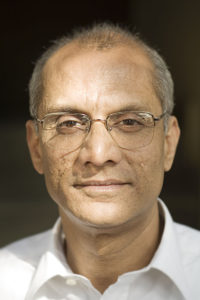
Colin Gonsalves
Drawing a historical parallel, Gonsalves compares the present situation to the colonial era, when freedom fighters were imprisoned for their political beliefs. He recalled the words of Bal Gangadhar Tilak, who, after his conviction by a British jury, famously said: ‘Despite the verdict of the jury, I maintain that I am innocent. There are higher powers that guide the destiny of men and nations.’
Gonsalves says Tilak believed that the cause he fought for might benefit more from his imprisonment than from his freedom a sentiment that resonates even today.
“India is witnessing a second Emergency. Just as during Indira Gandhi’s Emergency people could not secure their release from jail, today we are living through another emergency one imposed not formally, but in practice. This time, it is under the leadership of Narendra Modi and Amit Shah. In this emergency, no one gets bail. Courts appear unwilling to enforce the Constitution and protect personal liberty,” he adds.
Gonsalves also warns that the message being sent by the government is deeply chilling. “Our Constitution guarantees freedom of speech and there are hundreds of judgments affirming this right. Yet the message today is clear: do not criticise the government. Do not speak. If you exercise your constitutional rights, you will be crushed and kept in jail,” he adds.
Also Read: Double speak on CAA-NRC-NPR
He calls on the youth across the country to resist this climate of fear through peaceful means.
“The response cannot be silence. Young people must organise, protest peacefully and speak out every time freedom of speech is attacked. That is the only way to resist the tyranny we are witnessing,” he says.
International human rights organisations speak out
Beyond India’s borders, human rights advocates have closely watched the case as symptomatic of broader trends affecting civil liberties in the world’s largest democracy.
Amnesty International, a leading global human rights organisation, has condemned the continued detention of Khalid and Imam, noting that they have been held more than five years without trial on politically motivated allegations. Aakar Patel, Chair of Amnesty International India’s Board, says the charges should be dropped and the activists released unconditionally, and criticised the Supreme Court’s decision to impose a one-year wait before further bail applications. The organisation warned that “prolonged pre-trial detention is becoming normalised” and called it deeply worrying for justice and civil rights in India.
Meanwhile, the Indian American Muslim Council (IAMC), a US-based advocacy group for Indian American Muslims, termed the Supreme Court’s decision “a grave injustice” and characterised the prolonged detention as punishment for refusing to forsake pluralistic values. IAMC’s statement underscored that the activists’ only “crime” was to affirm that Muslims are as Indian as any other group, and criticised India’s government for what it called political repression.
Also Read: JNU attacks strengthen students’ resolve
Human Rights Watch, a leading independent, international non-governmental organisation (NGO) that investigates and reports on human rights abuses globally has also criticised the use of UAPA against activists and students, warning that such laws are increasingly deployed to silence criticism rather than address genuine security threats. The organisation has highlighted that prolonged pre-trial detention undermines the presumption of innocence, a cornerstone of democratic legal systems.
Other international groups, including the International Commission of Jurists, Front Line Defenders, and the World Organisation Against Torture, have issued joint statements urging Indian authorities to drop what they describe as “politically motivated prosecutions” and to uphold constitutional freedoms.
As of now, Khalid and Imam remain in jail, awaiting the slow progress of a trial that has already consumed half a decade of their lives. Their next opportunity to seek bail may come only in 2027, unless the prosecution completes its witness examinations sooner.