
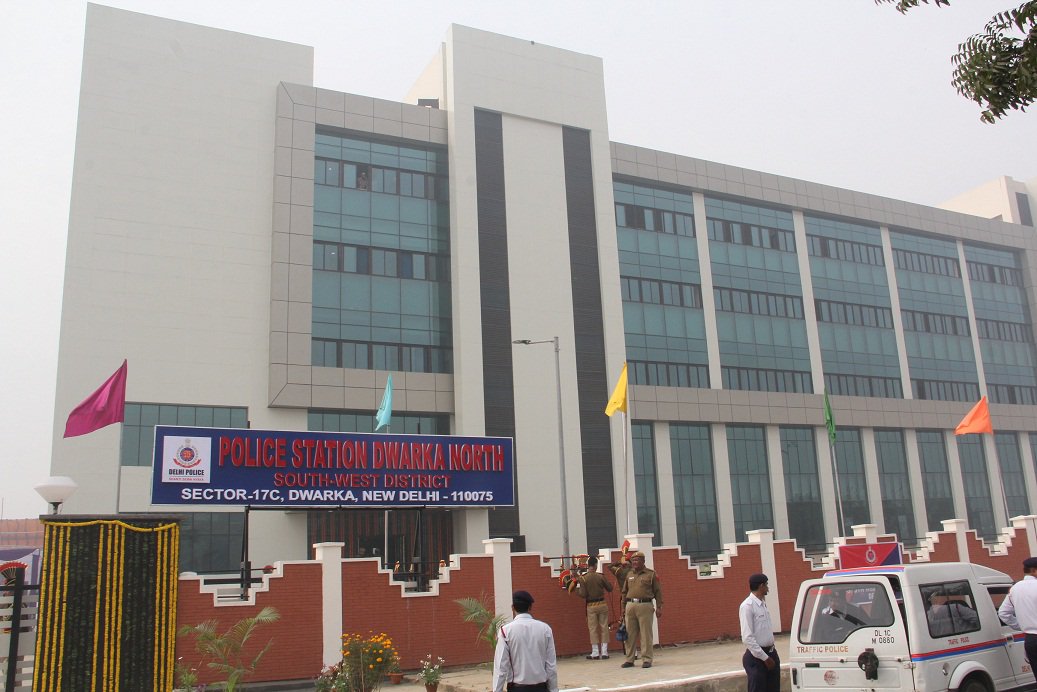
Defence lawyers argue that courtroom scrutiny and the physical presence of police officials is indispensable to protecting the integrity of the justice system (Photo: Delhi Police/Twitter)
Lawyers in Delhi have moved the Delhi High Court, demanding scrapping of a notification recently issued by the Lieutenant Governor of Delhi that permits police officials to depose through video conferencing instead of appearing physically in court.
Several petitions from bar associations are scheduled for urgent hearing in the High Court this week, with petitioners arguing the notification exceeds executive authority and compromises constitutional protections.
While the stated objective of the notification is “efficiency and streamlining of legal processes,” bar associations contend it risks undermining the right to a fair trial as cross examination of investigating officers is a key part of a trial.
The notification clarifies that testimony recorded within police stations through video calls may be accepted as part of proceedings.
Justifying the notification, police officials say that in Delhi alone, police collectively spend thousands of man-hours annually waiting in courtrooms. The measure, they argue, could free up resources for field policing duties, especially critical, given Delhi’s rising crime load, which saw over 234,000 registered cases in 2024.
However, defence lawyers argue that courtroom scrutiny and the physical presence of police officials is indispensable to protecting the integrity of the justice system and cite orders by the Supreme Court upholding in-person cross examinations.
They say that Supreme Court precedent, including CBI v. Anil Sharma (1997) 7 SCC 187, underscores that custodial interrogation differs qualitatively from free questioning, emphasising that physical presence deepens elicitation.
“Firstly, if police need to interrogate a suspect in custody, why wouldn’t the court need to examine a policeman at least in person? In Anil Sharma and many other judgments, the Supreme Court itself highlighted that questioning suspects in person is more truth-oriented. Why then not accept lawyers’ argument that in-person cross-examination of policemen would be more revealing than videoconferencing? Risks of witness coaching or subtle influence, out of camera view, are much graver,” Ali Zia Kabir Choudhary, a human rights lawyer based in Delhi, tells Media India Group.
He adds that demeanour, hesitation and nervousness, factors judges often weigh heavily, cannot be properly assessed on camera. Exhibits like weapons, documents or forensic materials also demand physical engagement, difficult to replicate digitally.
“Cross-examination is an interplay, questions, objections, clarifications, happening instantly. Delays, lags or disruptions make it impossible to replicate in digital mode. It strips justice of its natural flow,” says Choudhary.
The notification provides general guidelines mandating CCTV-equipped rooms within police stations, digital logging of testimonies and the presence of defence counsel during video examination.
Critics say these fall short of ensuring independence. Under Indian law, witness statements to police under Section 162 of the Code of Criminal Procedure cannot be signed by witnesses or used as substantive evidence and Section 25 of the Indian Evidence Act renders confessions to police inadmissible. These provisions, argued lawyers, exist precisely because of the historic mistrust in police neutrality.
“Police have always been considered an interested party. Their evidence, interests and conclusions must be tested under the eye of the court. Doing away with physical presence of policemen in courts strikes at the principle of separation of powers, the bedrock of democracy,” says Choudhary.
Officials across district policing units maintain that digital testimony, when deployed with sufficient technological safeguards, is a progressive step.
A senior officer with Delhi Police defended the directive, stressing both efficiency and fairness.
“Adopting modern methods will make legal proceedings more efficient. It saves manpower and time, allowing us to serve the public more effectively. Digital records provide verifiable evidence, which reduces the possibility of manipulation. With CCTV safeguards, fairness can be ensured, and the accused will retain their right to cross-examine,” he tells Media India Group.
The officer noted that many criminal courts in India already accept digital evidence, including CCTV, DNA reports, and video recordings under Section 65B of the Evidence Act. Applying similar standards for police testimony, he said, would harmonise judicial digitalisation.
“Sometimes coming in contact with suspects poses serious risk. Virtual interrogation is the best possible solution in these times, but it cannot entirely replace police custody, which remains essential for thorough investigations and security,” says the Delhi police officer.
“Physical custody allows police to apply necessary pressure and control that remote video questioning cannot replicate, especially with uncooperative or serious offenders,” he adds.
However, the claims by the police and the government have failed to cut any ice with the lawyers and the notification has drawn near-unanimous opposition from various bar associations across Delhi, including the Delhi Bar Association and the Coordination Committee of All District Bar Associations. Formal memoranda have demanded immediate withdrawal of the notification. Associations argue the directive erodes public confidence in judicial impartiality.
The Indian diaspora legal community has also weighed in, citing parallels to reforms tested abroad. In Canada and the UK, extensive use of video testimony is allowed largely for vulnerable witnesses, children, sexual assault victims, or those abroad, and only with explicit judicial oversight. Making video testimony a “routine convenience” for state officials, critics insist, sets a dangerous precedent in a democracy.
At the heart of the dispute lies a fundamental question, whether efficiency indicators justify alterations to procedures deeply tied to fairness and perception of justice. Observers note that resource allocation arguments, such as the oft-quoted cost of deploying police officers to courts, cannot outweigh judicial sanctity.
“In democracy, justice and elections must not only be right but must also seem right beyond all doubt. Efficiency or cost-cutting cannot come at justice’s expense. If resources are short, let the government cut luxuries, not justice,” adds Choudhary.
