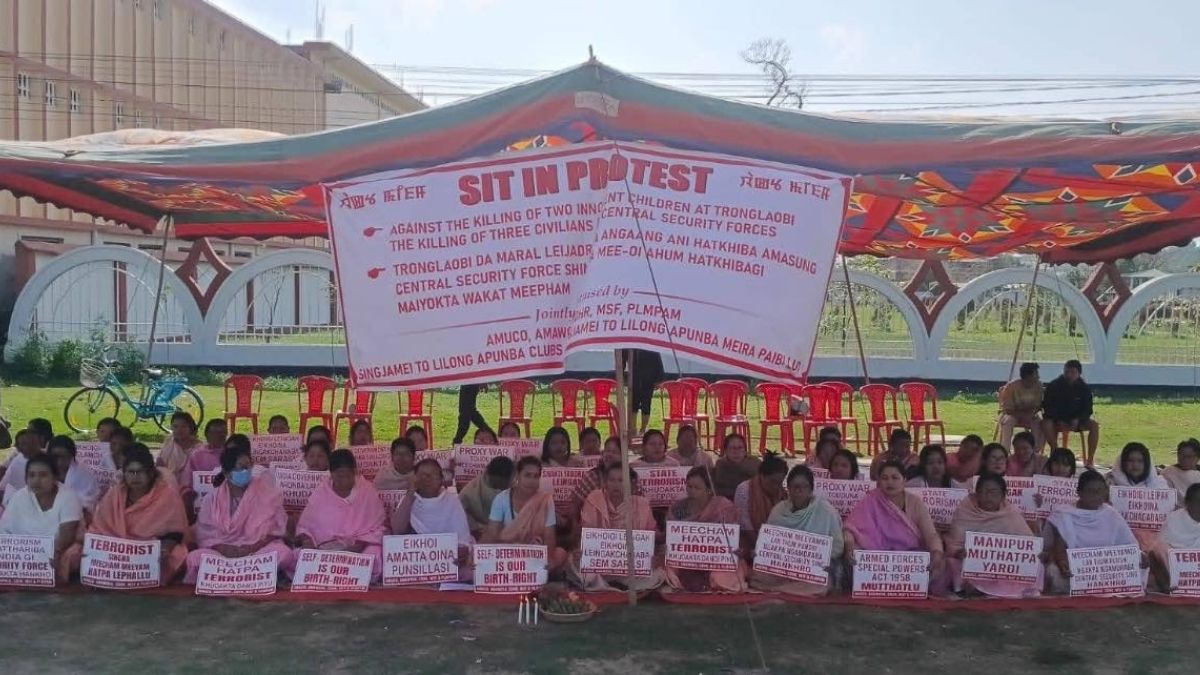
The killings triggered mass protests across Manipur's valley districts, led by groups including COCOMI and AMUCO (Photos: AMUCO)
With three more deaths in under a week, the death toll in ethnic clashes in Manipur just in April has reached eight, with over 20 others, including two children, injured. With fresh violence, the Bishnupur-Churachandpur road, which is the key artery in the state, has remained blocked for the past 12 days.
The violence this week and in April is part of a long-running ethnic conflict that has gripped Manipur since 2023, with clashes between the Meitei community, which is predominantly present in the plains and the Kukis who mainly live in the hills in the state.
On April 7, two children were killed in a bomb attack in Bishnupur district, and two protesters died later the same day after security forces opened fire to quell the protest. The incidents led to heightened security measures and the suspension of internet services in several districts. Meitei leaders blamed Kuki fighters for the killings, who in turn denied any involvement, pointing at the location of the incident, which is an area mainly inhabited by the Meiteis.
Also Read: Month after Central rule imposition, Manipur continues to boil
A few days later, a constable of the Border Security Force (BSF) which is amongst various paramilitary forces deployed in Manipur, was shot dead near Mongkot Chepu village in Ukhrul district.
On April 18, two Tangkhul Naga civilians, including a retired Indian Army soldier, were killed, when suspected militants ambushed a passenger vehicle near TM Kasom on the Imphal–Ukhrul road. The attack, which left others injured, occurred shortly after a visit by Chief Minister Yumnam Khemchand Singh.
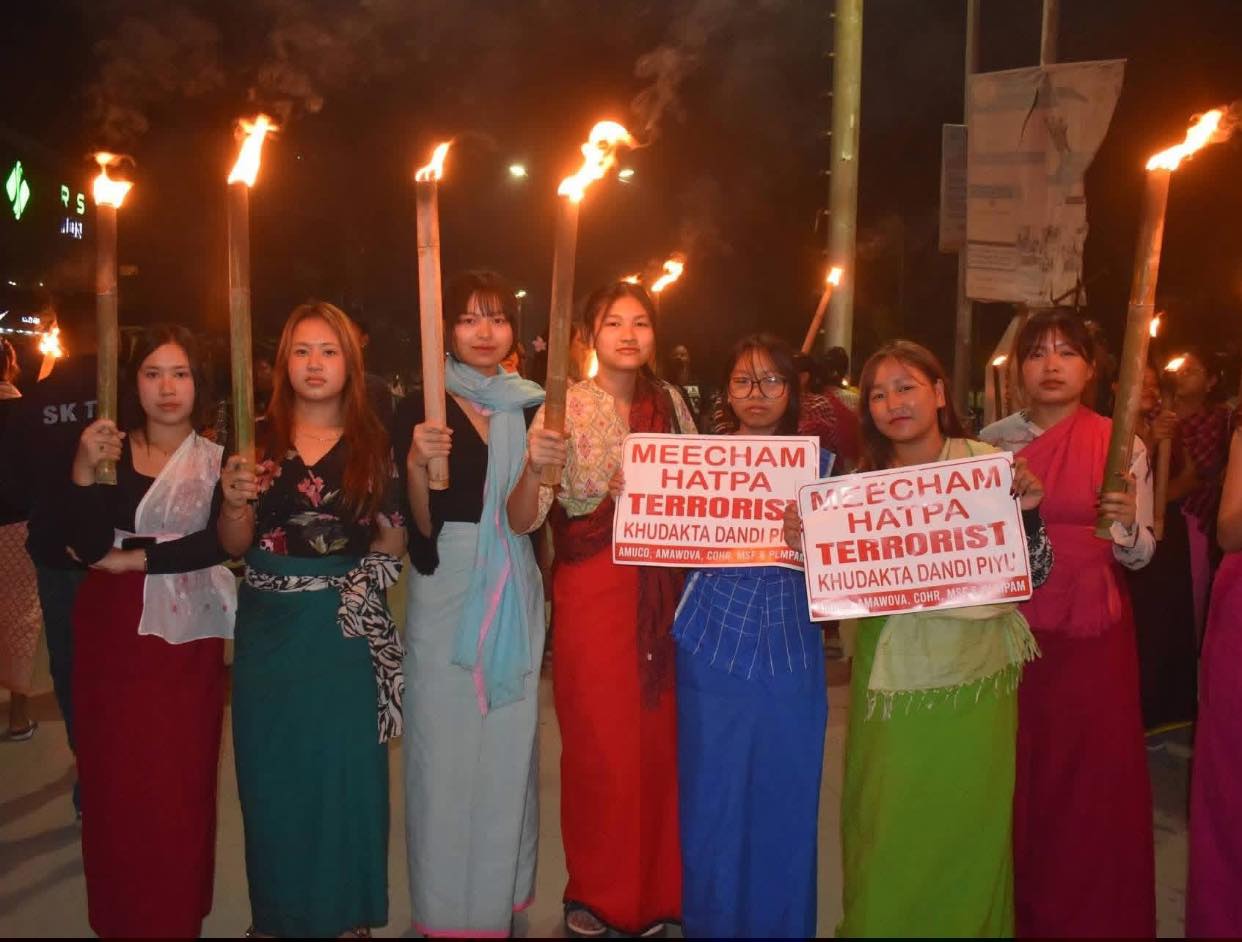
As of now, over 260 people have been killed, around 60,000 have been displaced
The next day, another gunfight broke out in the Naga-dominated region of Ukhrul, this time between Naga and Kuki groups. Over three more people were killed and at least 17 houses were burned.
On April 24, at least three people were killed in a violent gunfight between Kuki and Naga communities in Ukhrul district with reports from noting additional casualties among village volunteers. The clash, occurred in early morning in the Sinakeithel and Mullom village areas, also left several civilians injured.
In total, eight people were killed between April 7 and April 24. The investigation into the children’s killing has been handed over to the National Investigation Agency (NIA). But there has been little progress and as of April 20, investigators had not even received CCTV footage from the area around the crime scene. No arrests have been made in any of the cases. The killings triggered mass protests across Manipur’s valley districts. Led by groups including COCOMI and AMUCO, thousands marched, demanding immediate arrests and the resignation of officials over the deteriorating security situation
The central government and Prime Minister Narendra Modi face intense criticism regarding their handling of the ethnic violence in Manipur, which has continued uncontrolled for over three years now.
Also Read: Loktak lake: the floating wonder in Manipur
While the state government and the ruling Bharatiya Janata Party have been criticised for failure to take action and inability or unwillingness to put a lid on the violence, Modi has been criticised for keeping mum on the issue and failing to pay even a single visit to the state, though he has visited neighbouring states dozens of times and has been campaigning in Assam for the past six months.
The opposition parties have accused BJP and Modi of simply abandoning the state, critics frequently highlighted this absence.
As of now, over 260 people have been killed, around 60,000 have been displaced. Villages have been burned down and families have been split and now thousands of people are still living in camps, children’s have lost access to stable homes and schools. This is where Manipur stands now, more than 2 years after the violence began.
The violence began on May 3, 2023 when the tribal communities held protest rallies against the Meitei demand for Scheduled Tribe status, while the Meitei community held counter-rallies and counter-blockades. After one of these rallies, clashes broke out between Kuki and Meitei groups near the border of the Churachandpur and Bishnupur districts, followed by burning of homes.
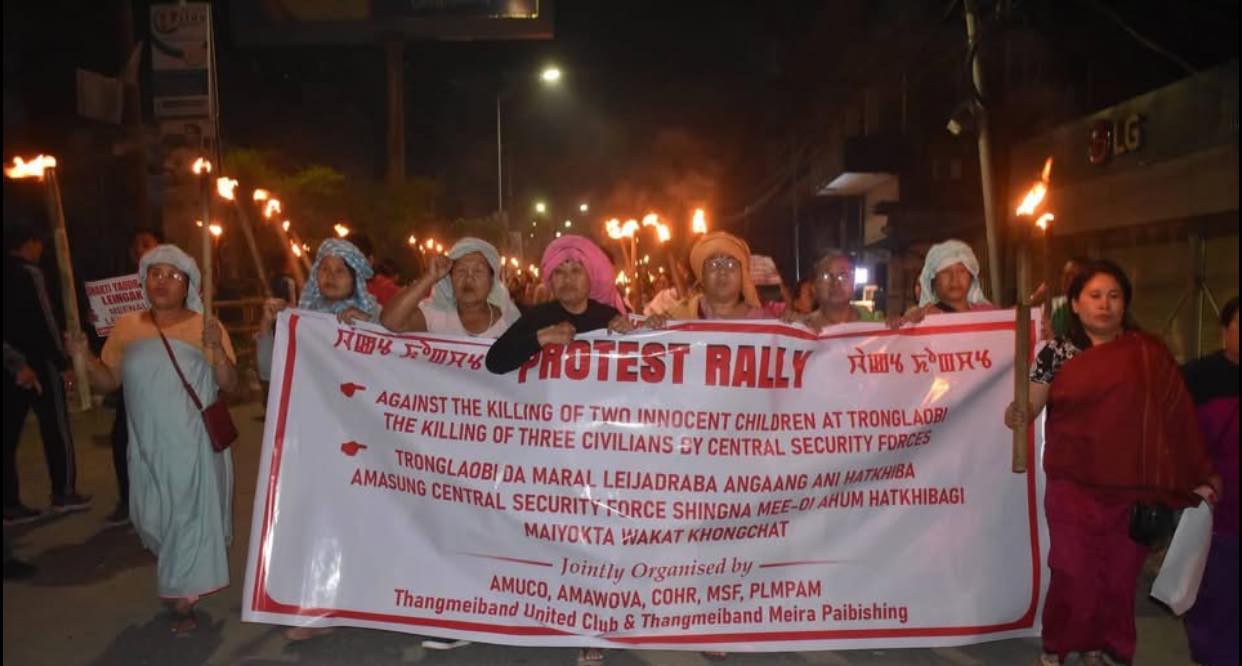
Intense protests and widespread unrest continue across Manipur’s valley districts
And since then, the situation has not stopped escalating, says Gunjan Khuman, a Meitei student from Manipur, currently living in Delhi.
“Many people from Manipur believe the situation is more complex than just that issue. There had already been rising tensions due to factors like the state government’s actions against poppy cultivation and the Chief Minister’s concerns around illegal immigration from Myanmar, emphasising the use of biometric data for identification and deportation and debates over land and identity,” Khuman, tells Media India Group.
Entire communities of Manipur now live in hardened ethnic enclaves. Peace talks have repeatedly collapsed. Arms continue to flow across the Myanmar border. People are sleeping in relief camps that were never meant to be permanent.
Also Read: “Time for India to speak up against human rights violations in Myanmar”
“With over 260 lives lost and around 60,000 people displaced, Manipur has already crossed that threshold. Entire communities are now living in camps, separated into hardened ethnic enclaves. Villages have been burned, retaliatory attacks have become routine, and some of the most disturbing acts of violence, including sexual atrocities that surfaced in viral videos in 2023, continue to define the conflict,” Sajid Abbas, a political analyst, based in Delhi tells Media India Group.
A viral video from the state showing dozens of men parading and assaulting two women who have been stripped naked, broke through nationally in July 2023. It drew international attention, condemnation from across the political spectrum and a rare acknowledgment from Narendra Modi, But Khuman, who lives in Manipur, remembers what the attention missed: “While that incident absolutely deserved attention and condemnation, many people here feel that equally serious and ongoing violence before and after that did not receive the same level of coverage or response,” says Khuman.
Sajid Abbas
In Jiribam where six people, including three women and three children, were abducted and murdered took place on November 11, 2024, and they were found dead in mid-November, 2024. As of now, no one has been arrested.
Abbas does not find this surprising, he says that the killings since April 7, including the horrific murder of two children and their grandmother in Jiribam, with no arrests to date, point to a breakdown that cannot be explained by a single factor.
“When crimes of such brutality fail to produce even basic accountability, it signals more than just an overburdened system. It reflects paralysis. The answer is not either-or. It is both. A weakened justice system and a hesitant political leadership are feeding into each other, creating a vacuum where impunity thrives,” says Abbas.
The silence of the then Chief Minister N Biren Singh in face of repeated incidents of violence sent out its own kind of message.
“Leadership is not only about maintaining order but about sending a clear message that violence will not be tolerated regardless of who commits it. The silence of the administration led by Singh creates the impression that the state is either unwilling or unable to act decisively. The perception that leaders may be playing to constituencies rather than enforcing the law uniformly only deepens mistrust,” says Abbas.
Last month, security forces opened fire on a crowd that had gathered to mourn the dead and demand justice. Two more people were killed. The official response was to describe them as militants. Videos from the scene showed unarmed mourners.
Abbas says that if the state begins to treat all gatherings, even those driven by grief, as potential threats, it risks erasing the line between armed insurgency and civilian dissent. That line is fundamental in any democracy.
Khuman, who is living through this, says, “The fact that central forces opened fire during protests, leading to deaths and injuries among civilians many people here feel that, instead of being protected, they were met with force, which has only deepened fear and anger on the ground.”
Human Rights Watch and other human rights organisations have flagged patterns of severe ethnic violence, police bias, and state accountability failures in Manipur. The ongoing conflict, largely between the Meitei and Kuki communities, is marked by targeted attacks, sexual violence, and significant population displacement, with reports highlighting a failure by authorities to protect civilians and ensure accountability
Abbas says that when people who have lost family members cannot even mourn without fear, the state is no longer seen as a protector. It becomes part of the problem.
Since the violence began, Modi has not visited Manipur once. There has been no sustained national reckoning with what is happening there.
Also Read: BJP looking to leave footprint in Manipur
“Even as political energy is spent elsewhere, including election campaigns in West Bengal led by figures like Mamata Banerjee, Manipur struggles to remain at the centre of national attention. This disconnect reinforces the sense that the crisis is being treated as peripheral rather than urgent,” says Abbas.
The residents feel that silence carries an immense weight. When a region watches the national government spend its energy elsewhere while its people are crying, dying and displaced, it stops feeling like a part of the country being governed and starts feeling like a territory being managed or ignored.
According to Abbas at this stage, the issue is no longer just about maintaining law and order. It is about restoring faith in the idea that the state can act fairly and decisively in the face of deep ethnic divisions.
He points to what would need to happen: closer intervention by the Supreme Court of India, a serious review of the Armed Forces Special Powers Act to ensure accountability, and a hard look at political leadership in the state, including whether a change at the top is necessary.