
The union have described the current three-day strike as a symbolic one, a warning, not the final word (Photos: All India Motor Transport Congress)
From May 21, several autorickshaws and taxis have stayed off the roads in response to a strike and protest called by as many as 68 unions that have demanded an urgent revision of fares in view of repeated hikes in price of petrol as well as Compressed Natural Gas (CNG) that fuels public transport vehicles in the capital.
As a culmination of their protest, the striking workers have organised a protest march to the Secretariat, the seat of Delhi government, on Saturday. The striking workers, who have gathered under the umbrella of more than 68 transport associations and unions across Delhi-NCR, have come together under the banner of the All India Motor Transport Congress (AIMTC), in protest against what they describe as unjust and unfair policies imposed by the Commission for Air Quality Management (CAQM) and the Delhi government on the transport sector.
Delhi has over 92,000 registered three-seater auto-rickshaws and around 85,000 taxis, a small share of the city’s total vehicle count that stood at more than 15.6 million in the year 2024-25. Registrations of auto-rickshaws, taxis and buses have remained somewhat constant with minor year-to-year variations, even as number of two-wheelers and private cars continued to swell on Delhi’s roads.
Ravi Rathore has been driving a cab in Delhi for over a year. He came from Jharkhand, like so many others, lured by the city’s promise of steady wages to ensure that he could send some money back home. Sitting outside his parked cab near a deserted pick-up point in Sarita Vihar, a residential area in south Delhi, he says that he came Delhi to earn money, but things have not gone well.
Also Read: Inflation spikes up days after fuel price hike
“I came here to earn money. Everyone, including my wife, children, and ageing parents, depend on me. Earlier, before the fuel prices began to rise, I could save INR 800-900 a day, enough to send something home. Now the price of CNG has crossed INR 80 a kilo and I have other costs like food, house rent and installments for the taxi. I drive 12-13 hours a day and still nothing is left at the end of the month. Sending money home is out of the question, even surviving here has become difficult. If the government does not act soon, I will have no choice but go back. And there are thousands like me here,” Rathore tells Media India Group.
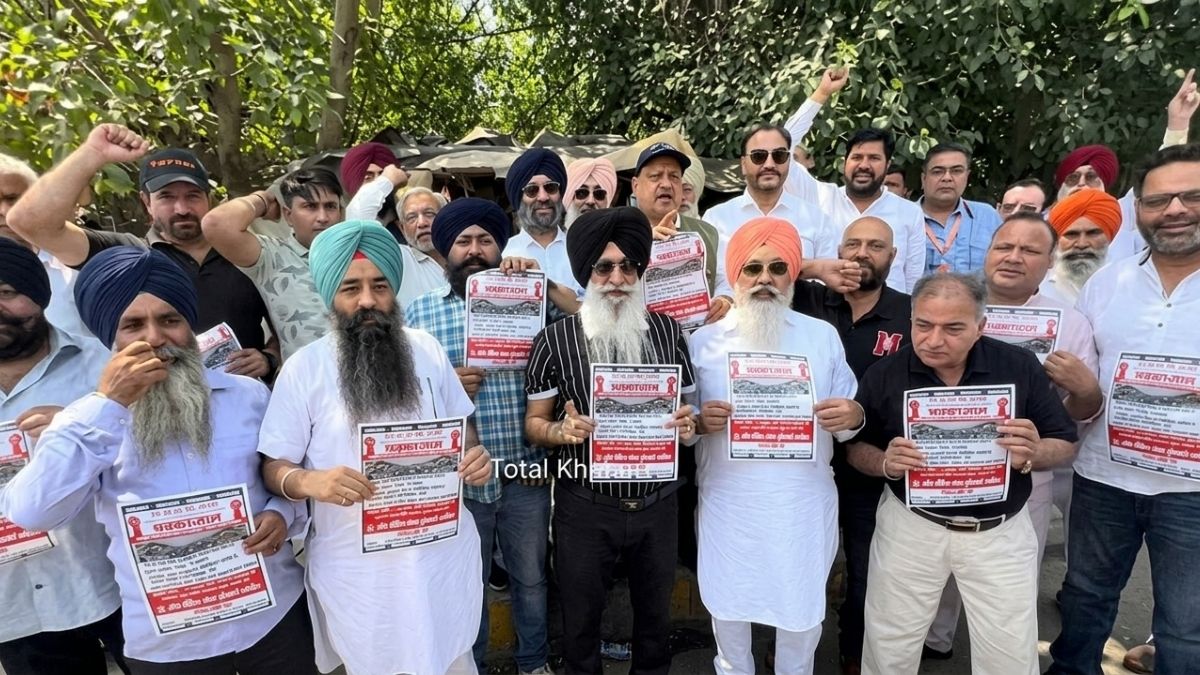
Delhi taxi and auto-rickshaw strike enters third day as drivers demand fare hike over rising fuel costs
Petrol in Delhi currently stands at INR 98.64 per litre, diesel at INR 91.58 per litre, and CNG the fuel that runs the majority of Delhi’s auto-rickshaws and a large share of its cabs at INR 80.09 per kg. These prices have scaled gradually over the past decade. The fares, however, have not kept pace. Union representatives claim that fares in Delhi-NCR have not been revised for nearly 15 years despite sharp increases in petrol, diesel, and CNG prices.
A few kilometres away in Govindpuri, Raju, another taxi driver, has spent two days without driving. He says that he is still repaying the loan on his taxi, which becomes due on the fixed date every month, regardless of whether he has driven or not.
“The EMI is due whether I drive or not. The bank does not care about strikes, it does not care about fuel prices, it does not care about my children’s school fees or the ration I have to buy. In addition, there is pressure squeezing from both sides fuel costs going up on one hand and Ola and Uber cutting our per-kilometre rates on the other. Earlier I would earn a thousand rupees and take home six or seven hundred. Now even two hundred feels like a stretch some days. We have been voting in this city, paying our taxes, keeping its roads running and the fare has not moved in 15 years. At some point you have to ask whether the government even sees us,” Raju tells Media India Group.
Raju’s grievance about app-based cab aggregators is widely shared among drivers. Unions claim that app commissions and operational cuts have nearly halved effective per-kilometre earnings for cab drivers in recent weeks, pushing men who were already stretching their budgets into outright deficit.
But the drivers are not upset only about their fare revision. The AIMTC has laid out a pointed list of structural demands including a proposal by the CAQM to ban BS-IV and older commercial vehicles from entering Delhi-NCR from November 1, as part of pollution control measures. In a statement, Rajender Kapoor, President, AIMTC, said that restrictions based purely on vehicle registration category, rather than actual tailpipe emissions, are fundamentally unfair, particularly when BS-VI vehicles, which are permitted even during strict GRAP pollution measures, are still being charged the environment compensation cess.
The cess hike itself has been the immediate trigger. The Environment Compensation Charge (ECC) on light commercial vehicles and two-axle trucks was raised from INR 1,400 to INR 2,000 effective April 19, while charges for three-axle and heavier vehicles went from INR 2,600 to INR 4,000. The government has also announced a 5 pc annual increase in the charge going forward, a compounding pressure that transporters say will hollow out margins further with each passing year. The unions also object to the cess being applied even on empty trucks arriving for loading and vehicles carrying essential commodities.
Also Read: Soaring petrol and diesel prices
Union Road Transport and Highways Minister Nitin Gadkari said he is hopeful of resolving the issue soon after discussion with Delhi Chief Minister Rekha Gupta. That statement, however, has not been followed by any announcement of formal talks, a timeline, or interim relief. The unions, for their part, have written to the Lieutenant Governor, Chief Minister, Transport Minister, and Police Commissioner of Delhi, formally informing them about the agitation. None of the officials have responded to the demands or the notice yet.
But the impact on commuters has been considerable. At New Delhi Railway Station, always one of the city’s most chaotic transit nodes, the absence of autos and cabs has led to stretched queues and forced many passengers to rely on the metro or private vehicles. The strain is visible across the city’s major transit points. Vehicle density in Delhi has risen from 484 vehicles per 1,000 people to 522 in 2025–26, yet a chunk of the shared transport on which millions of daily wage workers, students, and office commuters depend has simply vanished from the roads this week.
Anuj Kumar Rathore, Vice-President of the Chaalak Shakti Union, another union of autorickshaw and taxi drivers, says that member of his union and other drivers are struggling to support their families due to the continuously increasing prices of CNG, petrol and diesel. He warns that if the government does not increase taxi fares and issue a notification within one or two weeks, the movement will be intensified into a large-scale protest.
The unions have described the current three-day strike as a symbolic one, a warning, not the final word. The protest at the Delhi Secretariat on Saturday is meant to put a face to that warning. But the mood among drivers is not symbolic. It is tired, and it is serious. If the unions leave the Secretariat on Saturday without a credible commitment for creation of a formal fare revision committee, an interim cess rollback, the men who drive this city are already saying what comes next will not have an end date.