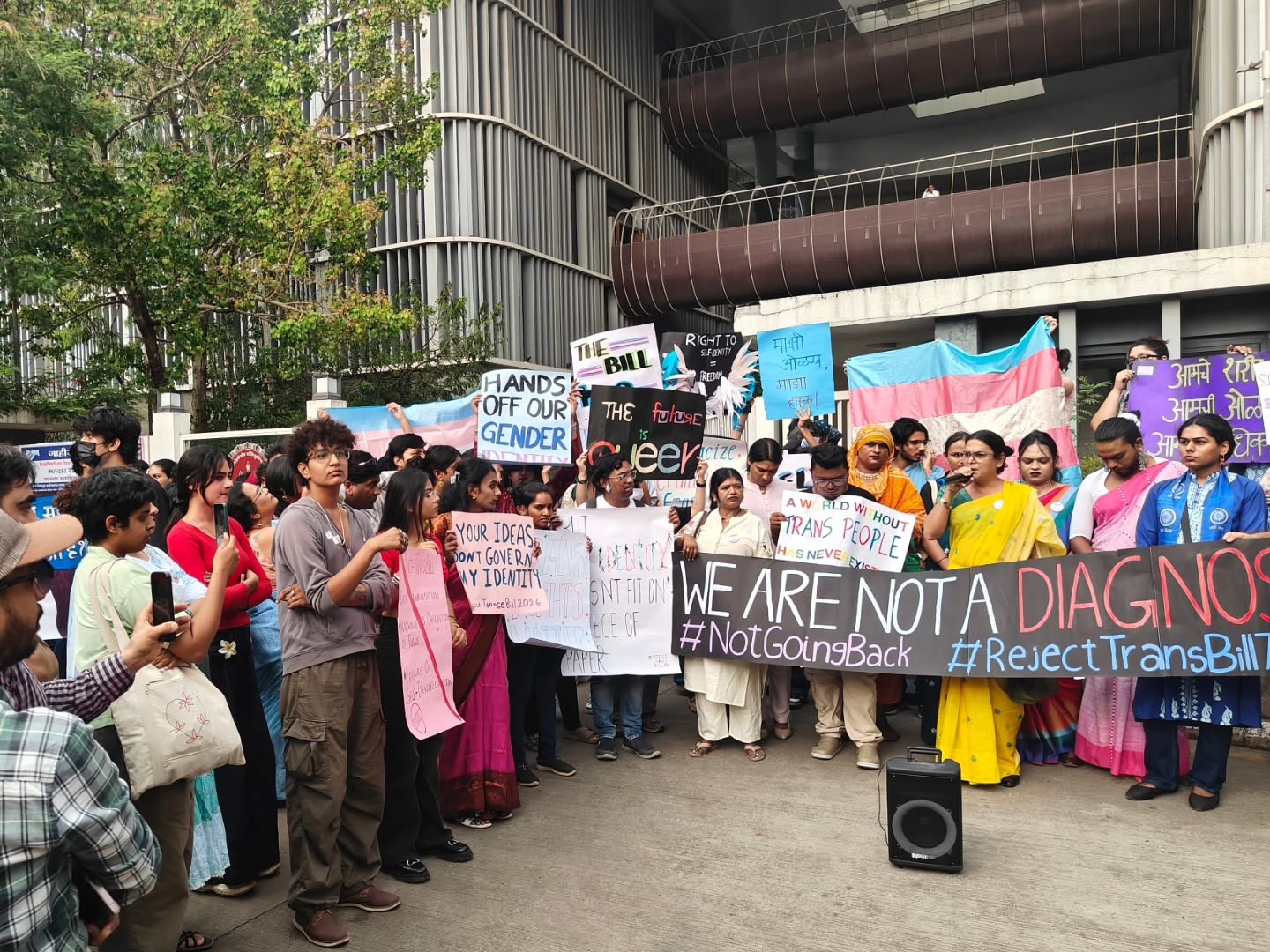
Across cities from Delhi and Mumbai to Bengaluru and smaller towns protests, sit-ins, and digital campaigns have intensified (Photo: Mist LGBTQ Foundation)
The rapid passage of the Transgender Persons (Protection of Rights) Amendment Act, 2026, following presidential assent by Droupadi Murmu, has triggered a wave of anxiety, anger, and protest across India’s LGBTQ+ community. What was positioned by the government as a legislative update has instead been termed by many as a serious rollback of rights hard-won after a landmark ruling of the Supreme Court in March.
Across cities from Delhi and Mumbai to Bengaluru and smaller towns protests, sit-ins, and digital campaigns have intensified. Activists, students, and members of the transgender and queer community have taken to the streets, arguing that the amendment introduces rigid definitions, mandates medical scrutiny, and undermines the principle of self-identification that had once brought a sense of recognition and belonging.
Also Read:Transgender aspirants struggle for fair recruitment in Maharashtra police
For Preeti Mital, a Gurugram-based PR professional who identifies as bisexual, the amendment has triggered an internal conflict she thought she had long resolved. “Being a part of this community, this amendment made me feel very confused and unsettling in my heart, I believe it made me question my identity which I have come to terms with through my share of experiences over time,” Mital, tells Media India Group.
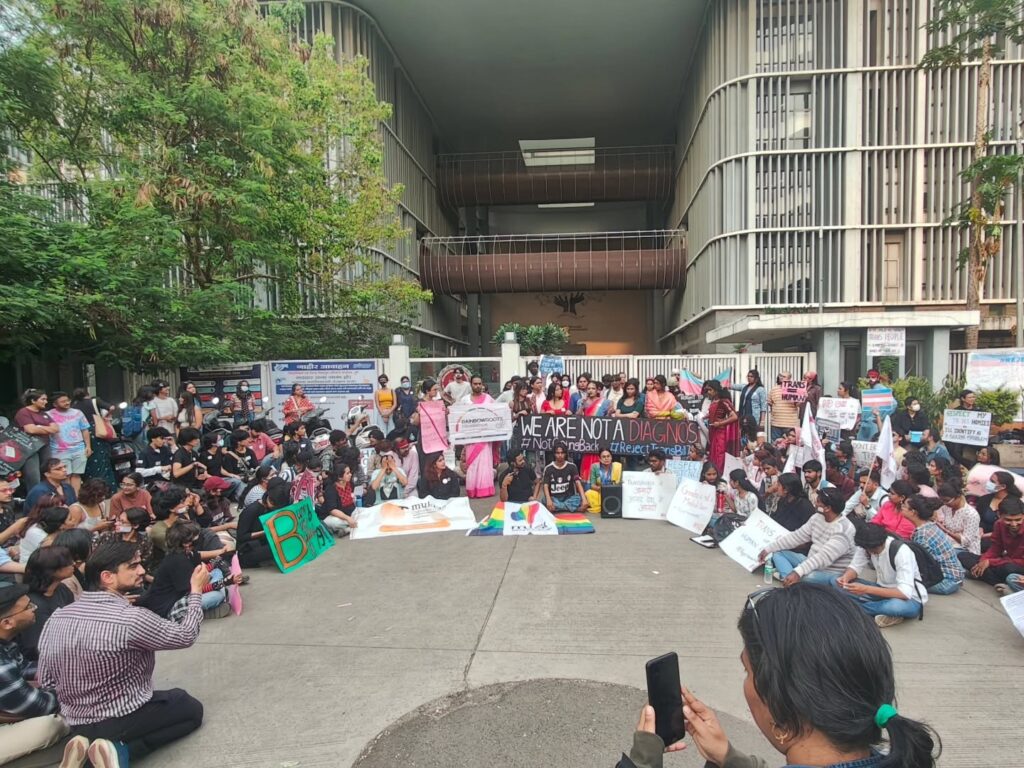
Activists, students, and members of the transgender and queer community have taken to the streets, arguing that the amendment introduces rigid definitions, mandates medical scrutiny (Photo: Mist LGBTQ Foundation)
The concerns surrounding the amendment draw heavily on the landmark NALSA v. Union of India ruling delivered by the Supreme Court of India in 2014, which recognised transgender persons as a “third gender” and affirmed that the right to self-identify one’s gender whether male, female, or third gender—is intrinsic to fundamental rights guaranteed under Articles 14, 19, and 21 of the Constitution, including dignity, equality, and personal liberty. The judgment explicitly rejected the need for medical or surgical validation, placing autonomy over identity firmly with the individual. In contrast, the Transgender Persons (Protection of Rights) Amendment Act, 2026, has been criticised for diluting these protections by introducing stricter, state-controlled definitions of who qualifies as transgender, and by reportedly mandating certification through government-appointed medical boards, including physical scrutiny in some cases. Critics argue that this shifts the power of self-identification from individuals to institutions, creates new bureaucratic and medical barriers, and risks excluding non-binary, gender-fluid, and transitioning individuals who may not conform to rigid criteria effectively curbing the autonomy and dignity that the NALSA judgment had sought to secure.
Mital recalls how the NALSA judgment had created a sense of acceptance. “The recognition and sense of dignity I had developed through the human rights embedded by the judgement made me feel acceptable. I felt like I could just exist as myself, without needing anyone’s approval. But I never thought that a new law might question what really counts as being transgender. That recognition is somehow fading away. It makes you feel unseen and erased in a certain way,” says Mital.
Her concerns extend beyond personal identity to the broader disconnect between policy and lived reality. “Honestly, there is a real gap between what the Bill assumes and what transgender people actually live through every single day. Life is not that simple for them like the divided categories written in this new policy,” says Mital.
She points to the everyday struggles that rarely make it into legislative debates misgendering, bureaucratic hurdles and the emotional toll of constantly having to explain oneself. She says a lot of transgender and non-binary people go through small and exhausting things where they are misgendered and not taken seriously. Sometimes they find it hard to explain their identity, especially with government documents that don’t match who they really are.
For Mital, the failure of the law to address these realities is deeply troubling. “If a law can’t protect the dignity of its people and can’t understand the complexity behind things, it fails them. I have seen how hard it is for a transgender person to constantly prove themselves in classrooms, workplaces, even hospitals. If the law also fails them, it becomes isolating and alienating.”
Also Read: Navigating legal hurdles: Struggles of India’s transgender community
She believes the impact will be most severe for those already on the margins. “The people who will feel the tremors the most are those already struggling to be seen trans men, non-binary people, and many others who don’t fit into rigid narratives. This kind of exclusion doesn’t just leave them out of a definition; it pushes them further into the margins,” says Mital.
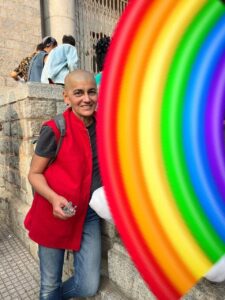
Swayamb Soham
The consequences, she adds, are not abstract. “It shows up in real ways being denied healthcare that respects your identity, being overlooked for jobs, or having documents that don’t match who you are. It creates a constant feeling of being out of place, like the system was never built for you.”
At an emotional level, the amendment has shaken her faith in institutional progress. “For me, this feels like losing that little strand of hope. After NALSA, there was a sense that things were slowly moving towards acceptance. But now it feels like the opposite. Instead of expanding rights, the approach has become more restrictive. It is not just political it is emotional. It leaves you uncertain about where you stand and whether you will ever be fully recognised,” says Mital.
For Swayambhu Soham, who uses they/them or xie/them pronouns, the amendment strikes at the core of constitutional guarantees. “It has taken away the fundamental right to dignity. The new bill has made it mandatory for transgender persons to be scrutinised by a government medical board with physical checks. That takes away our dignity,” Soham tells Media India Group.
Soham says that the amendment directly contradicts the spirit of the NALSA judgment. “The government has overruled what the Supreme Court recognised. The definition of transgender has been narrowed down, and that excludes many of us. Even when objections were raised, the bill was pushed through,” says Soham.
Legal scholars and activists have echoed similar concerns, noting that the requirement of medical verification undermines the principle of self-identification upheld in 2014. They says that the move could create new bureaucratic barriers, particularly for those without access to healthcare or those unwilling to undergo invasive procedures.
For Rose, a 41-year-old trans woman of Indian-origin currently based in Berlin, the implications are deeply personal and immediate. “The whole bill was a big shock. I was in the middle of moving from Mumbai to Berlin, and I was panicking about how I would be treated at the airport and immigration,” Rose tells Media India Group.
Although her journey went smoothly at the time, the law’s passage has created new uncertainties. “I had to travel on my old passport with my male identity. My plan was to transition, update my documents, and align everything with who I am. I have done that locally, but now I have to update my passport and I don’t know if I will be allowed to,” Rose adds.
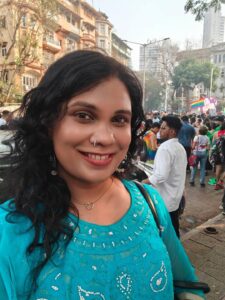
Rose
Her situation reflects a growing concern among trans Indians living abroad. “I don’t fall under the categories the government has now decided as transgender. I have updated my gender as female based on the earlier law and also in Germany, where self-identification is recognised. But now, I don’t think India will permit me to update my passport accordingly,” she adds.
The consequences are more than administrative. “My whole existence feels like it is in question. Every night is a bit of panic thinking about how I will manage this. I have even had to seek therapy,” Rose adds.
Rose believes the amendment fails to address ground realities. “A law on paper is different from how people are treated in real life. We needed more supportive laws and a better framework for inclusion. Instead, this feels like being pushed back a hundred years. I feel violated as a person. It is like we have been put into a shell, and I don’t know how easy it will be to come out of it,” says Rose
Also Read: Abolition of Section 377: Landmark for LGBTQ Rights
Among the most vocal critics is Arnavi Sharma, a transgender artist and activist from Jammu & Kashmir, who has been widely recognised for her achievements, including being a gold medallist in fine arts from the University of Jammu. Her response to the amendment is both deeply personal and sharply political.
“Today everything has changed and how many times do we have to fight for our identity. Where are we supposed to go now? The entire LGBTQ+ community lesbian, gay, bisexual, transgender, queer, intersex where will we go,” Sharma tells Media India Group.

Arnavi Sharma
Sharma also questions the government’s insistence on medical scrutiny. “Why does the government want a medical board to decide who we are? Gender is not within the body, it is in the mind. We have already fought with society to live with dignity, to wear what we want, to exist as ourselves, and now they want to strip that away and harass us again. What does the government want from us? Where will we go? The entire LGBTQ+ community is being pushed aside. It feels like our existence is being played with, as if we don’t belong to this country at all,” she says.
In her critique, she does not hold back from directly targeting political leadership, expressing anger at what she sees as a lack of understanding and empathy from those in power, including Prime Minister Narendra Modi and members of the ruling establishment. Her remarks reflect the depth of frustration among sections of the community who feel that their identities are being legislated without their participation.
Protests across the country have mirrored this sentiment. Demonstrators have carried placards reading “Self-identification is a right, not a privilege” and “No to medical gatekeeping,” while chants demanding the rollback of the amendment have echoed through university campuses and public squares. Student groups, queer collectives, and civil society organisations have joined forces, calling for wider consultations and a reconsideration of the law.
Legal experts warn that the amendment could face legal challenges over its constitutionality, particularly on grounds of violating the right to equality, privacy, and dignity under Articles 14, 19, and 21 of the Constitution. Some have pointed out that the requirement of medical certification could be seen as discriminatory and inconsistent with international human rights standards.
The government has defended the amendment, saying that it seeks to streamline processes and provide clarity in implementation. However, critics say that “clarity” has come at the cost of inclusivity, reducing a complex spectrum of identities into narrowly defined categories.
For many within the LGBTQ+ community, the issue is not just legal but existential. It is about who gets to define identity individuals themselves or the State.