
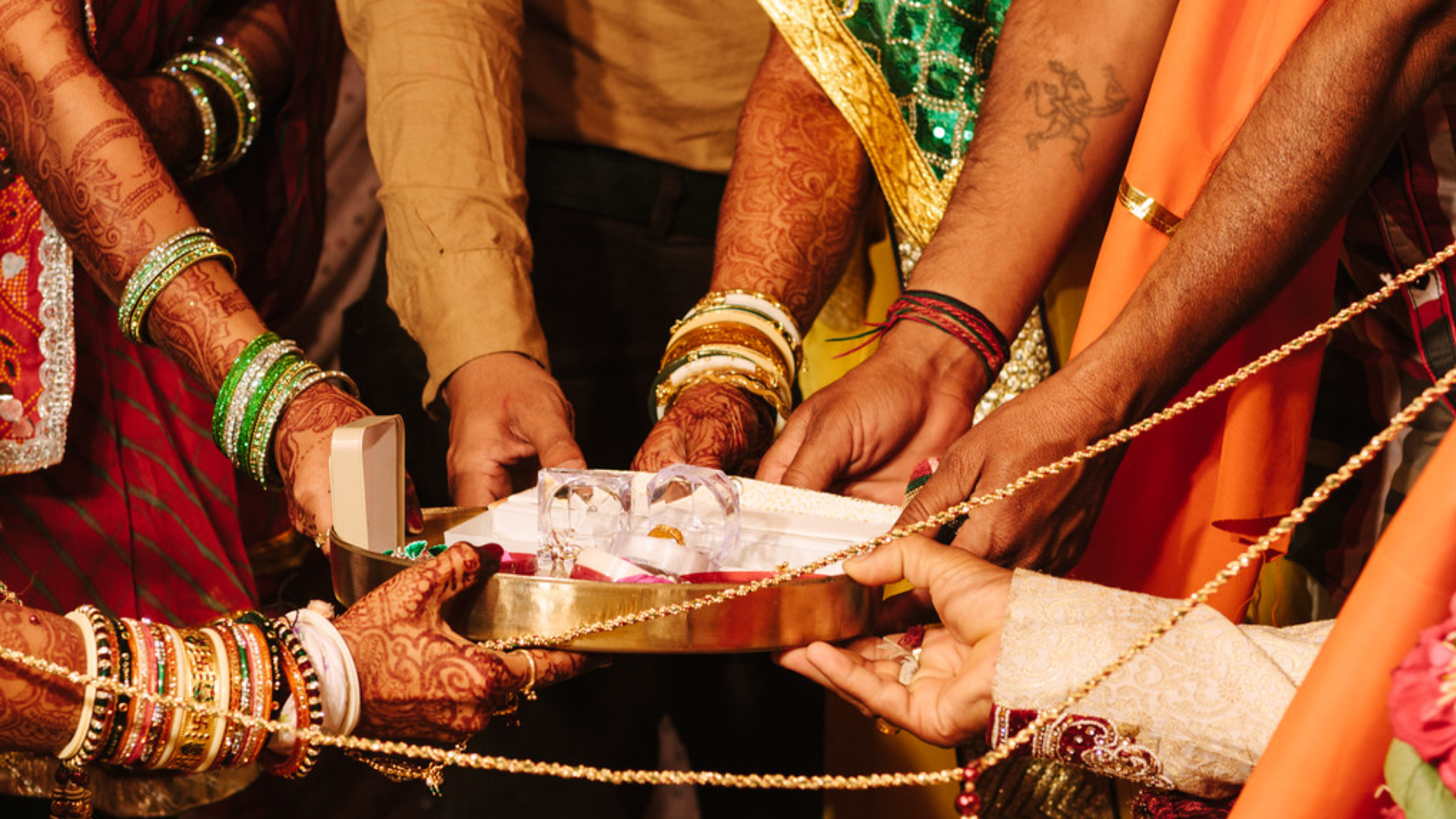
The persistence of dowry deaths, even with stricter laws, reflects a problem extending beyond police stations or courtrooms (Photo: Centre for Law & Policy Research)
The recent alleged murder of Nikki Bhati, a 28-year-old woman, in a an alleged dowry-related case in Greater Noida, in the National Capital Region Delhi, has put the spotlight back on the age-old ill-practice of the Indian society.
Dowry-related deaths and violence remain one of India’s most persistent and disturbing social challenges, with thousands of women losing their lives each year despite decades of legal prohibitions.
According to the National Crime Records Bureau (NCRB), India registered 6,516 dowry deaths in 2022, averaging nearly 18 women per day. Uttar Pradesh, the country’s most populous state, accounted for 2,138 of those deaths, making it the epicenter of this social evil.
Over a five-year span (2018–2022), Uttar Pradesh alone reported 11,488 dowry-related deaths, nearly one-third of the national total.
Experts and activists stress that these official figures represent only a partial picture, as countless cases remain unreported due to social stigma, family pressure, or weak law enforcement.
Against this grim backdrop, the horrific case of Bhati shows how deeply entrenched the practice of dowry remains in Indian society.
On August 21, Bhati was allegedly doused in flammable liquid and set ablaze by her husband and in-laws after they demanded an additional dowry of INR 3.5 million and a luxury car, demands her family could not meet.
Witnesses include her young son and her sister, who managed to record part of the episode on her phone camera. Despite desperate attempts to save her, Bhati succumbed to her injuries en route to Delhi’s Safdarjung Hospital.
Investigations revealed that Bhati, married since 2016 to Vipin Bhati, faced regular assault and harassment over dowry demands. The fatal attack represented the final escalation of years of cruelty. Her death triggered widespread outrage across Uttar Pradesh and beyond, with citizens demanding not only justice in her individual case but also stricter action against dowry crimes as a whole.
Public anger has grown louder as people from different walks of life connect her story to the broader menace of dowry culture.
“The dowry system is like a shadow over marriages here. Many families suffer silently, and women bear the brunt. Nikki Bhati’s death is a brutal reminder of the urgent need to end this cruelty. Awareness alone won’t work unless the law is enforced strictly,” Suman Sharma, a high-school teacher in Lucknow, tells Media India Group.
For some, the latest case represents much more than just a single failure of law and society, it reflects the deeply poisonous nature of a custom that has long been normalised.
“Dowry is a deeply rooted tradition, but it has become poisonous. The case of Nikki is heartbreaking. Society and families need to rethink their values and respect women’s dignity. It is about time we stopped treating marriage as a business transaction,” Deepa Singh, a homemaker based in New Delhi, tells Media India Group.
“While laws are important, community mindset is harder to change. Women should be empowered with education and legal knowledge. Only then can cases like Nikki’s become less frequent,” Singh adds.
Lawyers say that the practice of dowry is adequately covered by the legal framework in India, under the Indian Penal Code (IPC) as well as its replacement, the recently passed Bharatiya Nyaya Sanhita (BNS), 2023.
“Dowry harassment is covered under Section 86 of BNS. It prescribes imprisonment up to three years and a fine for the husband or his relatives who harass a woman in connection with unlawful dowry demands. Cruelty includes both physical and mental harassment,” Naveen Gautam, Lawyer and Dalit Rights Activist based in New Delhi, tells Media India Group.
“Section 80 of BNS provides that if a woman dies within 7 years of marriage under unnatural circumstances, such as burns, bodily injuries, or suicide, and it is proven that she faced harassment for dowry, the punishment may range from a minimum of 7 years to life imprisonment. Courts are bound by Section 113B of the Bharatiya Sakshya Adhiniyam to presume dowry death if harassment soon before death is proven,” Gautam adds.
But he adds that families of the brides often hesitate before taking recourse of the law, in the vain hope of ‘reaching a settlement’ or to avoid social stigma. Instead, he says, such actions should not be delayed.
“Families should immediately secure evidence such as threatening messages, hospital reports, witness accounts, financial records, and above all, dying declarations if available. Early complaints under Section 86 can prevent escalation, but families often hesitate or delay due to stigma or fear. The law provides preventive measures such as restraining orders and police protection under the Domestic Violence Act and the BNSS. But implementation remains patchy,” he says.
While lawyers, teachers and homemakers approach the issue from law and morality, ordinary citizens also feel deeply about the injustice.
“As a man, I feel ashamed that something as sacred as marriage is being reduced to a financial bargain. When dowry becomes a reason for cruelty or even murder, it is not just a crime against women, but a stain on all of us as men and as a society. True dignity lies in rejecting this culture, not demanding it,” Rohit Mehra, a 32-year-old freelance photographer from Delhi tells Media India Group.
As of September 8, police have filed a chargesheet against Vipin Bhati and four of his family members under provisions of dowry death and abetment. The case has been transferred to a fast-track court in Gautam Buddh Nagar district following pressure from women’s groups and local representatives.
The persistence of dowry deaths, even with stricter laws, reflects a problem extending beyond police stations or courtrooms. Analysts argue that the dowry system is embedded in social and cultural frameworks, and therefore requires simultaneous legal, social, and educational interventions.
While laws punish offenders after violence occurs, critics insist that prevention must come from within the community, where boys and men are taught to reject financial negotiations in marriage.
