
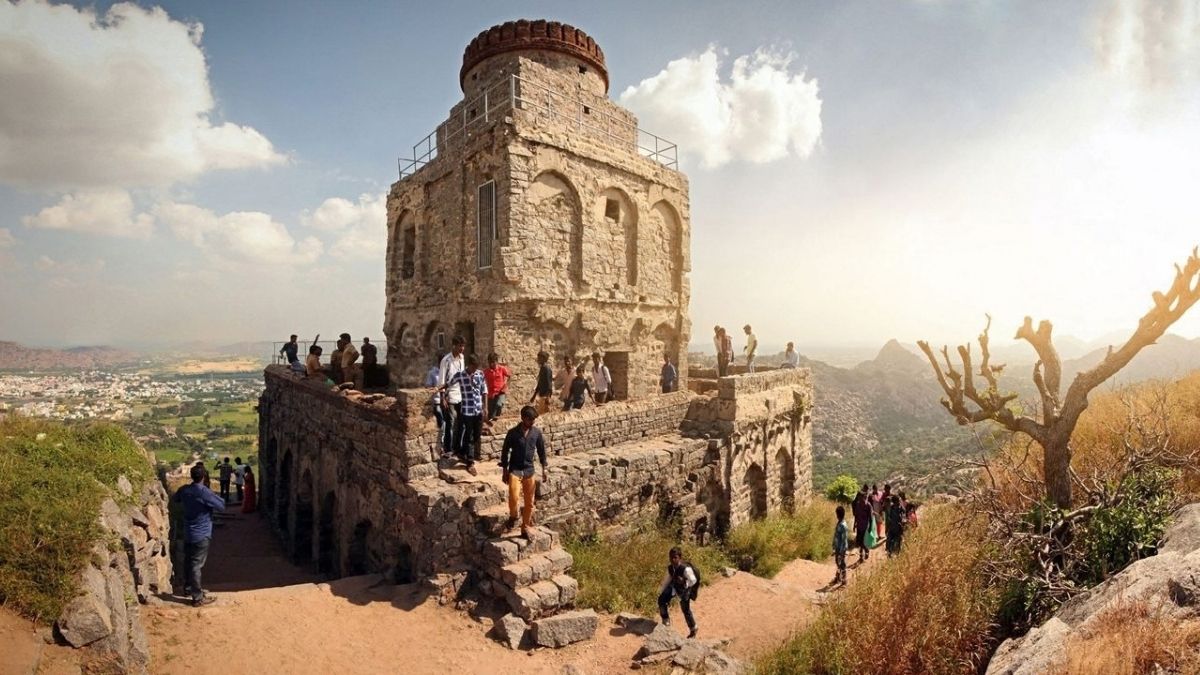
The architecture of Gingee reflects the practical requirements of a fortress that had to survive sieges (Photo: Incredible India)
Set across the rugged Rajagiri, Krishnagiri and Chandrayandurg hills in Villupuram district of Tamil Nadu, the sprawling Gingee Fort complex stands as one of South India’s most formidable hill fortresses. Surrounded by vast stretches of landscape, its imposing walls and strategic location reflect the military importance the stronghold held through centuries of warfare and dynastic struggles.
Unlike many heritage monuments that are concentrated within a single structure, Gingee is an expansive fortified complex where the natural terrain itself forms an important part of its defence. Its steep hill sides, massive walls, gateways, watchtowers, temples, granaries and water structures reveal the scale of a stronghold designed to withstand prolonged attacks.
A fortress shaped by centuries of history
Gingee’s history stretches across several centuries, with different dynasties and rulers seeking control of the strategically important fort. The stronghold has been associated with the Cholas, Vijayanagara rulers, Gingee Nayaks, Marathas, Mughals and European powers, each leaving traces of their presence.
The fort gained particular importance during the period of the Vijayanagara Empire and the subsequent Nayak rule, when its defensive structures were significantly developed. The Nayaks strengthened the fortifications and expanded the complex, turning the rocky hills into a formidable military centre.
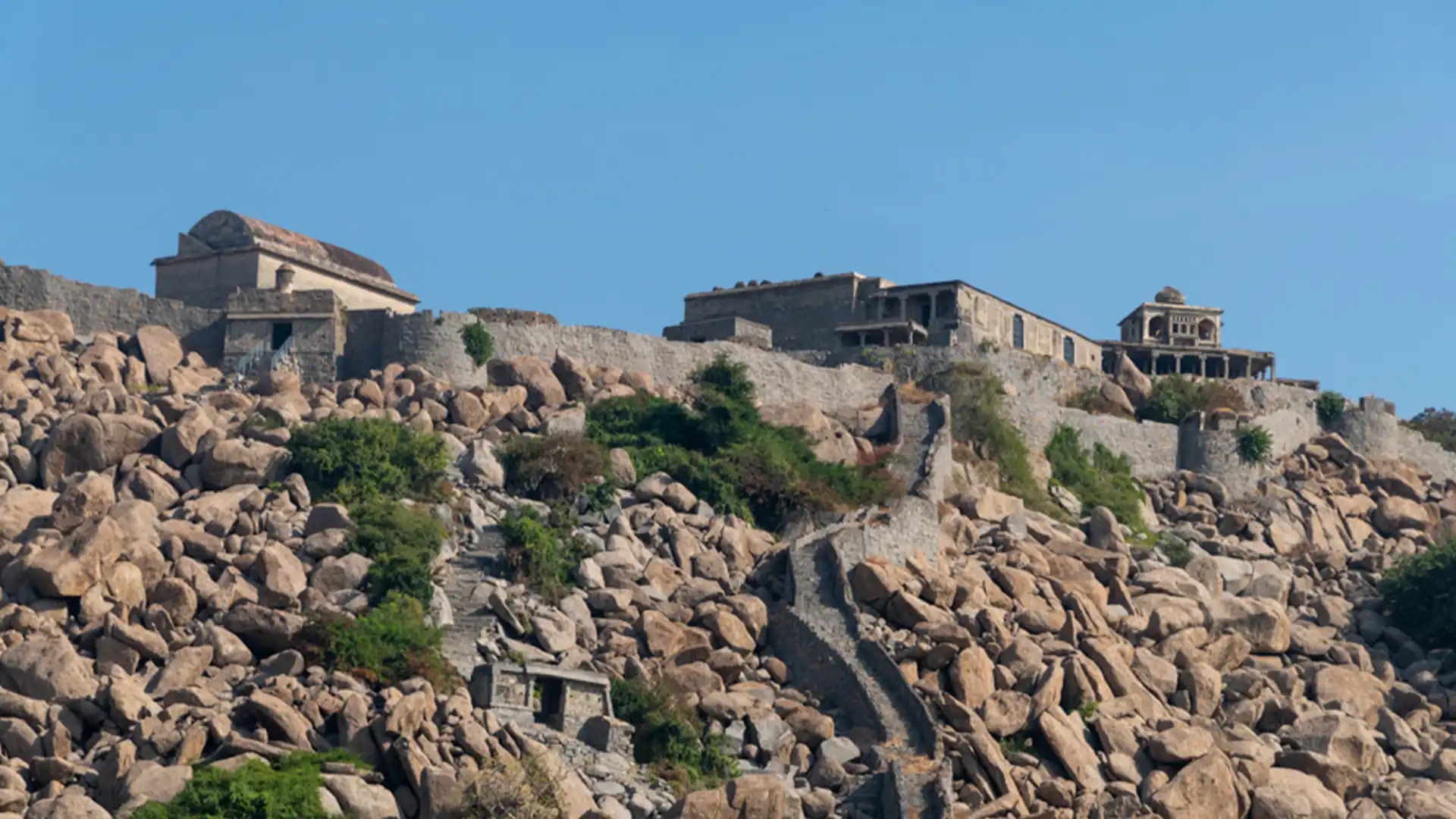
Inside the complex are temples, palaces, military buildings and other structures that reveal that Gingee was more than a fort (Photo: Tamil Nadu Tourism)
Over time, Gingee became a prize in the political and military struggles that swept across southern India.
Three hills, one formidable stronghold
Gingee’s unique character comes from its three-hill layout. Rajagiri, the highest and most heavily fortified of the three, is surrounded by steep rocky terrain that made an assault extremely difficult.
Krishnagiri, another major fortified hill, contains its own defensive structures and provides sweeping views of the surrounding countryside. Chandrayandurg forms the third major defensive section of the complex.
Walls and fortifications connect different sections of the stronghold, while natural cliffs and rocky slopes add another layer of protection. The arrangement demonstrates how the builders used the landscape itself as a military advantage.
Architecture designed for war
The architecture of Gingee reflects the practical requirements of a fortress that had to survive sieges. Massive defensive walls and gateways controlled access, while granaries and water reservoirs helped sustain the population during periods when the fort was cut off from the surrounding region.
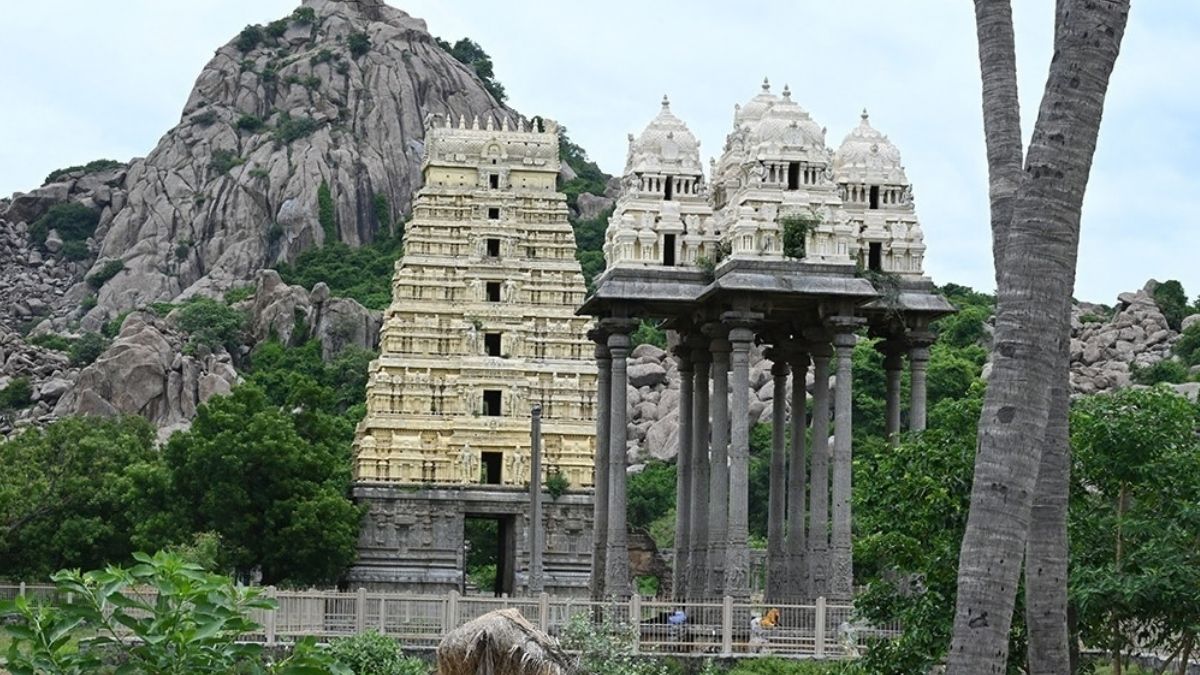
The fort became a major centre of Maratha resistance, leading to a prolonged siege by the Mughal Army (Photo: Archaeological Survey Of India)
Inside the complex are temples, palaces, military buildings and other structures that reveal that Gingee was more than a fort, it functioned as a fortified settlement where soldiers, rulers and civilians lived and worked.
The Kalyana Mahal, with its distinctive multi-storeyed tower, is among the most recognisable structures within the fort complex. Its surviving architecture provides a glimpse into the royal and residential aspects of the stronghold alongside its military purpose.
Rajaram and the Mughal siege of Gingee
Gingee also occupies an important place in Maratha history. After the death of Maratha King Shivaji, his son Rajaram sought refuge at Gingee during the conflict with the Mughal Empire.
The fort became a major centre of Maratha resistance, leading to a prolonged siege by the Mughal Army. Its difficult terrain and strong defences allowed the Marathas to hold out for an extended period, demonstrating why Gingee had acquired a reputation as an exceptionally difficult fortress to capture.
The siege became one of the significant episodes in the wider Mughal-Maratha conflict and further cemented Gingee’s place in the Indian military history.
A fort caught in changing power struggles
Gingee continued to change hands as political powers competed for influence in southern India. Following the Mughal period, the fort became connected with the Carnatic Wars and European rivalry, bringing French and British interests into its long history.
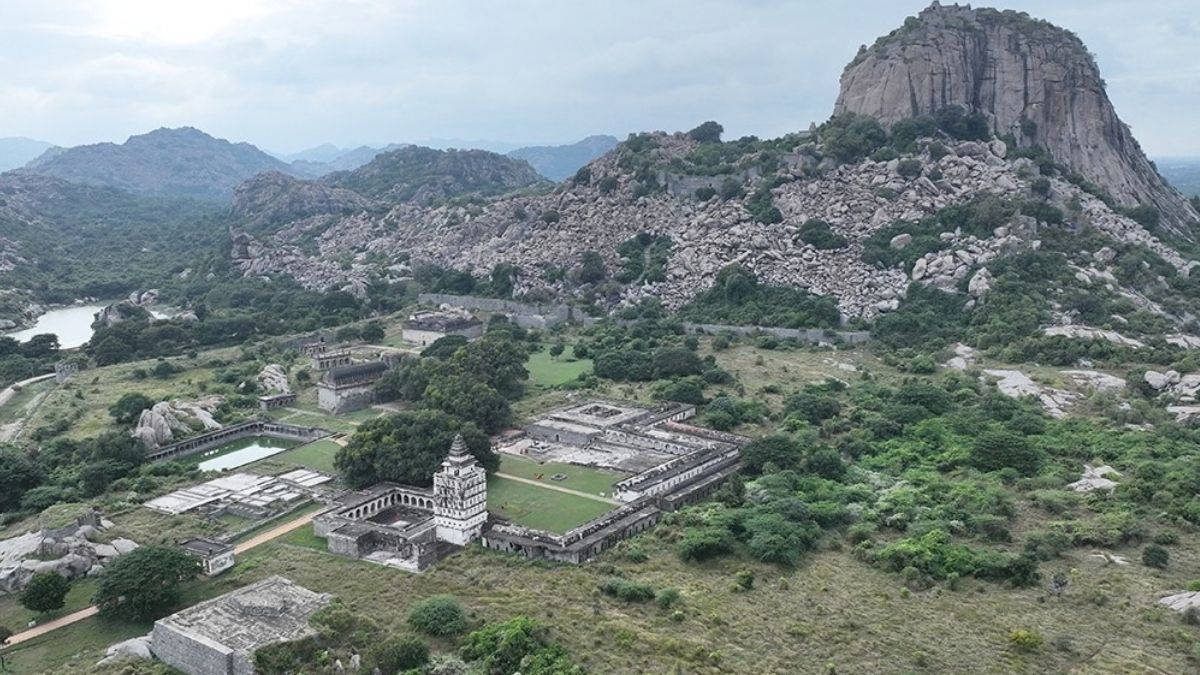
Elevated sections offer countryside views amid rugged rocks, ancient walls and ruins (Photo: ASI India)
These successive changes of power have left Gingee with a layered historical identity. Its walls tell stories not of a single dynasty but of centuries of competing kingdoms, military campaigns and shifting political control.
Why this place remains an offbeat heritage destination
Despite its imposing scale and historical significance, Gingee remains relatively less prominent on Tamil Nadu’s mainstream tourist circuit compared with destinations such as Mahabalipuram, Thanjavur and Madurai.
Part of its appeal lies precisely in this relative lack of crowds. Exploring Gingee involves walking through its extensive fortifications and climbing sections of its rocky hills, making the experience feel more like discovering a historic landscape than simply visiting a monument.
The elevated sections also offer expansive views of the surrounding countryside, while the combination of rugged rocks, ancient walls and ruined structures creates a striking setting for visitors interested in history and architecture.
