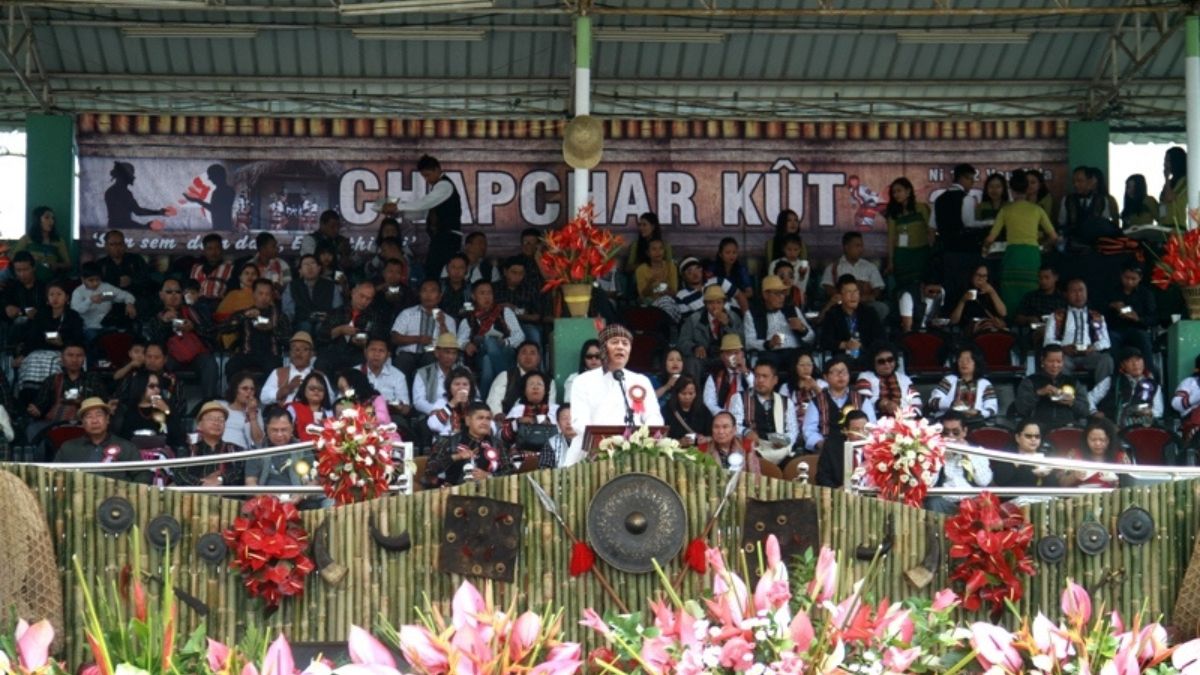
Chapchar Kut Festival celebrates Mizoram’s vibrant tribal culture and springtime traditions (Photos: Government of Mizoram)
Chapchar Kut is celebrated across Mizoram, drawing people from towns and villages to processions, dances, music and cultural programmes. Though its roots lie in the everyday life of jhum cultivators, it has evolved into a state-wide cultural celebration that brings together Mizos from different tribes and walks of life in joyful festivity.
The timing of the festival is tied directly to the traditional slash-and-burn cycle after cutting forests and bamboo for jhum cultivation, farmers leave the vegetation to dry before burning it. That waiting period, known locally as chap char, becomes an occasion for community gathering, feasting and celebration.
Origins in folklore and community resilience
The origins of Chapchar Kut are rooted in oral history and tribal lore. One widely shared account tells of a village chief whose hunting party returned empty-handed. To lift spirits, he organised an impromptu feast with whatever food was available, encouraging villagers to contribute from their own stores.
The feast, accompanied by rice beer, song and dance, lifted the mood so much that it became a tradition repeated each year at that same time. This blend of communal feasting, music and dance is said to have given birth to what became Chapchar Kut.
Over time the festival spread to all villages of Mizoram, becoming deeply embedded in local cultural practice. In its early form it could last several days, with dances, feasts and communal celebration marking each phase of the celebration. Today it remains a highlight of the cultural calendar, recognised as a gazetted public holiday in the state.
Also Read: Shigmo: Goa’s vibrant spring harvest festival
The Cheraw dance: Rhythm, skill and heritage
What makes Chapchar Kut culturally unique is Cheraw, the famous bamboo dance that has become its most iconic performance. In this dance, long bamboo staves are placed on the ground and rhythmically tapped together by participants seated at either end.
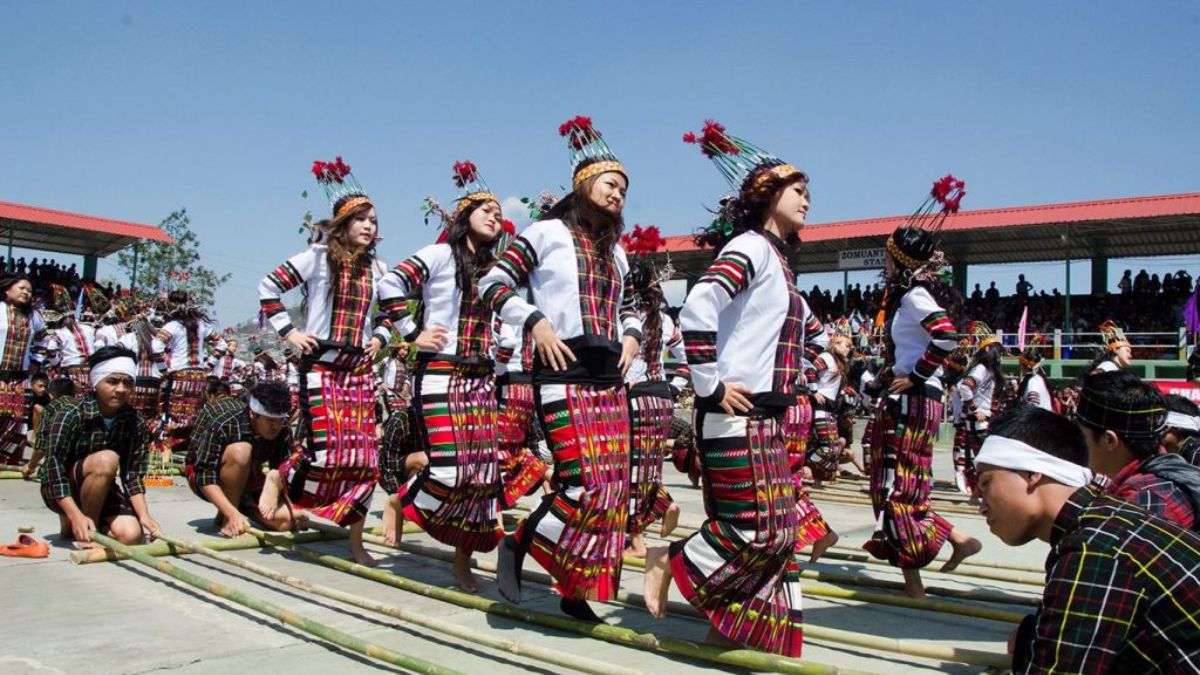
Cheraw, Mizoram’s bamboo dance, with performers weaving between tapping bamboo poles
Dancers, often women dressed in colourful traditional attire, step in and out of the moving bamboos with precise timing and grace, matching their movements to the rhythm created by the bamboo poles and accompanying music.
Cheraw is both visually striking and deeply symbolic. The coordination and agility required reflect the community’s connection to land, labour and cooperation, tracing back to Mizoram’s agrarian roots. The use of bamboo in the dance, a material central to the jhum cycle itself, reinforces this cultural link to the forests and the seasonal work rhythms that shape rural life.
Alongside Cheraw, other traditional dances and cultural performances take place, showcasing the diversity of Mizo artistic expression. Folk songs, processions, costume displays and communal activities fill the festival grounds with colour, sound and movement.
Also Read: Forest Churches: Unique settings for Christmas celebrations in tribal villages
Culinary traditions and shared meals
Food is central to Chapchar Kut, connecting celebration to Mizoram’s rich culinary heritage.
Festival tables feature iconic Mizo dishes such as Bai, a mixed vegetable and bamboo shoot stew often cooked with pork, Vawksa Rep, smoked pork with greens and chillies, Sawhchiar, a rice-and-meat porridge and Bekang, fermented soybeans served with rice or in stews.
Simple dishes like Chhum Han or sticky rice cakes also appear, while Zu, traditional rice beer, is shared among communities.
Sharing food during Chapchar Kut is as much a social act as a culinary one, bringing families, neighbours and festival participants together in conversation and celebration.
Community, continuity and cultural pride
Chapchar Kut today is more than a moment between agricultural tasks. It has become a powerful expression of cultural identity and community continuity. People from across the state and even visitors from neighbouring regions, come together to witness and participate in the festivities.
Traditional attire, handicrafts and local cuisine add even more texture to the celebrations, reinforcing links between past and present.
For many Mizos, Chapchar Kut is a time to transmit folk knowledge, strengthen community bonds and celebrate a shared heritage that remains meaningful in a rapidly changing world. The rituals, dances and collective spirit of the festival ensure that Mizoram’s cultural rhythms remain alive and visible to future generations.