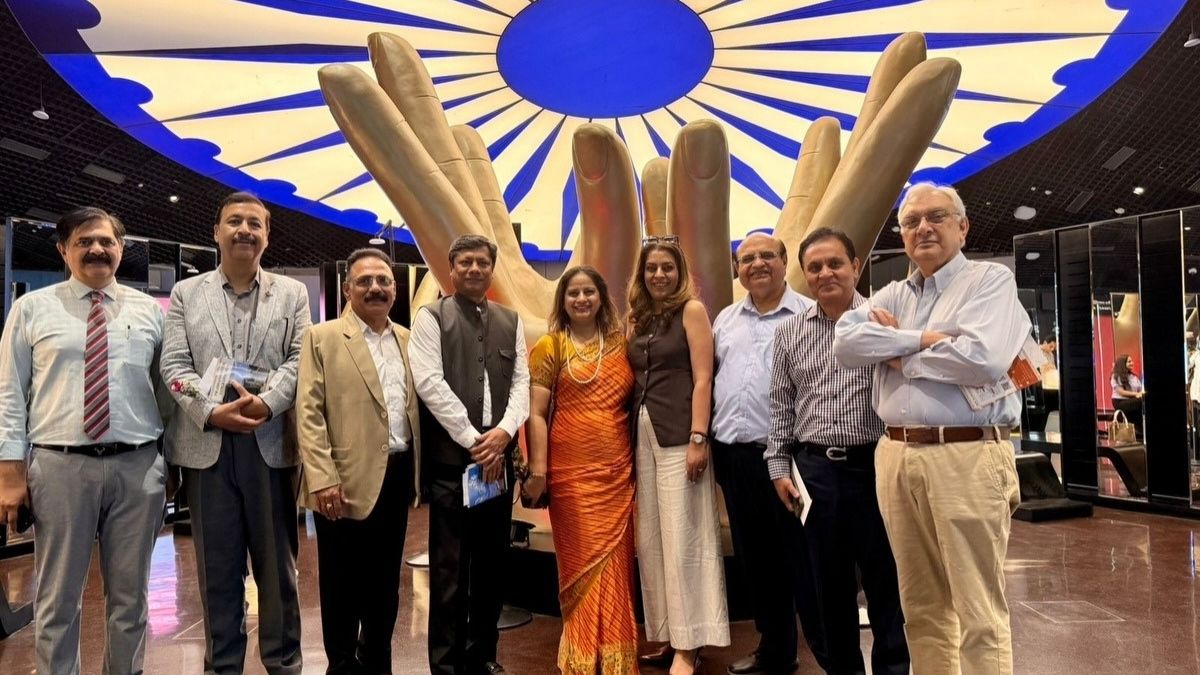
SATTE organised a familiarisation tour for the travel industry (Photos: India & You)
The Prime Ministers Museum and Library, formerly known as Trimurti Bhawan, located in New Delhi, in collaboration with SATTE, a leading travel and tourism exhibition, organised a familiarisation tour for the travel industry, revealing a heritage attraction that is steadily growing its visitor numbers and is about to get bigger.
The tour attracted a strong participation from leading travel associations and industry stakeholders, bringing the travel fraternity together to explore the museum.
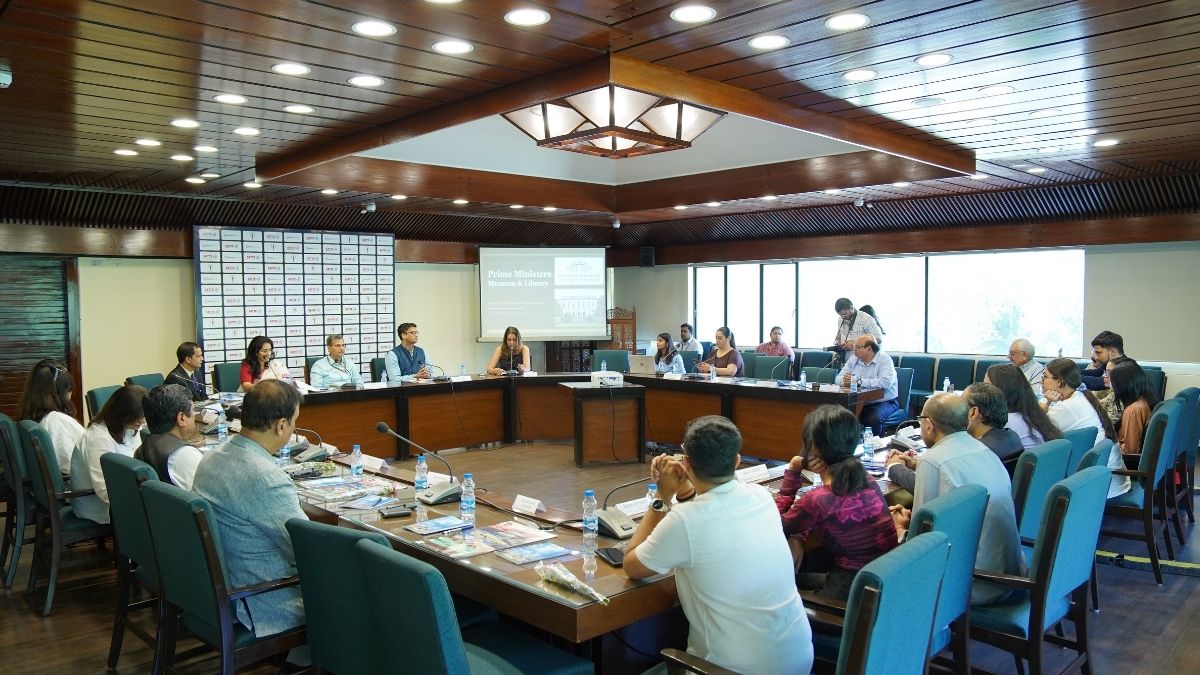
The event saw strong participation from leading travel associations and industry stakeholders
On the occasion, Ashwani Lohani, Director of the Prime Ministers’ Museum and Library, said that PMML was not just about showcasing various Indian Prime Ministers, it was also about enabling people to experience India’s journey since independence, its Constitution, its transformation and its progress through technology-driven storytelling.
Lohani added that the PMML was built on three pillars, the museum, the planetarium, and a strong academic centre and it has emerged as a primary institution for research on the Indian history and the society of modern and contemporary period.
According to Lohani, the museum recorded 6,08,765 visitors in 2024–25. In the current financial year 2025–26, that figure has already crossed 6,40,419, a jump that reflects both growing public interest and the museum’s increasing relevance as a school excursion destination.
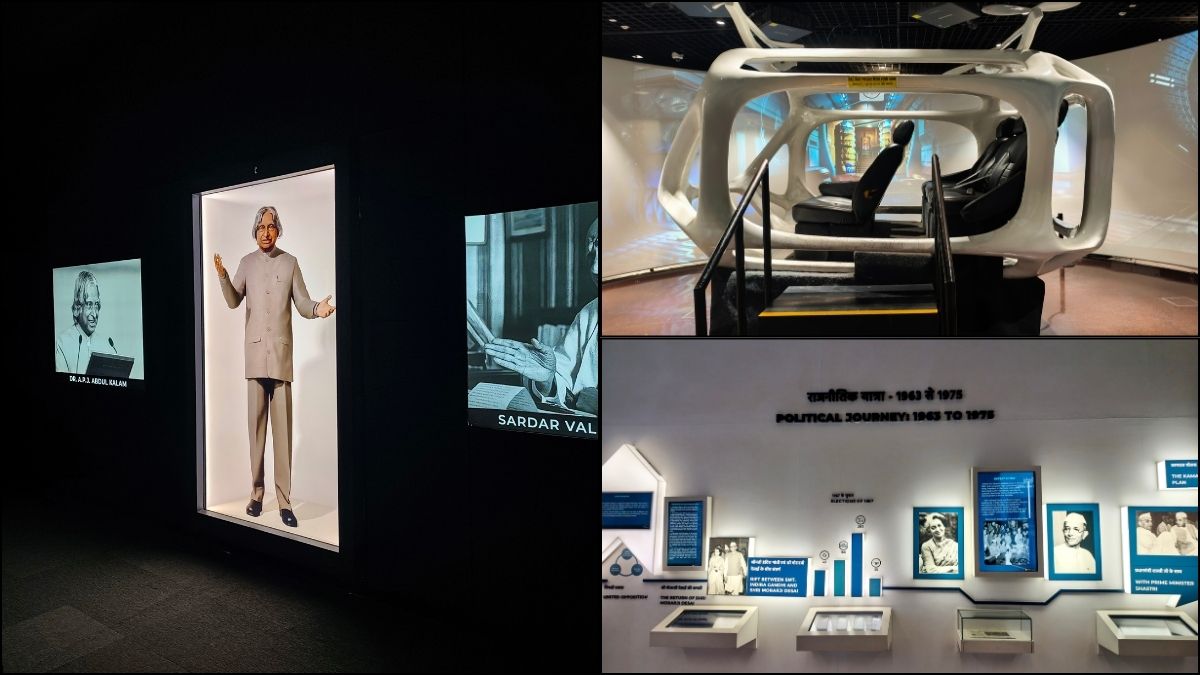
The museum offers a comprehensive view of India’s development through technology-based interfaces like VR, interactive screens, and holograms
“We have between 1,000 to 1,500 daily visitors, in addition to between two and three school groups every single day. That consistent school footfall is significant. The museum is functioning as part of the educational infrastructure of the city, not just as a weekend tourist stop,” says Garud Rahul Deelip, Financial Controller in the Prime Ministers’ Museum and Library.
PMML also features a notable fine dining restaurant named Forest Table
The PMML traces India’s political journey from Independence to the present, covering every Prime Minister from Jawahar Lal Nehru, the first Prime Minister of independent India, to Narendra Modi, the current incumbent, through a mix of archival material, personal artefacts and technology installations.
The exhibits are designed to be participatory rather than passive a deliberate design choice that shows up in the gallery. Dilip highlighted some parts of the museum, such as Bhavishya ke Jhalakiyan, Surkha, Selfie with PM, Walk with PM, Letter with PM, and the AL Holo Box.
The AI Holo Box is among the more striking of these a holographic experience that brings historical figures and moments to life through projection technology. Walk with PM offers visitors a more immersive sense of proximity to leadership, while the selfie installation has proven particularly popular with younger groups. An audio guide rounds out the experience for those who prefer to move at their own pace.
The 3D installations and digital storytelling scattered across the galleries are consistent with the museum’s broader ambition. This is not a place designed purely for historians. The intent is to make India’s post-Independence political history accessible and interesting to a general audience, including children and first-time museum visitors.
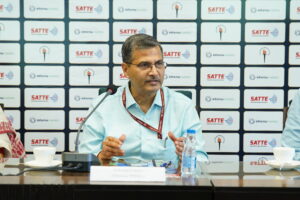
Ashwani Lohani
While the gallery floors draw the crowds, the research function of PMML is something Lohani spoke about with particular emphasis. The archive holds 13 million documents, making it one of the most significant repositories of post-Independence Indian political history in the country.
“Researchers come to visit and see, it is the finest place for research,” says Lohani.
For historians, political scientists, and journalists, this collection represents a resource that is, in many ways, still being discovered. The breadth of material spanning correspondence, policy papers, photographs and official records places PMML in the same category as national archives elsewhere in the world, though it remains underutilised by the academic community relative to its scale.
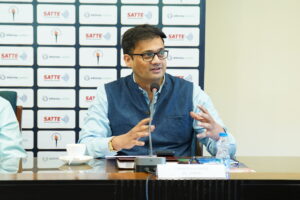
Garud Rahul Deelip
The most immediate operational development at PMML is a structural one. Priyanka Mishra, Chief Executive Officer, Prime Ministers’ Museum, confirmed at the event that the museum is launching a dedicated holding area on May 1.
“Visitors will be sent slot by slot into the museum,” she explained, noting that groups above 30 will be managed through this system.
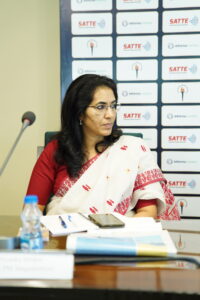
Priyanka Mishra
The change is designed to improve the flow of visitors through the galleries, which can get crowded during peak school hours and weekends. Slot-based entry is standard practice at high-footfall museums globally, and the introduction of a holding area signals that PMML is scaling its operations to match its growing audience. For travel agents planning group tours, it also means advance coordination will become more important group bookings above 30 will need to factor in slot allocations.
The Nehru Planetarium, located within the PMML premises, is also a major tourist attraction. With regular 2D & 3D shows on astronomy, the Planetarium has emerged as a premier hub for astronomy education, popular science, and space science education in India. It is widely recognised for promoting scientific temper through captivating star shows, workshops, and exhibitions, particularly with its modernised hybrid projection systems.
PMML also features a notable fine dining restaurant named Forest Table. Situated on top of a rocky mound near the planetarium, it offers panoramic views and serves visitors, with additional cafeteria and canteen facilities mentioned within the premises.