
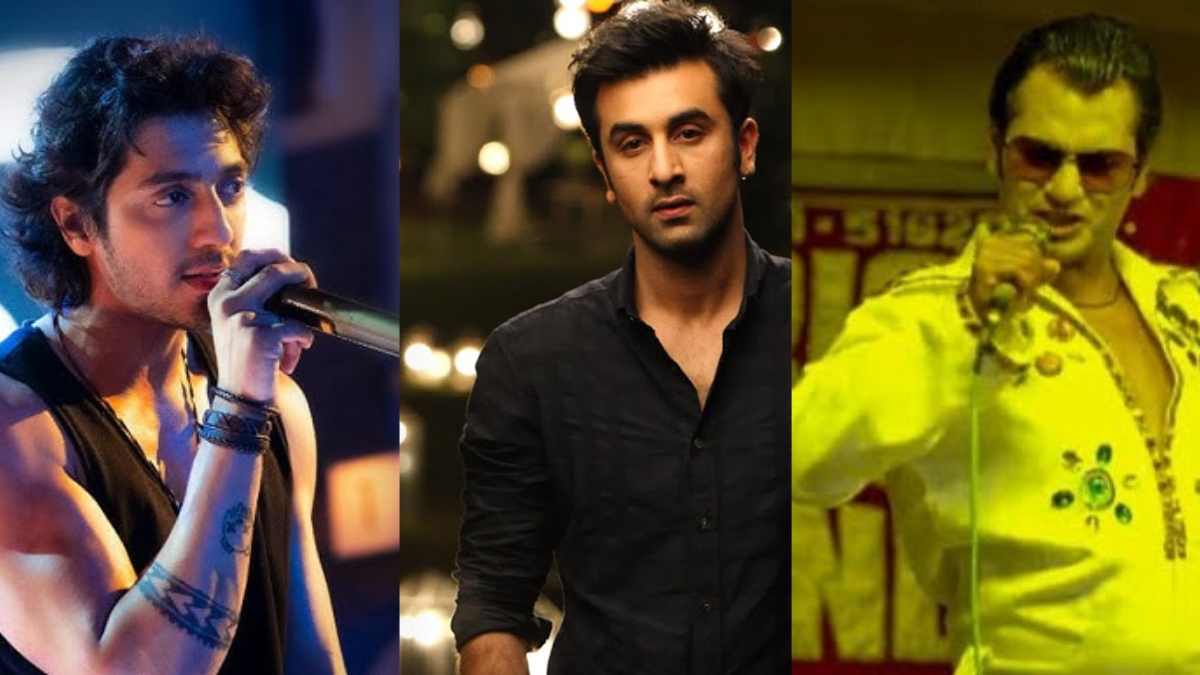
Parallel narratives in Bollywood’s youthful romances also work in indirect ways, through dissonance
Songs in Bollywood are rarely ornamental. They have served as emotional shorthand for decades, strengthening character journeys and filling in narrative gaps. However, over the past two decades, music has developed into a more complex narrative device, particularly in young musical romances. These days, instead of stopping the narrative for a song, filmmakers use songs as emotional undertones that accompany spoken storylines, giving viewers an “inner film” inside a movie.
“Saiyaara, a recently released romantic-comedy movie, directed by Mohit Suri is an excellent example of a film that uses music as a parallel storytelling device. Consider one of the film’s song Dhun, sung by Arijit Singh, or rather, what happens before we arrive at this musical sequence. This is how Mohit Suri establishes Krish’s skill and his promising future. The music in Saiyaara does work in tandem with the narrative. It lends support to it, adds depth to it,” Vikas Yadav, a film critic based in Lucknow tells Media India Group.
The key to this parallel narrative lies in how songs double as internal dialogues. “Songs have their lyrics and music to capture the characters’ state of mind, to convey what they are feeling in that particular moment,” Yadav adds.
He also says that this is evident in films like Ae Dil Hai Mushkil (2016), where the song Channa Mereya expresses heartbreak in ways dialogue cannot, or Rockstar (2011), where Mohit Chauhan’s voice in Nadaan Parindey echoes Ranbir Kapoor’s emotional disintegration.
Such musical moments don’t just accompany the plot, they reveal what remains unsaid, often mirroring the unspoken anxieties and contradictions of youth.
From an audience perspective, these “inner films” resonate deeply.
“When I think of Channa Mereya, I remember not just the wedding sequence, but also my own heartbreak. It felt like Ranbir’s silence on screen was my silence too, and the song said what I couldn’t tell anyone. Without that song, the scene would not have carried half its meaning,” Namit Sharma, a 24-year-old MBA student from Mumbai, tells Media India Group.
“In Kabira from Yeh Jawaani Hai Deewani (2013), I saw my own friendships change after college. The lyrics were not about me, but the feeling of nostalgia and moving on, they were exactly mine. It felt like two stories were running together: the film’s plot, and my own memories tied to the song,” says Sanya Tyagi, a freelance writer based in New Delhi.
Parallel narratives in Bollywood’s youthful romances also work in indirect ways, through dissonance.
“The first is Emotional Atyachaar from the film Dev D (2009). The words are zany, but they reflect the pain Dev is experiencing during the scene. Everybody is dancing, and the music is upbeat. This clash suits the movie’s overall mood—unpredictable, textured, colorful. Similarly, in Heer Toh Badi Sad Hai from Tamasha (2015), the music is happy and energetic, but the lyrics talk about a woman in a very sad state. Deepika’s character pretends to be cheerful in front of colleagues, while inside she is broken. The beats mask the sadness, just as her smile masks her pain,” says Yadav.
This technique has become vital in youthful romances, where dual identities often define the protagonists, their public selves projecting confidence and vitality, while their private selves wrestle with longing, uncertainty, or fragility.
According to FICCI-EY’s Media and Entertainment Report 2024, the Indian film music industry grew by 7.3 pc over the previous year, with film songs accounting for more than 70 pc of all music streams in India across platforms. More tellingly, Spotify India’s 2024 data revealed that Bollywood romantic tracks received over 4.5 billion streams in the age group 18-34, highlighting their dominance among younger audiences.
This demographic is not just consuming music; it is constructing personal narratives through it. Spotify’s global trends also note that India leads in playlist-making, with “Bollywood Love” and “Mood Booster Hindi” among the top curated lists. Many of these playlists reflect how audiences treat these tracks not as background but as parallel emotional landscapes to their own lives.
Bollywood’s youthful romances, from Aashiqui 2 (2013) to Tamasha (2015) to Gehraiyaan (2022), stand apart because their songs do not “pause” the film. Instead, they enrich it with dual storytelling.
“Songs in these films don’t diverge from the narrative. Even when the tone clashes, it is deliberate, it reveals the contradictions within the characters, their public performance versus their private truth,” Yadav adds.
In today’s Bollywood, youthful musical romances thrive not just on plots of love and heartbreak but also the way music runs as a silent twin film, amplifying anxieties, desires, and unspoken longings.
