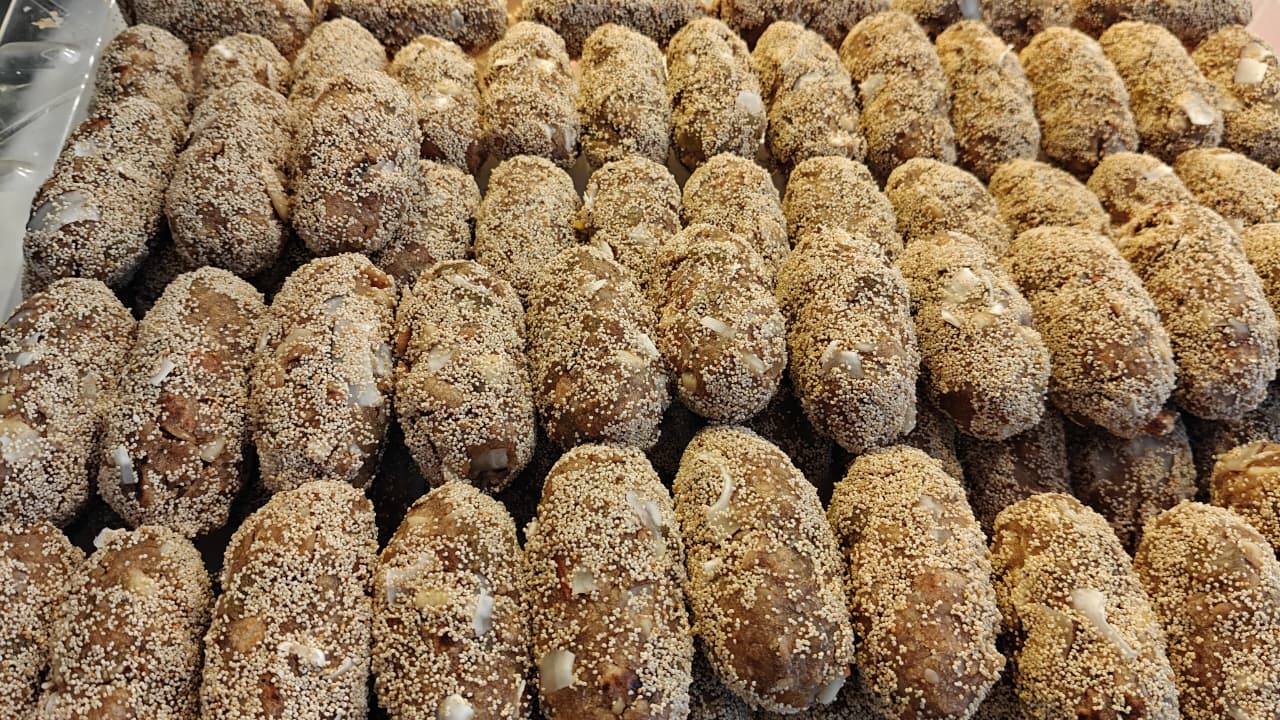
Tosha has been closely tied to religious gatherings such as recitations of the Quran known as khatams (Photo: Shah Khursheed)
Amidst its culinary diversity, North Kashmir is perhaps best known for a traditional dessert called Tosha, a preparation rooted in the region’s Sufi culture and religious life. Made from flour enriched with ghee, poppy seeds and dry fruits, Tosha is not associated with celebration alone. It is prepared as a mark of respect during times of joy as well as mourning and distributed among neighbours and relatives as part of a shared act of prayer and remembrance.
For decades, Tosha has been closely tied to religious gatherings such as recitations of the Quran known as khatams, Urs commemorations at shrines, and funeral-related observances. In these settings, the dessert is prepared as niyaz, an offering believed to carry barkat, or blessing.
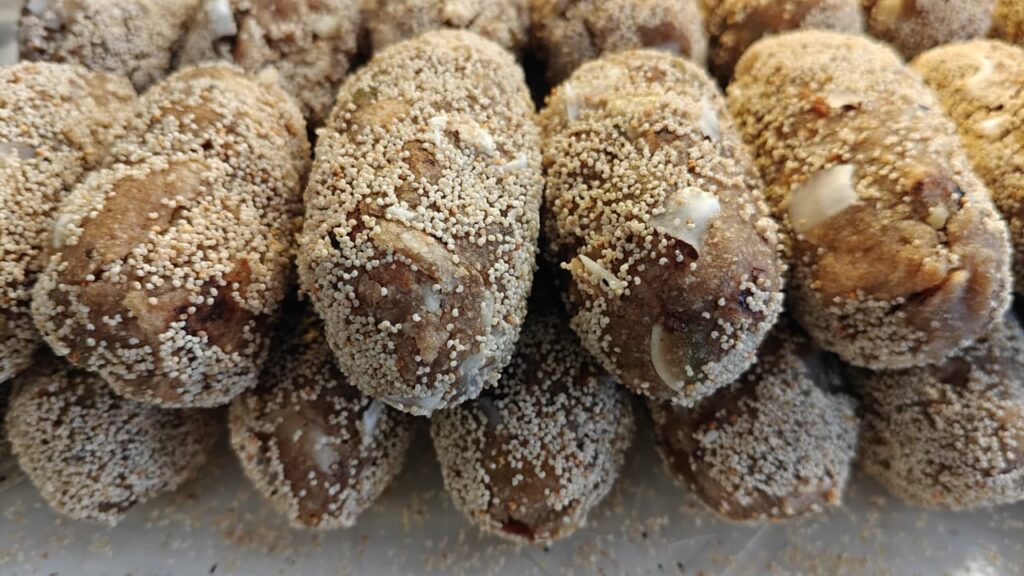
Tosha is often remembered as a collective act
In north Kashmiri households, the making of Tosha is often remembered as a collective act. Once prepared, it is divided into small portions and sent to nearby homes. Children or younger family members carry plates to neighbours and extended relatives, reinforcing a sense of shared responsibility and belonging. Receiving Tosha is understood not simply as hospitality, but as acceptance of the prayer attached to it.
Over time, the dish has come to represent balance between restraint and richness, between personal faith and social obligation. Unlike elaborate sweets prepared for weddings or festivals, Tosha avoids excess. Its significance lies in intention rather than presentation.
It is in the middle of this tradition that the act of making Tosha unfolds unhurried and deliberate. The process begins with flour and water, brought together slowly until a soft dough forms. It is kneaded patiently, shaped by repeated movement, and then left to rest. The pause is important. In many homes, it is believed that rushing this stage affects not just the texture, but the spirit of the dish. After the pause the dough moves easily under the hands. Placed on a hot pan, it responds to warmth, turning firm and golden as it roasts. The bread is flipped gently. Once ready, it is torn into pieces by hand still warm, still pliable before being transformed further. What follows is not hurried mixing, but careful bringing together, allowing heat, touch and time to do their work.
This method, passed down quietly, is rarely written or measured. It is learned through watching, correcting, repeating.
The social function of Tosha extended beyond faith. Its preparation and distribution reinforced neighbourhood ties and collective participation. During periods of mourning, the dish served as a way for families to engage with the community without elaborate hospitality. In moments of joy such as the birth of a child, recovery from illness, or the fulfilment of a vow it marked gratitude and acknowledgement. In both cases, Tosha acted as a neutral, respectful offering appropriate for all occasions, avoiding extravagance while fulfilling social obligation.
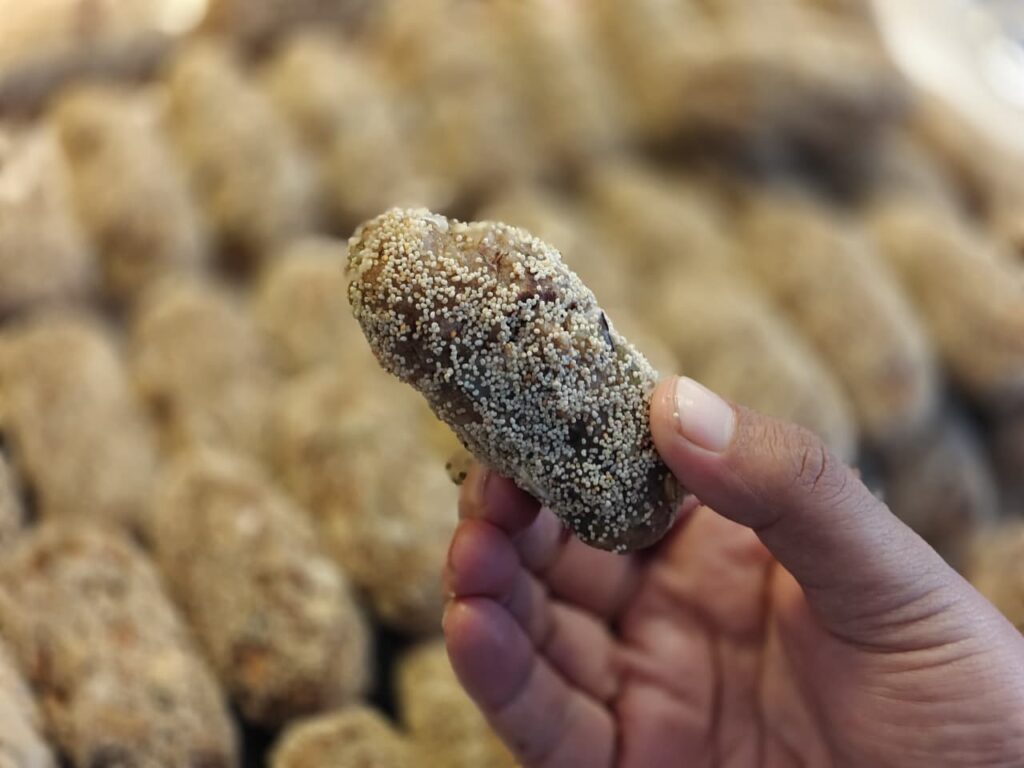
Recent years have seen a gradual revival of Tosha
Over time, however, the presence of Tosha in everyday cultural life declined. Changing lifestyles, smaller family units, and the increasing preference for store-bought sweets reduced the frequency of traditional preparations. The process of making Tosha is labour-intensive and time-consuming, requiring sustained attention for several hours. As religious gatherings became more private and less communal, the occasions that once necessitated large-scale preparation also diminished.
By the late 1990s and early 2000s, Tosha had largely disappeared from public visibility. While it continued to be prepared occasionally in rural households, many younger Kashmiris grew up unfamiliar with its taste or significance. In urban areas, especially, the dessert became associated almost exclusively with funerals or religious rituals, reinforcing the perception that it belonged to the past rather than contemporary life.
Reversing this decline, recent years have seen a gradual revival of Tosha, driven largely by local cooks, small eateries, and home-based kitchens across Kashmir. Rather than reimagining the dish, these efforts have focused on preserving its original form. Tosha has begun appearing on limited menus, often described simply as a traditional Kashmiri dessert, without modification or fusion elements.
This reintroduction has been accompanied by renewed interest in the cultural meaning of the dish. For older customers, encountering Tosha outside ritual contexts has prompted reflection on its earlier role in communal life. For younger diners, it offers an entry point into a culinary tradition that predates commercial food culture. Some eateries make a point of explaining the dish’s background, emphasising its roots in religious practice and community sharing.
The revival of Tosha also reflects a broader effort to document and preserve Kashmir’s lesser-known food traditions, many of which exist outside the well-documented wazwan repertoire. Food researchers and cultural historians note that dishes like Tosha represent a parallel culinary history one shaped by faith, restraint and social ethics rather than celebration or status.
At the same time, the shift of Tosha from sacred offering to menu item raises questions about context and meaning. While some says that selling a dish traditionally associated with prayer risks stripping it of its spiritual significance, others see the revival as a form of preservation. By keeping the recipe intact and acknowledging its origins, they contend, the dish can continue to carry memory even in new settings.
Importantly, the preparation methods have remained largely unchanged. Cooks involved in reviving Tosha emphasise the use of pure ghee, slow heat, and minimal ingredients. There is a conscious resistance to mass production, as the texture and flavour depend heavily on individual attention. This insistence on process has helped maintain the dish’s authenticity, even as its context evolves.
Tosha’s reappearance also reflects changing attitudes toward traditional foods among younger Kashmiris, many of whom are increasingly interested in local history and identity. In a region where cultural practices have often been disrupted, food has emerged as a tangible link to continuity. Preparing or consuming Tosha becomes a way of engaging with inherited traditions without requiring formal religious participation.
Today, Tosha occupies a space between memory and adaptation. It continues to be prepared for religious occasions in some households, while also finding a place in public food culture. Its meaning may no longer be uniform, but its core identity remains intact.