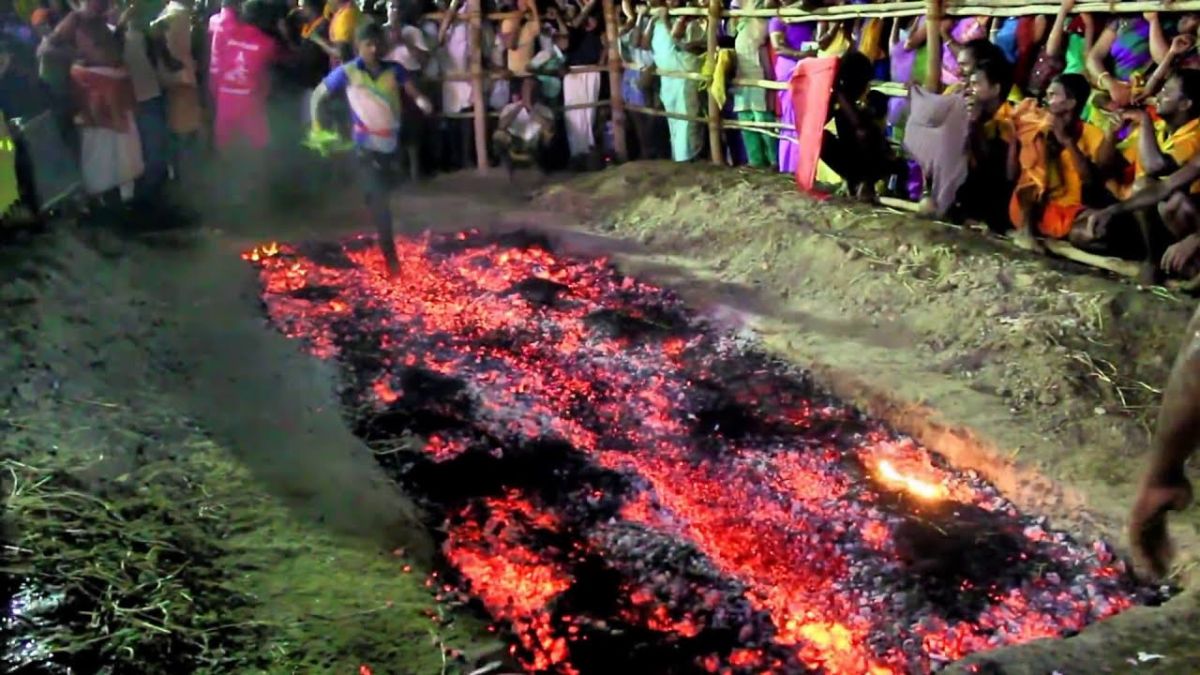
Theemithi unites communities through barefoot firewalking, devotion and faith (Photo: Utsav)
Theemithi, observed each year between March and April across Tamil Nadu, Karnataka and Andhra Pradesh during temple festivals and village celebrations, unites communities such as the Vanniyars, Nadars, Kshatriyas and other local village groups devoted to Draupadi and regional goddesses, through rituals of barefoot firewalking, music, chants and intense spiritual devotion.
Rooted in folk traditions and local goddess cults, it has evolved into a distinctive practice where endurance and faith converge, allowing devotees to engage directly with divine protection, seek blessings and affirm both personal devotion and collective identity.
Participants see it as a profound expression of faith, blending mythology, personal vows and collective identity into a single, intense experience. Despite regional differences, what binds these communities together is a shared belief in the protective power of the divine, expressed through enduring fire as an act of faith.
Regions and community practice
In Tamil Nadu, Theemithi is especially prominent, observed in towns and villages during temple festivals in months corresponding to seasonal cycles or harvests. Key celebrations occur at Draupadi Amman and Mariamman temples, where hundreds of devotees undertake the ritual to seek divine blessings.
Andhra Pradesh and coastal Karnataka also host firewalking rituals, often linked to local Shakti deities. Though less closely associated with the Mahabharata narrative, these festivals similarly involve vows, thanksgiving and devotion, emphasising spiritual purification and communal participation.
Across these regions, devotees come from diverse social backgrounds farmers, artisans, householders united by folk devotion to village deities and the belief that enduring fire demonstrates faith and earns divine favour. Diaspora communities, particularly in Singapore, Malaysia and South Africa, continue to practice Theemithi, maintaining cultural ties abroad.
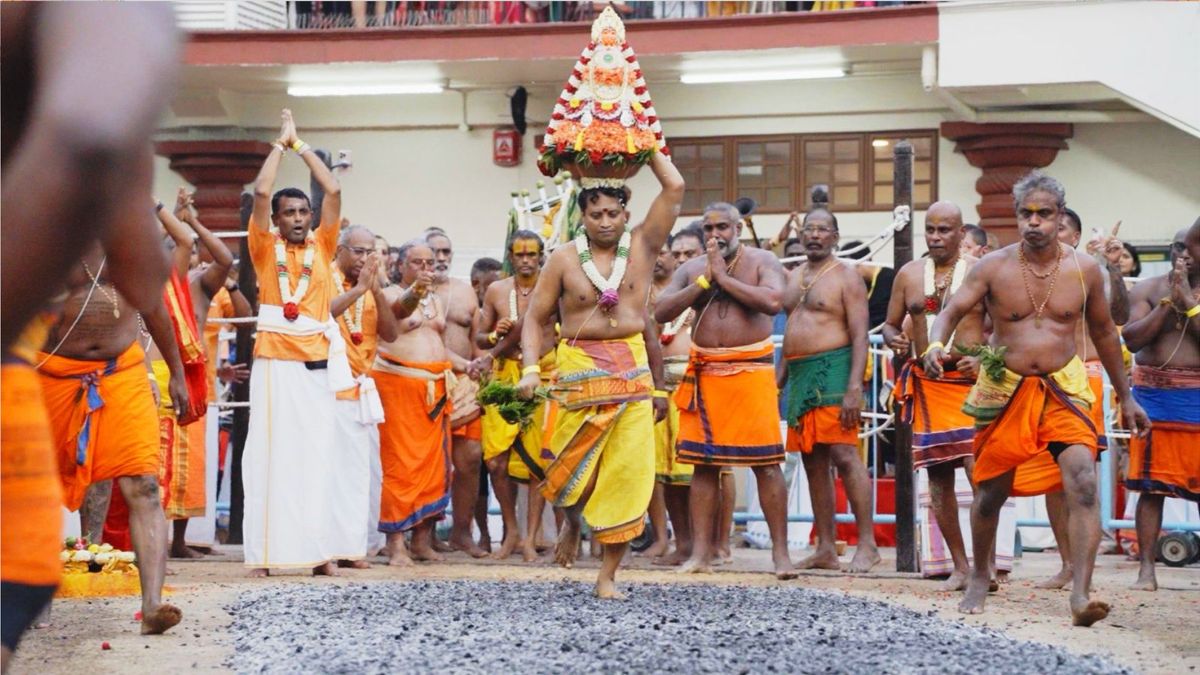
Diaspora communities in Singapore, Malaysia, and South Africa continue to preserve Theemithi traditions abroad (Photos: Hindu Endowments Board, Singapore)
Also Read: Capturing unique rituals & myths of Mewar Bhils through lens
Origins in mythology and folk belief
Theemithi draws inspiration from Draupadi’s trial by fire in the epic Mahabharata, where she emerged unharmed, symbolising purity, courage and divine protection. In many communities, walking on fire reenacts her ordeal or honours local goddesses, reinforcing the belief that divine grace shields the faithful from harm.
In other areas, the ritual emerges from ancient village traditions and folk beliefs, connecting worshippers with local spirits, ancestors and guardian deities. It also serves to preserve collective memory, as oral stories, songs and community rituals embed regional history and cultural values into the practice.
Purpose and significance
At its heart, Theemithi fulfills multiple spiritual and social functions. Devotees perform the ritual to seek blessings for health, prosperity, fertility and protection from hardship. Many take personal vows promising to walk the fire if their prayers are answered, reinforcing a spiritual contract between devotee and deity.
The ritual also strengthens communal bonds. Families and entire villages participate in processions, prayers and preparations, fostering shared identity and cultural continuity. The communal witnessing of the ritual underscores collective faith while reinforcing social unity.
Also Read: Unique wedding rituals practised in India
Preparation and performance
The firewalking process involves rigorous preparation. Participants often observe fasting, maintain strict mental discipline and participate in prayers before approaching the coals. The fire pit is sacred, accompanied by music, chanting and ceremonial guidance, creating an atmosphere of intense devotion.
During the act, participants walk barefoot across glowing coal, emerging physically unharmed through faith and focus. This dramatic physical display embodies spiritual purity, courage and surrender to divine power.
Community, identity and cultural continuity
Theemithi is deeply tied to local communities, many of whom have historically maintained folk traditions and ancestral worship. While the ritual highlights personal devotion, it also elevates collective identity, transmitting cultural knowledge, values and social cohesion across generations.
The ritual’s visual and sensory intensity the heat of the embers, the sounds of drums and chants, the anticipation of the walk reinforces the connection between myth, faith and lived experience. It is a living testament to the enduring relationship between belief, endurance and cultural heritage.