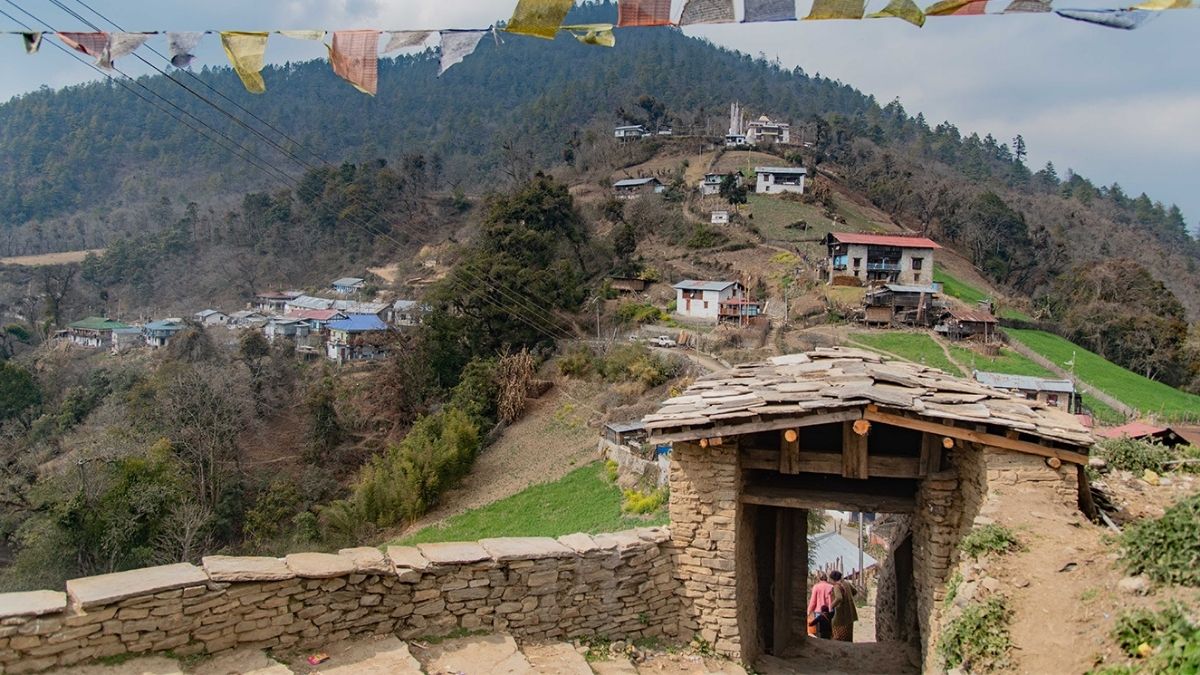
Ancient stone houses line the fortified Monpa village of Thembang in Arunachal Pradesh (Photos: Arunachal Pradesh Tourism)
Nestled in the mountains of Arunachal Pradesh at an altitude of about 2,000 metres, Thembang is a traditional Monpa village known for its historic settlement structure, ancient stone architecture and a fortified layout that reflects its origins as a defensive hill settlement. The village features on the tentative heritage list of UNESCO for its cultural and architectural significance.
The settlement is enclosed within historic stone ramparts, with old entry points and remnants of defensive structures that once protected the community. Inside, closely clustered stone houses built using local materials still stand and remain inhabited by Monpa families, making Thembang a living heritage site rather than a preserved relic.
Unlike commercial hill stations, tourism in Thembang is rooted in homestays run by local families. Visitors stay within village homes, sharing meals and participating in daily routines. This model ensures that tourism benefits are directly linked to the community while keeping the experience authentic and low-impact.
Food is a central part of the experience. Traditional Monpa cuisine is simple, warming and suited to the cold mountain climate. Meals often include Thukpa, a noodle-based soup, Zan, a staple made from millet or barley flour, local stews, boiled vegetables and yak-based dairy products in some households. Butter tea, a salty and butter-rich drink, is commonly served and reflects broader Himalayan food traditions. Most meals are organic and locally sourced, shaped by what the land produces seasonally.
Cultural life in Thembang is closely tied to Buddhism and Monpa traditions. Visitors may come across prayer flags, small household shrines and chortens scattered across the village landscape. The rhythm of life follows agricultural cycles and spiritual observances, with community gatherings playing an important role in village cohesion.
One of the most important cultural events linked to the wider region is the Losar Festival, the Monpa New Year, usually celebrated between January and February, depending on the lunar calendar. In Thembang and nearby villages, Losar is marked by prayers, masked dances, music, traditional attire and communal feasting. It is one of the most vibrant times to experience Monpa culture, as families come together to celebrate renewal and spiritual cleansing.
Other local rituals and seasonal ceremonies also take place throughout the year, often linked to farming cycles, Buddhist observances and community wellbeing. While not all are large public festivals, they reflect a deeply rooted cultural system that continues to shape daily life in the village.
Also Read: Journey to the Mystical Land: Beyul of Pemako, Arunachal Pradesh
Surrounded by dense forests, alpine vegetation and sweeping Himalayan views, Thembang also offers slow outdoor experiences. Short hikes around the village pass through pine forests, terraced fields and grazing lands, often opening into wide viewpoints of the Eastern Himalayas. The region is suitable for nature walks, photography and birdwatching, with the surrounding ecosystem supporting a variety of Himalayan species.
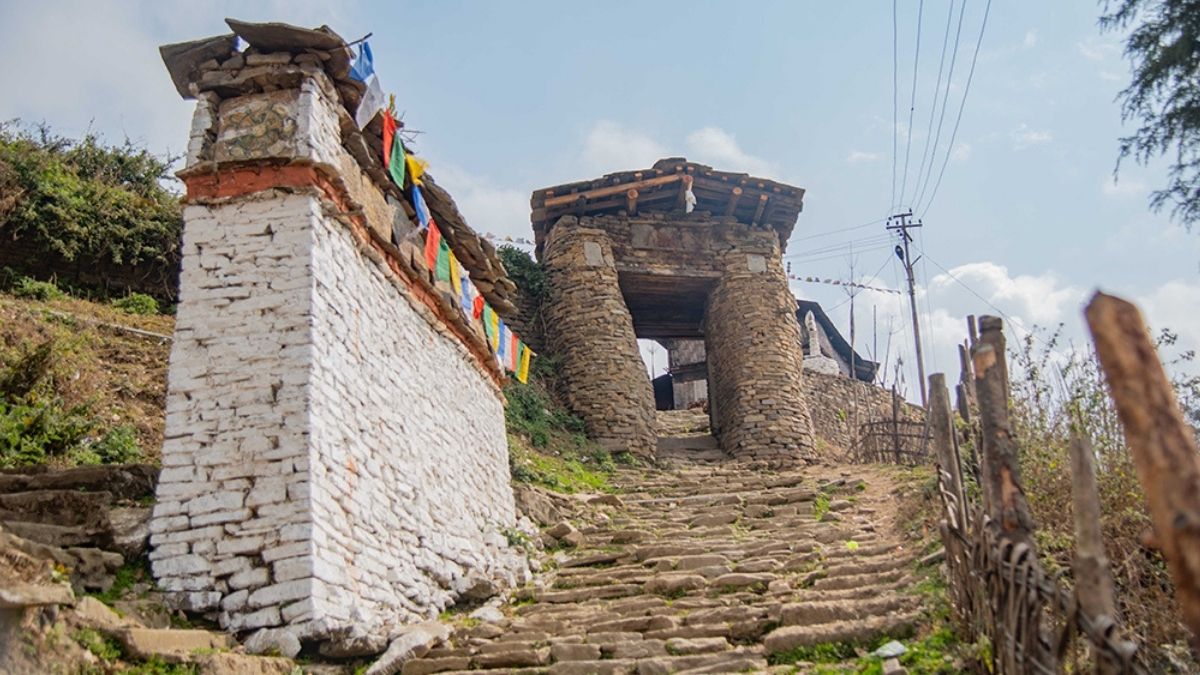
Historic stone ramparts encircle the ancient village
The biodiversity around Thembang adds to its appeal as an eco-tourism destination. Forested slopes and high-altitude vegetation zones support a range of flora and fauna typical of the Eastern Himalayas. Seasonal changes transform the landscape from mist-covered valleys in the monsoon to crisp, clear winter skies with long visibility across mountain ranges.
Within Thembang itself, the village is structured like a living heritage site, and most of what you see is part of its everyday life. The experience is less about individual monuments and more about moving through a preserved cultural landscape.
One of the most important features is the Thembang Dzong, the fortified core of the village. This historic stone enclosure reflects the settlement’s origins as a defensive hill village. Walking along the old ramparts and entry points gives a clear sense of how the community was once protected from external threats.
Also Read: The Ziro Valley in Arunachal Pradesh
Inside the settlement, traditional Monpa stone houses are a major highlight. These homes, still inhabited by local families, are closely clustered and built using locally sourced stone and wood. Many of them retain their original construction style, offering a direct look at Himalayan vernacular architecture.
Scattered across the village are small chortens or stupas and prayer structures that reflect the deep Buddhist influence in daily life. Prayer flags stretch across pathways and rooftops, especially along ridgelines and open spaces where wind carries prayers across the valley.
There is also a small local monastery space known as gompa used by villagers for daily prayers and rituals. While modest in scale, it plays an important role in community gatherings and religious observances.
At Thembang, each season offers a different experience. Summers are mild and comfortable for village walks and light trekking. The monsoon brings dense greenery and dramatic cloud cover, though travel can be challenging due to rain and road conditions. Winter is considered the best time for clear views, cultural immersion and festival experiences, especially around Losar.
Tourism infrastructure remains minimal by design. There are no hotels or large resorts inside the village. Accommodation is entirely based on homestays and small community-run setups, which helps preserve both the architectural integrity and the cultural rhythm of the settlement.
For now, Thembang stands as one of the few places where heritage is still lived rather than displayed. It offers travellers a close encounter with Monpa culture, traditional Himalayan food, seasonal festivals and a mountain lifestyle that continues to evolve without losing its roots.