
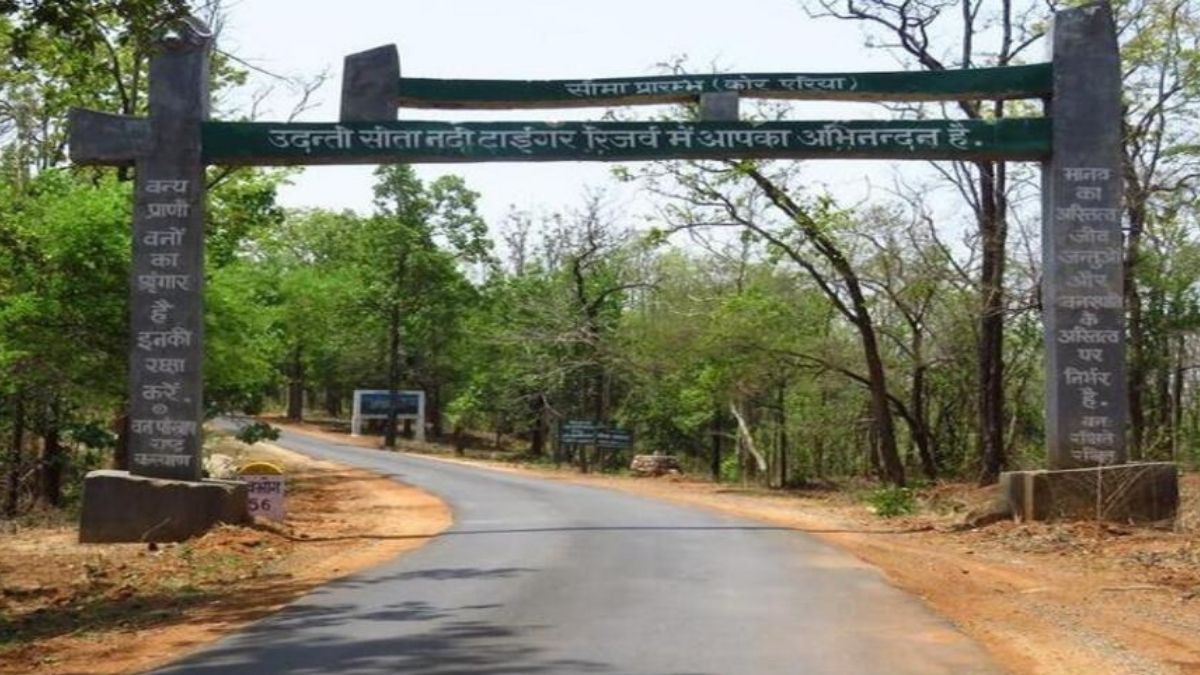
Chhattisgarh to launch a Hornbill Safari in the Udanti-Sitanadi Tiger Reserve
The Chhattisgarh forest department will launch a Hornbill Safari in the Udanti-Sitanadi Tiger Reserve within the next month, combining wildlife conservation with community-based tourism and livelihood generation for tribal communities living around the reserve.
According to a press statement, the safari will operate in the Particularly Vulnerable Tribal Group (PVTG) villages of Odh, Amlor and Amamora in Gariaband and Dhamtari districts.
The statement adds that the safari will focus on the Malabar Pied Hornbill, whose population in the reserve has increased over the past four years.
Also Read: Chhattisgarh’s Culinary Culture
Forest officials attribute the increase to anti-poaching measures, removal of encroachments, protection and plantation of fruit-bearing trees, and the ‘Hornbill Restaurant’ project, which ensures food availability for the birds.
A tracking team has been monitoring hornbill movements, nesting sites and habitats with the participation of forest staff and local trackers. The data collected has helped identify areas that will form part of the safari route.
Initially, the department will operate two safari vehicles for tourists, birdwatchers, wildlife photographers and researchers visiting the reserve, says the statement.
Forest officials said the initiative is part of efforts to integrate wildlife conservation with local livelihoods. The reserve, located about 130 km from Raipur, is home to several bird species, including the Shaheen Falcon, Indian Pitta, Brown Fish Owl and Grey-headed Fish Eagle, besides the Malabar Pied Hornbill. It also supports wildlife such as the Indian Giant Squirrel and Indian Giant Flying Squirrel.
Also Read: New Tribal battalion to fight Maoist Guerrillas in Chhattisgarh
According to Varun Jain, Deputy Director of Udanti-Sitanadi Tiger Reserve, trial runs have begun and the initiative will be formally launched within a month.
“The initiative will not only strengthen conservation of the Malabar Pied Hornbill but also generate new employment and income opportunities for local villagers,” says Jain.
“Youths and residents from PVTG villages are being trained as birdwatchers and nature guides. After completing the training, they will work as nature and hornbill guides for visitors, providing them with sustainable employment while promoting community-based eco-tourism,” Jain adds.
