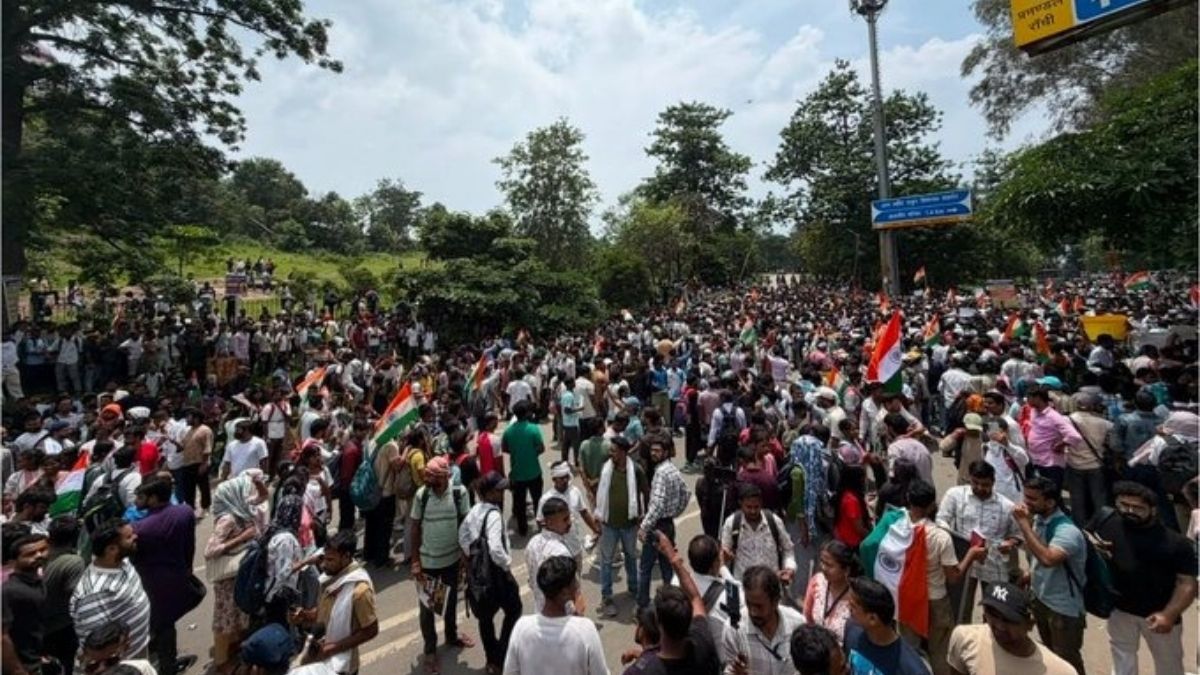
The student protests in Jharkhand have entered their 23rd day, centered mainly at Ranchi's Jaipal Singh Munda Stadium (Photos: JPSC JSSC REFORM MANCH)
The Jaipal Singh Munda Stadium in Ranchi, capital of Jharkhand, has turned into a semi-permanent camp of tents, hunger-strike beds and hand-painted placards. On Sunday, the sit-in by thousands of job aspirants against alleged irregularities in the state’s recruitment examinations completed 23 days, with no sign of the students packing up and going home.
The trigger was the Jharkhand Staff Selection Commission’s Combined Graduate Level exam, the JSSC-CGL, and a string of other tests conducted by the Jharkhand Public Service Commission (JPSC). Aspirants say the papers were compromised, the evaluation was inconsistent, and the agencies hired to conduct the exams could not be trusted with the next one either.
What began as a protest outside the JSSC office has grown into a state-wide movement under the banner of the JPSC-JSSC Reforms Manch, with various groups, including Akhil Bharatiya Vidyarthi Parishad (ABVP), the student wing of the Bharatiya Janata Party, along with BJP leader and former chief minister Raghubar Das and, more recently, activists of the Cockroach Janta Party (CJP) all joining the protest.
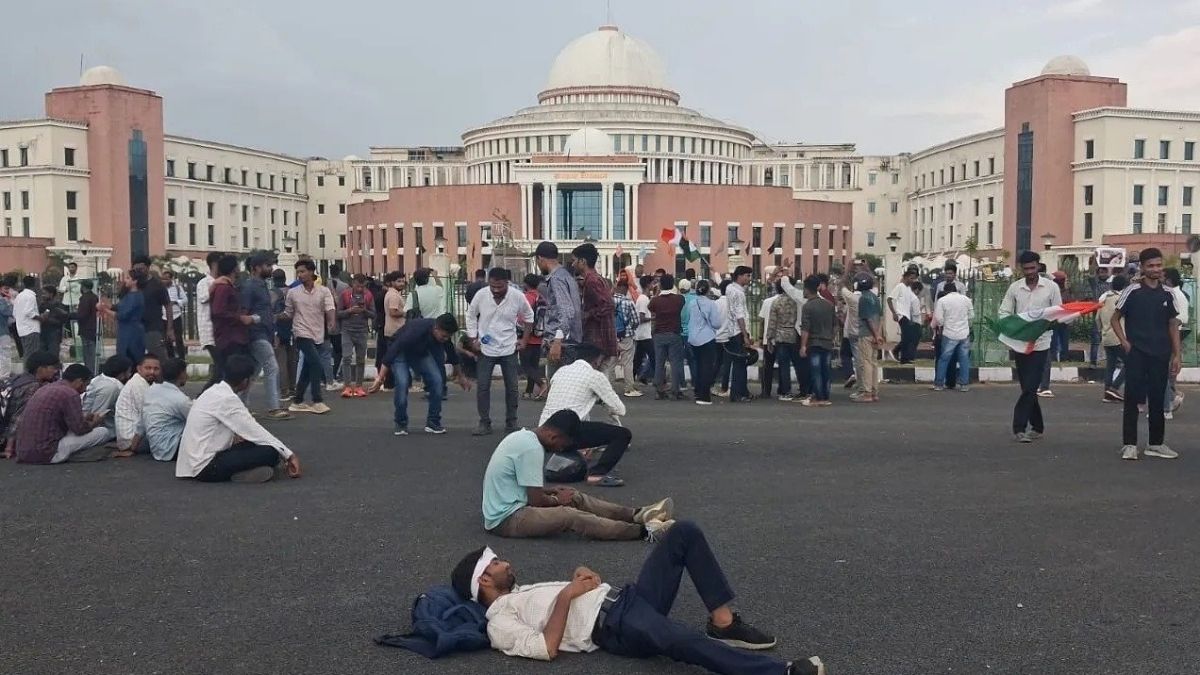
Students and job aspirants protested against alleged cheating, paper leaks, and corruption in recruitment tests held by the Jharkhand Public Service Commission
Also Read: 46 million children out of school as India’s education spending stays below 6 pc target: UNESCO
But there is a stalemate as the state government insists it has bent over backwards. Technical and Higher Education Minister Sudivya Kumar Sonu, who has led the government’s side of the talks, has repeatedly said Chief Minister Hemant Soren’s administration accepted 98 pc of the students’ charter of demands. That included cancelling the 14th JPSC preliminary exam along with the JPSC Backlog 2023 and Backlog 2025 exams, setting up a fast-track court, promising chargesheets within 90 days, and backing both a Criminal Investigation Department probe and a request for an Enforcement Directorate inquiry into the money trail.
Students reject the framing entirely. They say that their charter lists 13 disputed examinations but only three have actually been cancelled. And the one demand they call non-negotiable cancellation of the JSSC-CGL result and a Central Bureau of Investigation probe is exactly what the government has refused to concede to.
Sachin Paswan
The government says that over 2,000 candidates have already been appointed through the JSSC-CGL exam, saying this is the reason for refusing to cancel the result at this stage. When students saw they were not making much of a headway, they organised a march to the State Assembly on August 10. That march, which turned violent with police using tear gas shells and resorting to baton charge. The police allege they resorted to action after 14 security personnel were injured in stone-pelting during the march. And consequently, the police add, they have filed a case against 600 protesters, of whom 100 have been identified.
Despite the stalemate and police action, the protestors remain undeterred and in fact the protest has drawn support from wider populace as well. One such supporter is Sachin Paswan who runs a small business in Jharkhand and has shown up at the protest site every single day.
“I have been coming to the protest site every day, even though I am not an exam candidate, because I believe these students are fighting for something that affects the future of every young person preparing for government jobs. They have spent years preparing for these examinations, and when questions are raised about irregularities, they deserve answers. The use of force against protesters will not resolve the issue. Instead of lathi charges and FIRs, the government should sit with the students, address their concerns and ensure that recruitment examinations are conducted in a fair and transparent manner,” Paswan tells Media India Group.
Also Read: India’s shrinking classrooms expose cracks in school education
For Rahul Raj, who has spent years preparing for state government examinations, the prolonged protest reflects a deeper concern over the credibility of Jharkhand’s recruitment system and the need for structural reforms.
“We are not asking for anything the government hasn’t already admitted to, that the system is broken. We are only asking them to fix it properly, not exam by exam, but from the root,” Raj tells Media India Group.
Another protester, a woman who travelled from outside Ranchi to join the stadium sit-in, said the trust deficit was the real issue.
“Even if this year’s exam is cleaned up, what stops the next one from being compromised the same way? We are not just fighting for one result. We want to know that the next batch of students won’t have to sit here the way we are,” Shanu Kumari tells Media India Group.
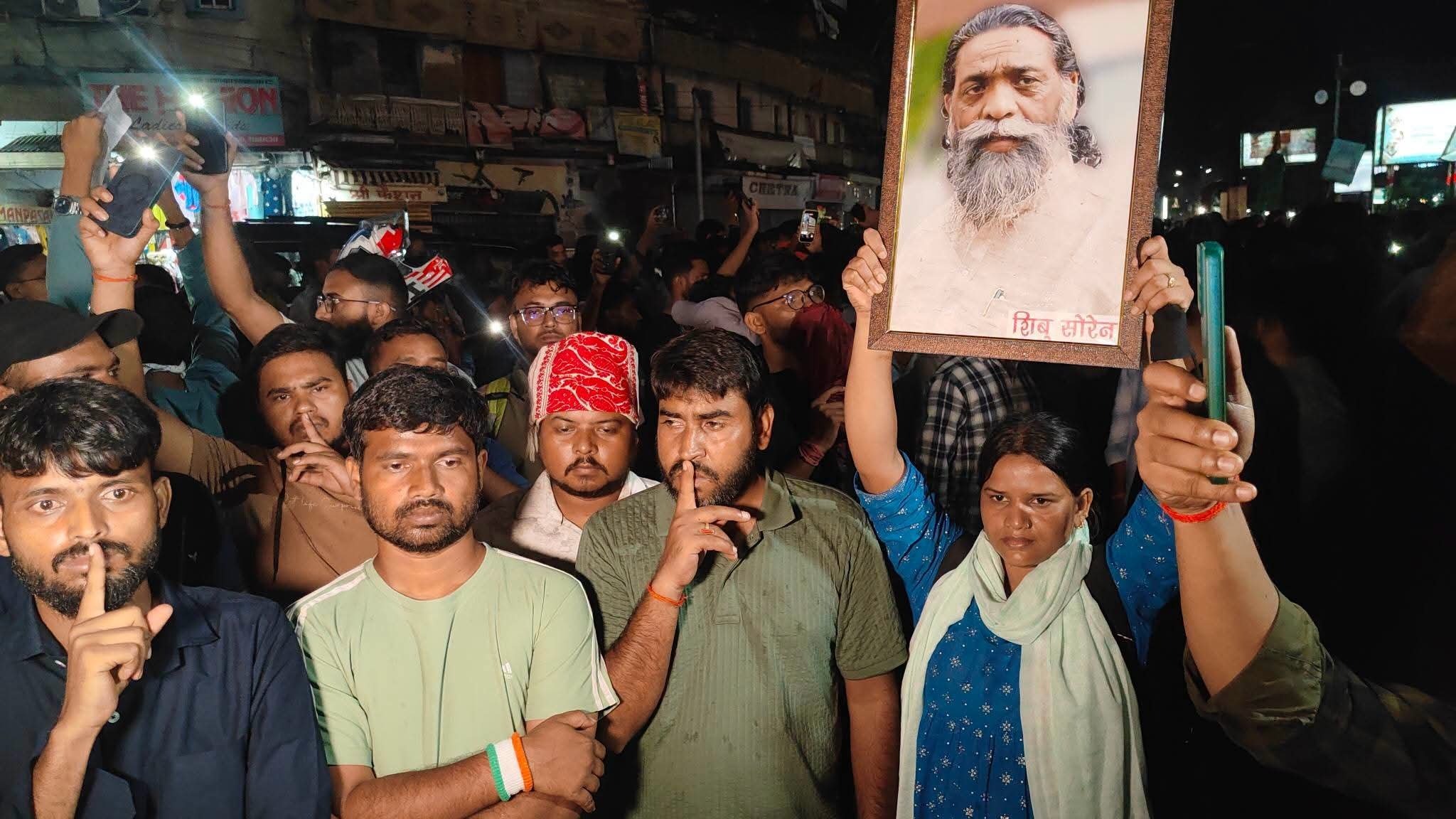
The protests were held mainly in various parts of the state including Ranchi, which included events like dharna, demonstration, padyatra and indefinite hunger strike
Chief Minister Hemant Soren has struck a conciliatory note in public, warning political parties against what he called attempts to mislead protesting students and insisting the agitation should not be politicised. He has said his government remains committed to dialogue and transparency, and that force is not the answer to the students’ demands. But that is a statement which sits uneasily with the baton charges and the FIR against 600 people that followed his own government’s police action.
The government has found support within its political alliance. Sudivya Kumar Sonu, an MLA of the Jharkhand Mukti Morcha (JMM) party, representing the Giridih assembly constituency, has defended the government’s record, pointing to the probe by the Criminal Investigation Department of the state police and even a proposed probe by the federal Enforcement Directorate, as well as setting up of a fast-track court, and the cancellation of the three JPSC-linked exams as proof of good faith. Governor Santosh Kumar Gangwar has also weighed in, promising students justice, though without offering specifics beyond what the government has already put on the table.
Also Read: Hundreds from across India gather at Cockroach Janta Party protest in Delhi
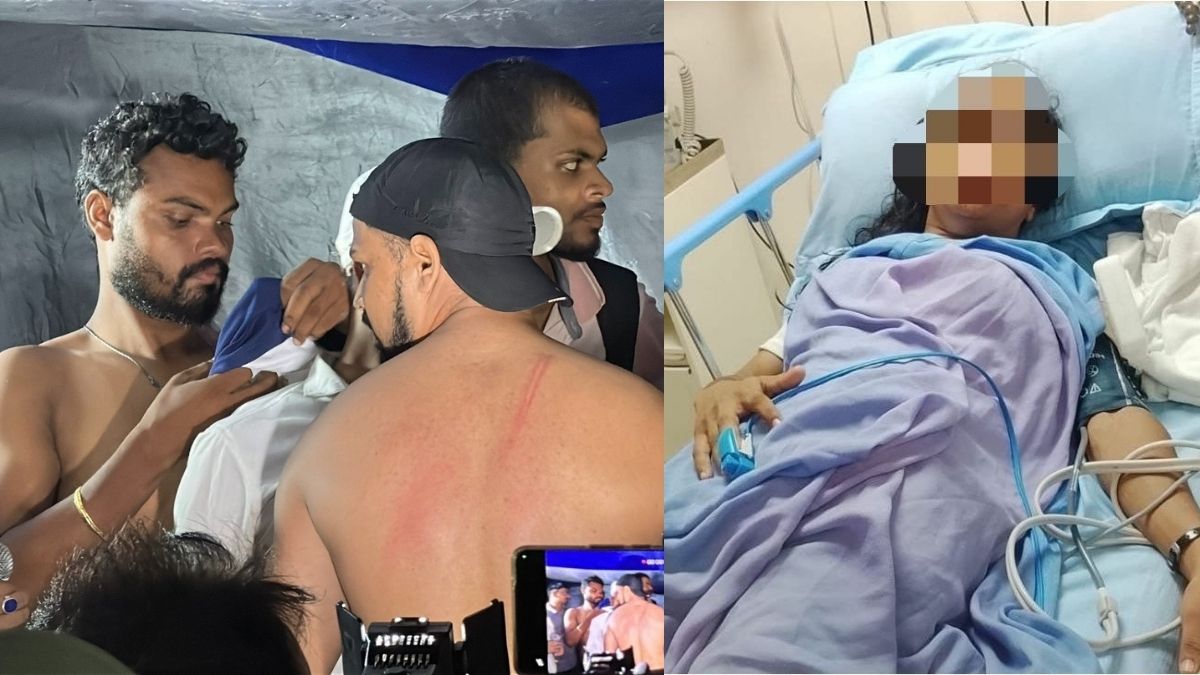
More than 100 youths were reportedly beaten with batons during a protest in Jharkhand
However, neither assurance has moved the protesters off the demand to hand over the probe to the Central Bureau of Investigation (CBI). Students says that a probe by the state’s own CID cannot be independent when the alleged irregularities implicate the same recruitment apparatus the state government runs, and point to the arrest of Abhay Tiwari linked to the exam-outsourcing agency TDAPL as evidence that outside scrutiny, not internal review, is what the situation calls for.
The protest has drawn attention far beyond the boundaries of Jharkhand. The Cockroach Janta Party (CJP), which built momentum earlier this year around the NEET-UG paper leak protests in Delhi, sent a core-committee delegation to Ranchi to back the students. CJP leaders have described their role as that of an external pressure group rather than a political leadership, offering logistical and moral support to those on hunger strike rather than trying to run the movement themselves. Actor-singer Piyush Mishra also visited the site to express solidarity.
With the government holding firm on the CBI question and students refusing to leave the stadium, the standoff shows no sign of resolving soon. Students have spoken of laying siege to the Chief Minister’s residence around August 20, though no formal announcement has been made and Ranchi’s administration has already stepped up security at Soren’s residence in anticipation.