
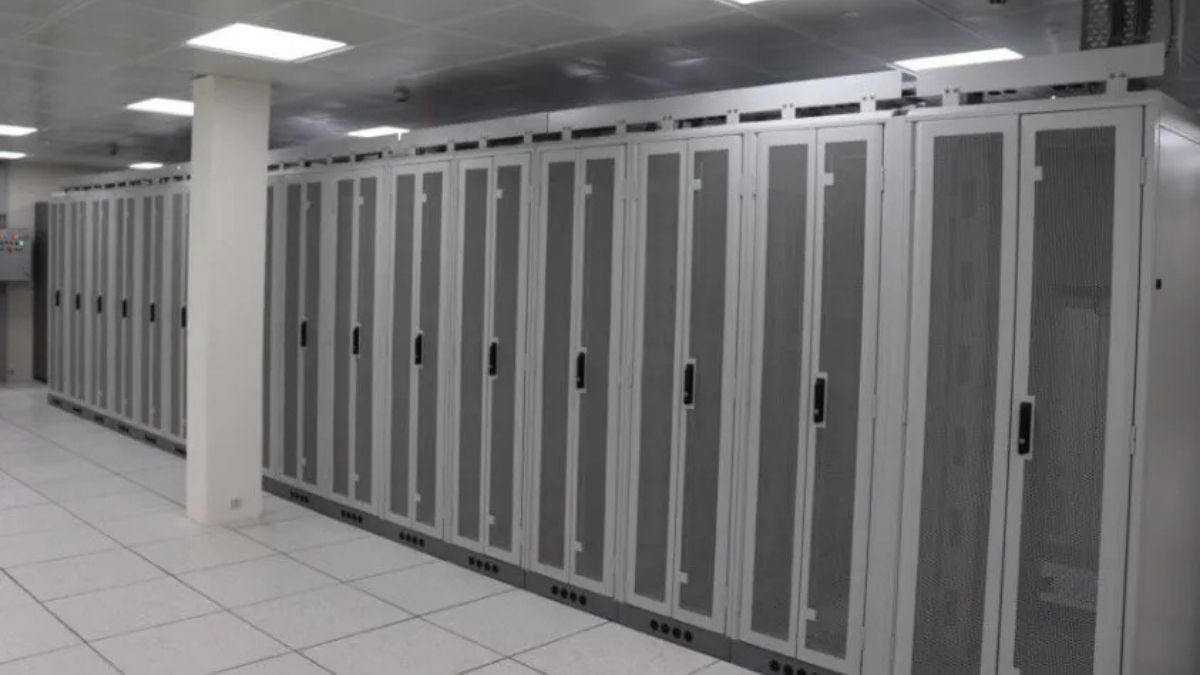
As India's data centre footprint grows, so do its demands for water, power and other critical natural resources (Photos: Iron Mountain)
According to a 2025 Deloitte India report, India’s data centre industry is witnessing rapid expansion, driven by the growing adoption of artificial intelligence (AI), cloud computing, digital services and supportive government policies. As global technology companies and investors continue to build new facilities across the country, demand for electricity and water is rising alongside India’s digital infrastructure. This expansion is adding pressure on natural resources in a country that continues to face groundwater depletion, water scarcity and an electricity system that remains heavily dependent on coal.
Deepak Bishnoi, an environmentalist says that the debate is not about whether India should build more data centres. Digital infrastructure has become as essential to modern economies as roads, ports and airports, supporting everything from UPI transactions and online education to AI research and cloud-based public services. The challenge is that unlike conventional infrastructure, data centres consume resources that remain largely invisible to the public. Every online search, AI-generated response or cloud-stored file depends on physical servers that require constant electricity and cooling, making the digital economy far more resource-intensive than many users realise.
The expansion comes at a time when millions of Indians continue to struggle for access to safe drinking water and reliable electricity. According to NITI Aayog’s Composite Water Management Index, nearly 600 million Indians face high to extreme water stress, while around 200,000 people die every year due to inadequate access to safe water and sanitation.
Also Read:RSF condemns Indian government for blocking report on Google’s data centre project
UNICEF estimates that nearly 163 million Indians still lack access to clean water close to home, while over 70 pc of the country’s surface water is contaminated. Although household electrification has reached almost universal levels, national surveys continue to show frequent power outages, particularly across rural India, where households often experience several hours of electricity cuts every day.
India’s digital infrastructure expands at unprecedented pace
India’s data centre industry has expanded rapidly over the past few years, supported by growing internet usage, digital services and the government’s IndiaAI Mission, which was approved with an outlay of INR 103.72 billion by the Ministry of Electronics and Information Technology (MeitY) to build domestic AI infrastructure.
According to the Council on Energy, Environment and Water (CEEW), India hosted approximately 271 data centres as of January this year, occupying nearly 23 million square metres of land. Other estimates, including Deloitte India’s 2025 report, place the number at around 150 operational facilities with an installed IT load of 1,200-1,300 MW, reflecting differences in whether reports count entire campuses or individual buildings.
The term IT load refers only to the electricity consumed by computing equipment inside a data centre, including servers, graphics processing units (GPUs), processors, storage systems and networking equipment. It does not include electricity used for cooling systems, lighting, transformers or backup infrastructure.
As AI workloads increase, IT load rises because more servers and specialised AI chips are required to process increasingly complex tasks. Higher IT load also generates more heat, requiring additional cooling systems, which further increases electricity and water consumption.
Capacity continues to rise rapidly. CBRE projects India’s installed capacity to increase by nearly 30 pc during 2026, adding close to 500 MW, after a record 440 MW (MegaWatt) was commissioned in 2025, representing a 160 pc increase over 2024. Cushman & Wakefield projects capacity to increase from around 1.5 GW at the end of 2025 to 1.7 GW by the end of 2026.
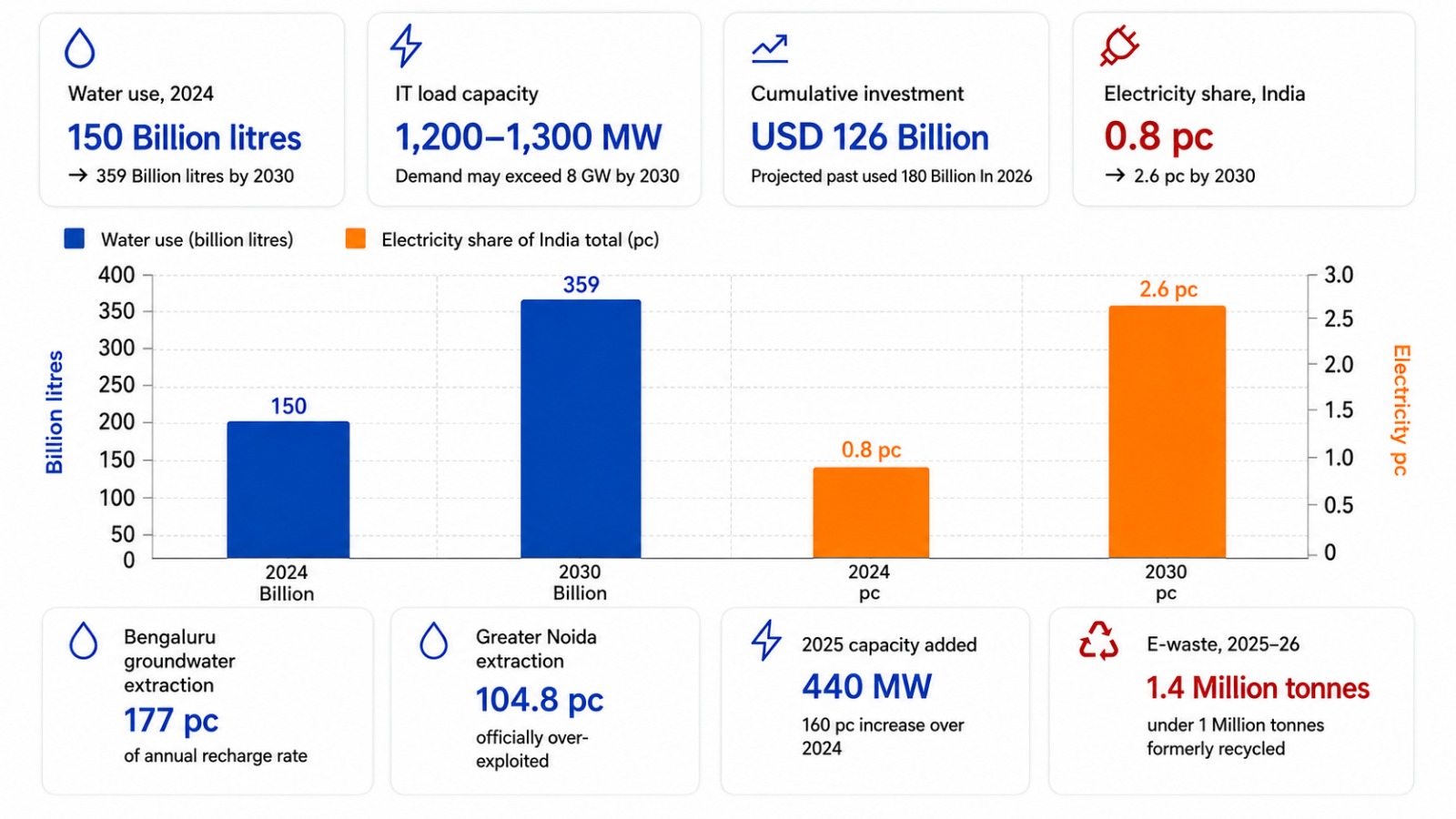
India’s data centre boom is fuelling rising water and power demand, alongside rapid capacity growth and higher e-waste (Infographic: Media India Group)
Investment is rising at an equally rapid pace. Industry estimates suggest commitments reached USD 56.4 billion in 2025, taking cumulative announced investments to USD 126 billion, with projections crossing USD 180 billion during 2026.
Mumbai remains India’s largest data centre hub, accounting for more than half of the country’s operational capacity, followed by Chennai, Bengaluru, Hyderabad and Delhi-NCR. Together, these cities account for almost 90 pc of India’s Tier-I data centre inventory, while newer investments are increasingly moving into Telangana, Andhra Pradesh, Uttar Pradesh and Maharashtra, with Tier-II cities such as Ahmedabad, Visakhapatnam, Patna and Bhopal emerging as new destinations.
The Union Budget 2026-27 further accelerated investment by announcing a 20-year tax exemption until 2047 for foreign cloud companies operating data centres in India, alongside earlier regulatory measures such as the Reserve Bank of India’s data localisation requirements for payment data.
Also Read:Rising occurrence of ‘free’ deals distort economic data
Every megawatt requires millions of litres of water
While data centres are often portrayed as clean digital infrastructure, their physical footprint weighs heavily on environment as they consume millions of litres of water and tens of megawatts of power for their operation.
Servers generate enormous amounts of heat and require continuous cooling to function. Most conventional facilities rely on evaporative cooling systems that consume substantial quantities of freshwater.
According to Rahul Verma, a data centre operations manager at Amazon Web Services, cooling remains one of the industry’s biggest engineering challenges.
“Servers generate heat every second they are operating. If temperatures are not controlled within very narrow limits, equipment performance deteriorates rapidly and the risk of failure increases. Water-based cooling has traditionally been one of the most efficient methods, but the industry is increasingly investing in closed-loop systems, liquid cooling and recycled water to reduce freshwater consumption,” Verma tells Media India Group.
According to Stratview Research, a conventional 1 MW data centre consumes roughly 26 million litres of water annually.
For larger hyperscale facilities, consumption rises dramatically. CEEW estimates that a 100 MW hyperscale data centre using evaporative cooling may consume nearly 800,000 litres of water every day, enough to cater to the daily consumption of about 5,400 households.
Nationally, India’s data centres consumed an estimated 150 billion litres of water during 2024. CEEW and Mordor Intelligence project this figure could more than double by 2030, reaching nearly 359 billion litres annually, which is the annual consumption of 2.74 million households in the country.
Yet, there is no control over the actual use of water in datacentres, as unlike many industries whose water consumption is closely monitored, experts say data centres often disclose little about how much water individual facilities withdraw or where it comes from.
Verma says the industry is aware that future expansion will depend on improving resource efficiency rather than simply building larger facilities.
“Many new-generation data centres are designed with lower Water Usage Effectiveness (WUE) and Power Usage Effectiveness (PUE) targets than facilities built even five years ago. Operators know that sustainability is no longer optional because both regulators and customers increasingly expect measurable improvements,” he says.
Bishnoi says the lack of transparency itself has become part of the environmental challenge.
“Most industries with high water demand are required to publicly disclose or justify their resource use. Data centres, despite becoming major industrial consumers, still operate with relatively limited public reporting on water withdrawals. Without transparent data, neither policymakers nor local communities can accurately assess their cumulative impact on already stressed aquifers,” Bishnoi tells Media India Group.
Also Read:Employment, environment & ethics need to be top priority of AI Impact Summit
The water challenge is already visible in Indian cities
The environmental debate becomes sharper because many of India’s fastest-growing data centre clusters are also among its most water-stressed regions.
Bengaluru illustrates this contradiction most clearly. The city hosts 31 operational data centres, while the Central Ground Water Board (CGWB) has identified Bengaluru as extracting groundwater at 177 pc of annual recharge, making it one of India’s most water-stressed metropolitan areas.
The rapidly developing Devanahalli region, where at least eight data centres have received approvals since 2013, has no perennial water source and already extracts groundwater at 169 pc of permissible limits.
While acknowledging the concerns, Verma says site selection has become a much more rigorous process for developers.
“Today, companies assess groundwater availability, municipal supply, climate conditions and even long-term drought projections before investing hundreds of millions of dollars in a new campus. Increasingly, operators are looking at using treated sewage water instead of potable water wherever local infrastructure allows,” Verma adds, pointing to several industrial parks where recycled water is already being integrated into cooling operations.
During the recent summer, the Bangalore Water Supply and Sewerage Board (BWSSB) deployed over 1,260 mini water tanks and 117 tankers across 448 water-stressed localities, even as residents relied increasingly on expensive private tanker supplies.
“Environmental planning should determine where data centres are built, not simply where land is available. Locating water-intensive facilities in already over-exploited groundwater zones creates long-term risks that extend far beyond the project boundary. Once aquifers decline beyond a certain point, recovery can take decades,” Bishnoi adds.
In March 2026, Karnataka IT Minister Priyank Kharge acknowledged in the state assembly that large hyperscale data centres may not be suitable for Bengaluru because of its growing water constraints.
One example highlighted by researchers showed that a proposed facility in Akkalenahalli Mallenahalli village received an allocation of 650 kilolitres of water per day, equivalent to nearly 20 times the annual domestic requirement of the village’s population.
Similar concerns are emerging in Greater Noida, where 17 operational or planned data centres are being developed even as the district’s groundwater extraction has reached 104.79 pc, officially classifying it as over-exploited.
Residents living near major facilities operated by companies including AdaniConneX and Sify increasingly depend on private water tankers as groundwater levels continue to decline.
In December 2025, Uttar Pradesh’s Ground Water Department issued notices to a Microsoft data centre project after inspectors found 10 borewells operating without the required permissions in an over-exploited groundwater zone.
Also Read:Earth Overshoot Day: Urgent need for ‘Ecological Budget’ for Earth
Power demand continues to rely heavily on coal
Water is only one part of the environmental equation. Data centres also require uninterrupted electricity throughout the day and night, making them among the most power-intensive commercial facilities.
Unlike traditional cloud computing, generative AI requires thousands of GPUs to perform billions of calculations simultaneously. This makes AI applications significantly more energy intensive than conventional internet services.
The International Energy Agency (IEA) states that AI has become one of the fastest-growing drivers of electricity demand from data centres. Globally, electricity demand from AI-focussed data centres increased by around 50 pc in 2025, while overall data centre electricity demand grew by about 17 pc.
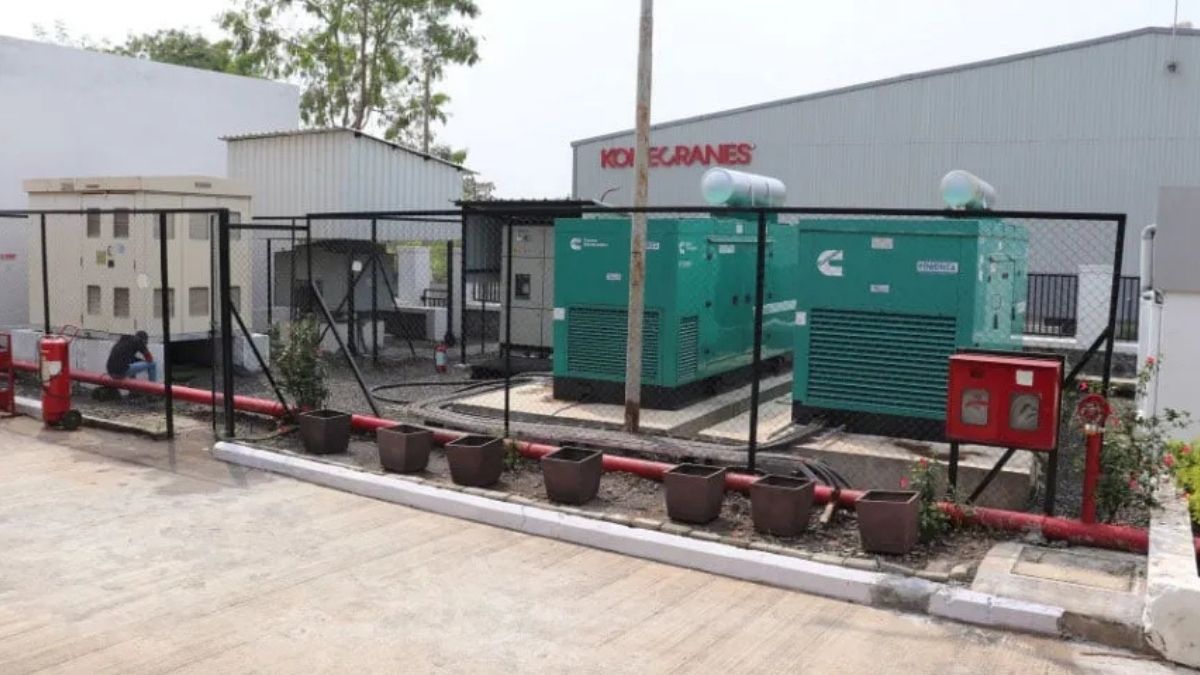
Diesel generators and cooling systems are essential to India’s expanding data centres, ensuring uninterrupted power and cooling
It says that global data centre electricity consumption reached about 415 terawatt-hours (TWh) in 2024, accounting for nearly 1.5 pc of global electricity demand. Electricity demand from data centres has grown by around 12 pc annually over the past five years, making it one of the fastest-growing sources of power consumption worldwide.
Researchers at the University of Rhode Island AI Laboratory estimate that GPT-5 in reasoning mode consumes around 18 Wh per query, while complex “extended reasoning” responses can consume up to 40 Wh.
IEA also notes that AI tasks involving image generation, video generation and autonomous AI agents can consume hundreds to thousands of times more electricity than a simple text prompt.
OpenAI has stated that ChatGPT now handles over 2.5 billion queries every day, meaning even small amounts of electricity per query translate into significant overall energy demand.
S&P Global Commodity Insights estimates that data centres could consume up to 2.6 pc of total electricity demand in India by 2030, compared with 0.8 pc in 2024, illustrating the rapid growth in electricity demand associated with AI infrastructure.
Industry estimates suggest India’s data centre electricity demand will exceed 2 GW during 2026 and could surpass 8 GW by 2030, representing a five-fold increase.
Although India has made rapid progress in renewable energy, crossing 230 GW of non-fossil electricity capacity, coal still produces roughly three-fourths of the country’s electricity, according to the Ministry of Power and the Central Electricity Authority.
Because solar and wind power remain intermittent without large-scale battery storage, experts say much of the additional electricity demand from data centres continues to be met by coal-fired generation.
Mumbai illustrates this dependence. Adani Electricity Mumbai projected demand from data centres rising from around 50 MW in FY2022-23 to nearly 638 MW by 2027, using this projected growth to justify continued operation of the coal-fired Dahanu power plant.
In late 2023, Maharashtra reversed earlier plans to retire the Dahanu and Tata Power’s Trombay coal stations, citing rising electricity demand from data centres. Elsewhere, a new coal-fired power plant is being developed in Chennai’s Ennore region partly to support electricity-intensive industries including data centres.
Researchers have also identified extensive use of diesel generators as emergency backup systems. According to a report by the Centre for Study of Science, Technology and Policy (CSTEP), Amazon’s Mumbai facilities alone have installed 41 diesel generators, contributing to local air pollution.
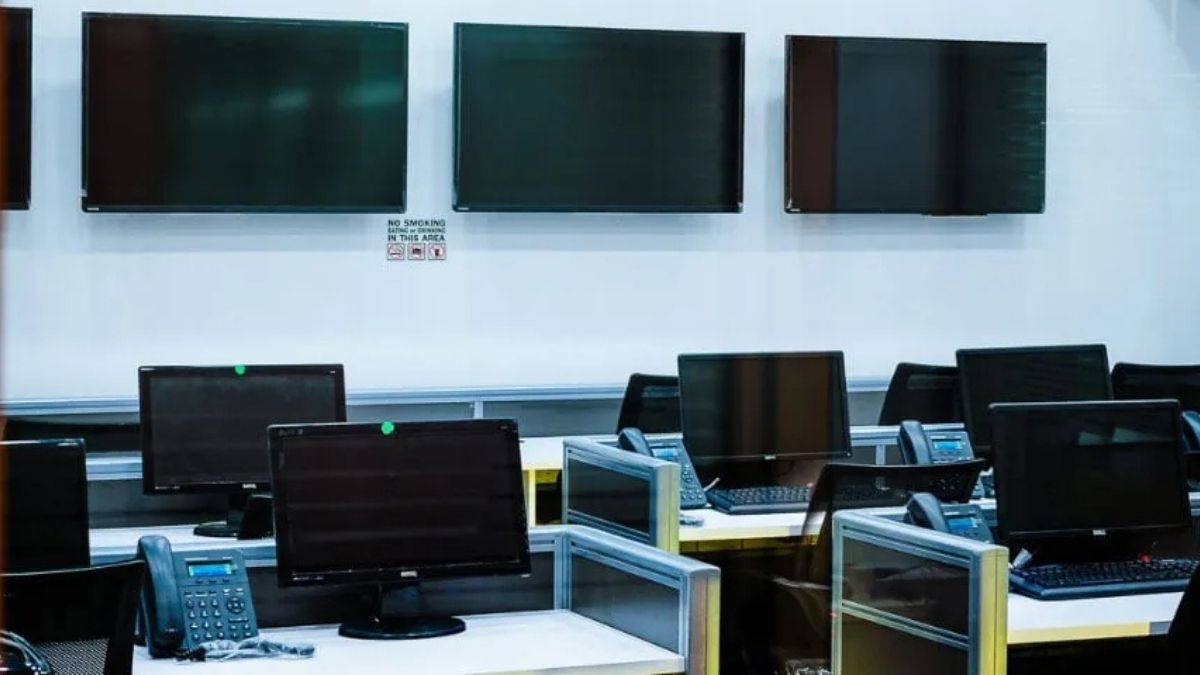
AI-driven hardware upgrades are accelerating e-waste generation
Carbon emissions remain a growing concern
The rapid expansion of AI infrastructure also raises concerns over carbon emissions. India’s installed data centre capacity is projected to reach over 2,073 MW by 2027, representing an increase of around 85 pc compared with 2025.
Verma says AI workloads are changing the way facilities are designed. “Artificial intelligence servers consume significantly more power and generate much higher heat loads than conventional enterprise servers. That is why operators are redesigning racks, cooling systems and airflow management. The objective is not simply to accommodate AI, but to do so with the lowest possible environmental footprint,” he says.
Also Read:India’s updated NDCs fall short of transformative ambition amid coal push, policy gaps
Globally, the IEA estimates emissions from electricity consumed by data centres could increase from approximately 180 million tonnes today to around 300 million tonnes by 2035, about 1 pc of total global emissions, while nearly 60 pc of electricity supplying data centres worldwide still comes from fossil fuels.
The environmental footprint extends beyond operating facilities. Studies estimate that training a single large AI model can emit more than 626,000 pounds of carbon dioxide, equivalent to the lifetime emissions of about five passenger vehicles.
A growing e-waste challenge
The environmental burden does not end when servers are switched off. India generated approximately 1.4. million tonnes of electronic waste during 2025-26, according to the Central Pollution Control Board (CPCB), but less than 1 million tonnes was formally recycled. However, CPCB’s data is questionable as the organisation itself points out that as many as 17 states and Union Territories still lack registered e-waste recycling facilities, and much of India’s informal recycling industry continues to recover metals through open burning and acid treatment, releasing hazardous substances into soil, air and water.
However, as rapid advances in AI hardware mean specialised processors often become obsolete within two to three years, environmentalists say electronic waste deserves far greater attention in discussions around AI infrastructure.
“The conversation usually focusses on electricity and water because those impacts are immediate. But the rapid replacement cycle of specialised AI hardware also creates a mounting waste challenge. Without stronger recycling systems and circular manufacturing practices, today’s computing revolution could become tomorrow’s e-waste crisis,” says Bishnoi.
Balancing digital growth with environmental planning
But despite these challenges, India’s digital economy is expected to continue expanding rapidly, with AI becoming central to manufacturing, healthcare, finance, governance and scientific research. Data centres are therefore becoming essential national infrastructure rather than optional commercial facilities.
This government-led push for setting data centres in India comes at a when the world seems to be moving in the opposite direction as protests over setting up of these water and power guzzlers have spread across the United States and many parts of Europe.
Several countries are already reconsidering how rapidly data centres should expand in environmentally sensitive regions. Singapore temporarily paused approvals for new data centres between 2019 and 2022 because of land, energy and sustainability concerns before introducing stricter efficiency requirements.
Parts of the Netherlands and Ireland have also reviewed data centre growth amid concerns over electricity demand and pressure on public infrastructure. These examples highlight how infrastructure planning increasingly requires balancing economic competitiveness with long-term resource security.
Yet, the 20-year tax holiday for data centres, as announced in the latest Union Budget, shows that the Indian government continues to push for setting up data centres at any cost, even at the cost of its rapidly dwindling water resources.
Also Read:Alarming rise in inequal access to cooling as heatwaves bake India
“Economic growth and environmental stewardship should not be viewed as competing objectives. If today’s digital infrastructure is built without accounting for tomorrow’s water and energy constraints, the costs will eventually be borne by communities rather than technology companies,” says Bishnoi.
The greatest challenge for India may not lie in being able to build enough data centres, but rather to ensure that the digital future does not come at the cost of its citizens losing access to the most essential resources, water, clean energy and a healthy environment.
AI is increasing electricity demand. Unlike traditional cloud computing, generative AI requires thousands of GPUs to perform billions of calculations simultaneously. This makes AI applications significantly more energy intensive than conventional internet services.
The International Energy Agency (IEA) states that AI has become one of the fastest-growing drivers of electricity demand from data centres. Globally, electricity demand from AI-focussed data centres increased by around 50 pc in 2025, while overall data centre electricity demand grew by about 17 pc.
S&P Global Commodity Insights estimates that data centres could consume up to 2.6 pc of total electricity demand in India by 2030, compared with 0.8 pc in 2024, illustrating the rapid growth in electricity demand associated with AI infrastructure.
However, more advanced reasoning models consume substantially more energy. Researchers at the University of Rhode Island AI Laboratory estimate that GPT-5 in reasoning mode consumes around 18 Wh per query, while complex “extended reasoning” responses can consume up to 40 Wh.
The International Energy Agency (IEA) also notes that AI tasks involving image generation, video generation and autonomous AI agents can consume hundreds to thousands of times more electricity than a simple text prompt.
OpenAI has stated that ChatGPT now handles over 2.5 billion queries every day, meaning even small amounts of electricity per query translate into significant overall energy demand.
Water footprint of AI. Electricity is only one part of AI’s environmental footprint. AI servers generate substantial heat, requiring cooling systems that often rely on water.
Researchers from the University of California, Riverside, found that 20-50 ChatGPT prompts may consume approximately 500 ml of freshwater, depending on the location of the data centre and its cooling technology.
The researchers also estimated that generating around 100 words using GPT-4 could indirectly consume up to 1.5 litres of water when both cooling and electricity generation are considered.
