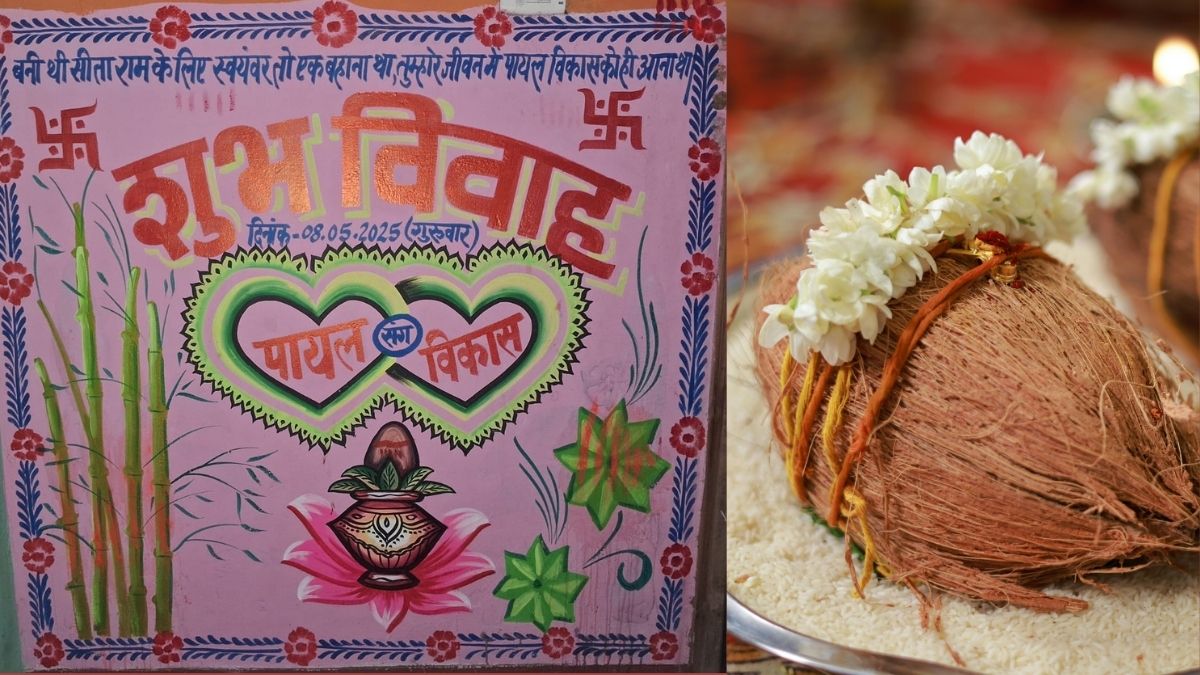
Khovar painting, a ritual wall art traditionally created by women inside the bridal chamber
As Bihar’s wedding season begins, homes across the state prepare for celebrations filled with rituals, music and family gatherings. Yet, one of Mithila’s oldest wedding traditions is quietly fading away. Khovar painting, a ritual wall art traditionally created by women inside the bridal chamber, was once an integral part of weddings in the Mithila region. Rich in symbolism and created using natural pigments, the paintings were believed to bless newlyweds with fertility, prosperity and marital harmony. However, changing lifestyles, modern housing and evolving wedding customs have led to the gradual decline of this centuries-old tradition.
For generations, Khovar painting was much more than decorative art. It was a sacred ritual performed before a wedding to prepare the khovar ghar, or bridal chamber, where the newly married couple would spend their first four days together. Every motif painted on the walls carried blessings for a happy marriage, healthy children and a prosperous future, making the room a sacred space that reflected both faith and tradition.
The word Khovar is believed to have originated from two local words, Kho, meaning cave or room, and Var, meaning bridegroom. Together, the term refers to the bridal chamber where the paintings were traditionally created. Closely linked to the wider Mithila or Madhubani painting tradition, Khovar is believed to have evolved over centuries as part of domestic rituals practised by women.
Local folklore associates its origin with the legendary wedding of Lord Rama and Goddess Sita in the ancient kingdom of Mithila, where homes were decorated with elaborate paintings to celebrate the royal marriage. While this remains part of mythology rather than documented history, it continues to shape the cultural identity of the tradition.
Also Read: Chapchar Kut: Spring festival of community and culture in Mizoram
The creation of Khovar paintings was itself an important social and cultural ritual. Days before the wedding, mothers, grandmothers, aunts and other women of the family gathered to decorate the bridal chamber.
As they worked, they sang traditional wedding songs, shared stories and passed artistic techniques from one generation to the next. Young girls learned the art simply by observing their elders, making Khovar a living tradition preserved through oral knowledge rather than formal instruction.
The paintings were created entirely from natural materials found in the surrounding environment. The walls were first plastered with a mixture of mud and cow dung to create a smooth surface. Colours were prepared using rice paste for white, turmeric for yellow, soot or burnt rice husk for black, vermilion or red ochre for red and leaves for green.
Bamboo sticks, twigs and handmade brushes were used instead of commercial painting tools, reflecting the close relationship between the art form and the rural landscape of Mithila.
Every motif painted on the walls held deep symbolic meaning. The lotus represented purity, fertility and the beginning of a new life. Fish symbolised abundance and prosperity because of their association with water and reproduction. Birds, often painted in pairs, reflected companionship, love and lifelong partnership between husband and wife.
Also Read: Iʿtikāf: A solitary retreat in last 10 days of Ramadan
Bamboo represented growth, resilience and continuity of the family lineage, while the sun and moon symbolised the eternal nature of marriage. Together, these motifs transformed the bridal chamber into a space filled with blessings and hopes for the couple’s future.
Beyond its artistic beauty, Khovar reflected the important role of women in preserving Mithila’s cultural heritage. It was one of the few traditional art forms practised almost exclusively by women, who transformed ordinary household walls into sacred spaces through their creativity and cultural knowledge. The collective act of painting strengthened family ties, encouraged community participation and reinforced the cultural significance of marriage within the region.
Despite its rich heritage, Khovar painting has steadily declined over the past few decades. One of the biggest reasons is the transformation of rural housing. Traditional mud houses, whose walls provided the perfect surface for painting, have largely been replaced by brick-and-cement structures with painted interiors that no longer accommodate ritual wall art. As these homes disappeared, so did the physical space where Khovar was traditionally created.
Changing wedding customs have also contributed to its decline. Today, many marriages are held in banquet halls, hotels and community centres rather than ancestral homes. Professional decorators now handle much of the wedding decor, replacing customs that were once carried out collectively by family members.
Urbanisation and migration have further weakened the tradition, as many families from Mithila now live in cities where limited space and fast-paced lifestyles leave little room for elaborate household rituals. At the same time, the widespread use of printed decorations, artificial flowers and ready-made wedding décor has reduced the need for handmade ritual art.
Although Khovar painting is no longer commonly seen during weddings, efforts are being made to preserve its legacy. Folk artists, researchers and cultural organisations continue documenting its history, motifs and techniques alongside the broader Mithila painting tradition. Many artists have adapted Khovar designs onto paper, canvas, textiles and handicrafts, allowing the art to reach audiences beyond rural Bihar through exhibitions, workshops and cultural festivals.