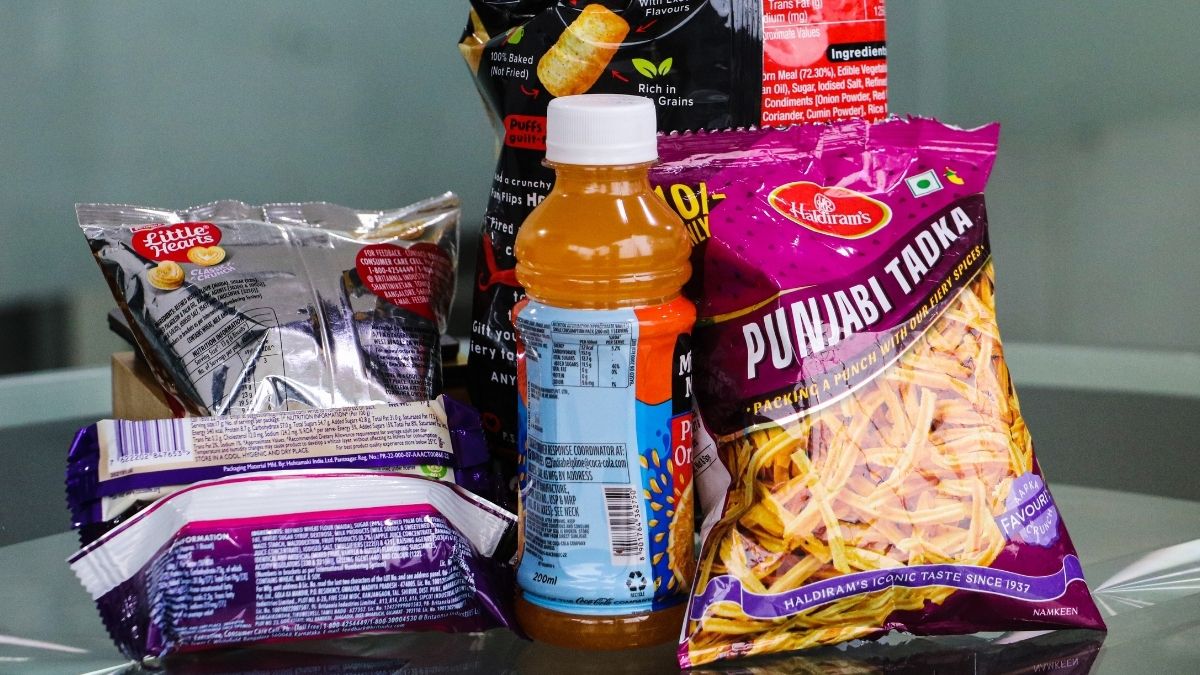
Packaged foods and beverages continue to flood the Indian market amid growing concerns (Photos: Media India Group/Amit Singh)
Last week, the Supreme Court took the Food Safety and Standards Authority of India (FSSAI), the apex food safety regulator of the nation, to task over delays in introducing front-of-pack labelling (FOPL), bringing the spotlight on India’s approach to packaged food. FOPL involves displaying clear nutrition information or warning symbols prominently on the front of food and beverage packets, allowing consumers to quickly identify products high in sugar, salt, saturated fat or calories without having to decipher complex information on the back.
India began considering such a system in 2019. Seven years later, mandatory and easily understandable front-of-pack warning labels are still not in place.
The delay stands in contrast to the global response to ultra-processed food. Led by the European Union, countries are increasingly introducing warning labels and stronger measures to discourage the consumption of products high in sugar, salt and unhealthy fats. In EU, all packaged foods, irrespective of the degree of processing, have to carry a clear label in the front of the pack, which indicates its nutritional quality, on a scale from A to E, in descending order of nutrition. This is in addition to the detailed information on ingredients and nutritional values in terms of average daily recommended doses which are displayed on the back of the product.
In the past decade, front-of-pack labelling has been adopted in more than 44 countries. Chile introduced black warning labels in 2016, Mexico followed in 2020 and Canada began enforcing mandatory ‘high in’ symbols this year.
Also Read: Childhood obesity set to surge by 2050, reigniting India’s sugar tax debate
With FSSAI asleep at wheel, ultraprocessed foods ravage India
Unmindful of the changes around the world and of its own ballooning health problems, the FSSAI has permitted an uncontrolled boom in the packaged and processed food industry.
Ultra-processed food sales in India surged nearly 40-fold, from USD 0.9 billion in 2006 to almost USD 38 billion in 2019. The food-processing sector reached an estimated INR 33,000 billion in 2025, reflecting the growing push towards convenience and packaged consumption.
This expansion has been unfolding alongside a sharp rise in lifestyle diseases. According to a study by the Indian Council for Medical Research, ICMR-INDIAB study, based on 113,043 adults across 31 states and Union Territories, conducted between 2008 and 2020, 101 million Indians have diabetes and another 136 million have prediabetes. Around 315 million people have hypertension, 254 million have generalised obesity and 351 million have abdominal obesity.
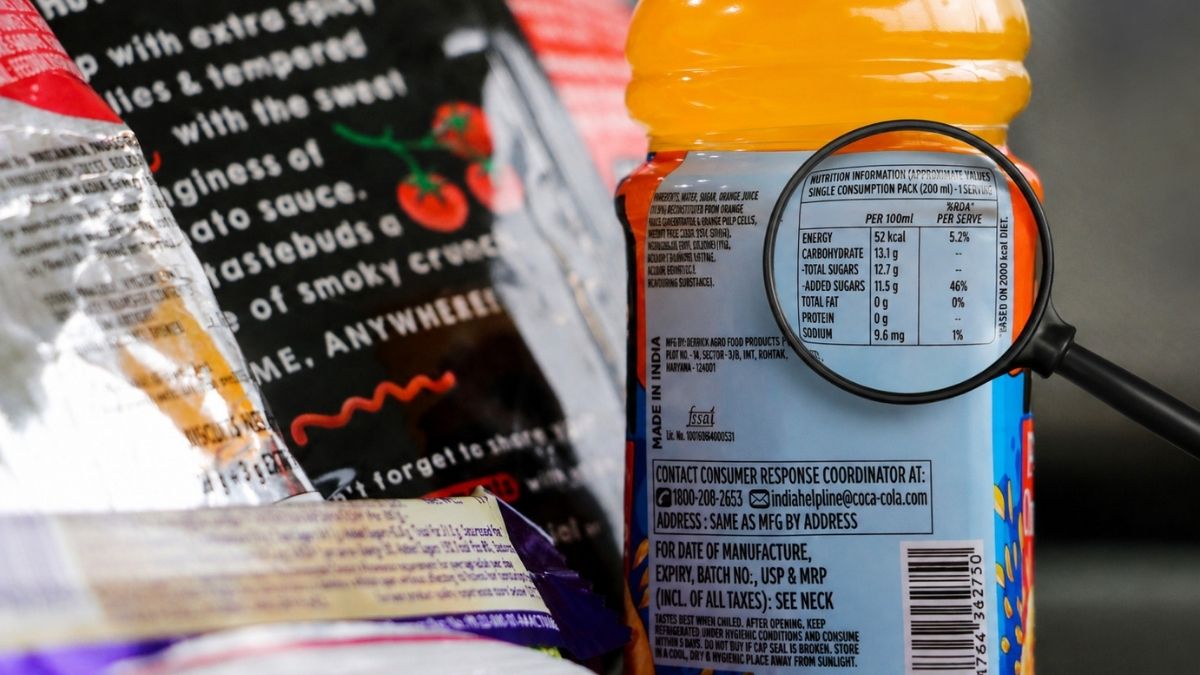
A closer look at what goes into packaged foods and beverages
The World Health Organisation, in its report The growth of ultra-processed foods in India, has highlighted the rapid expansion of these products and the need for stronger policy action. The Economic Survey 2025 also called for consideration of a health tax on ultra-processed foods, noting that industry self-regulation had not been effective.
Yet consumers continue to encounter food packaging dominated by unsubstantiated and often patently-false claims of nutrition and health.
Sugary malt-based drinks have been marketed as nutritious products. Biscuits containing a small quantity of oats are presented as healthy choices. Products carrying labels such as ‘high protein’ or ‘no added sugar’ can still contain high levels of calories, salt, saturated fat or other forms of sugar.
Also Read: Indian street foods: Laboratories of fearless fusion flavours
A controversy around popular malt drink Bournvita exposed this disconnect between marketing and nutritional value. In 2023, content creator Revant Himatsingka, known as Food Pharmer, questioned the product’s health positioning and highlighted its reported 37.4 g of added sugar per 100 g.
The controversy triggered wider scrutiny of malt-based and cereal beverages. In April 2024, the government directed e-commerce platforms not to classify dairy, cereal and malt-based beverages as ‘health drinks’ or ‘energy drinks’, noting that ‘health drink’ has no legal definition under India’s food laws.
Another controversy surrounding baby food brand, Cerelac, manufactured by Swiss foods giant, Nestlé, raised similar concerns about food marketed for children. A 2024 investigation by Public Eye and the International Baby Food Action Network found added sugar in all 15 Indian Cerelac variants tested, averaging about 2.7-3 g per serving. Comparable products examined in the UK, Germany and Switzerland reportedly contained no added sugar.
The Consumer Affairs Ministry subsequently asked FSSAI to investigate. Nestlé maintained that its products complied with Indian regulations and later introduced no-added-sugar variants.
Another regulatory gap emerged around products using the term Oral Rehydration Solution, or ORS. Doctors and campaigners raised concerns over flavoured products using the term despite not meeting the prescribed medical formulation. FSSAI eventually intervened in October 2025, ordering products that did not meet the formulation to stop using ‘ORS’ in their labels, brand names or trademarks.
Also Read: Scientists urge food system overhaul to curb global land degradation
These cases show a pattern in which regulatory action has frequently followed public controversies and complaints rather than preventing potentially misleading practices before products reach consumers.
Dt Nidhi Sawhney, a dietitian and nutritionist in Delhi, says packaging and marketing often shape consumer perceptions more strongly than the actual nutritional content.
“Packed foods are designed to be affordable, instant and have a long shelf life, often with preservatives, flavours, sugar, salt and unhealthy fats. One healthy ingredient can be used to market the entire product as an everyday healthy choice. For example, oat biscuits, even if oats are less than 5 pc of the total ingredients used,” she says.
She adds that technically correct claims can still create a misleading overall impression.
“No added sugar does not automatically mean low in sugar or healthy, and ‘high-protein’ does not necessarily mean low in calories, salt or saturated fat,” she says.
The problem is compounded by the complexity of food labels. While the front of the packet prominently carries attractive claims, the actual nutritional information is often buried in technical tables and ingredient lists.
“For nutritionists, dietitians or medical professionals, the ingredients list may be readable, but for an average consumer, it can be confusing. Scientific names of ingredients can make interpretation harder,” Sawhney says.
This makes the delay in front-of-pack warnings particularly significant. The responsibility for identifying potentially unhealthy food continues to rest largely with consumers, even though the information required to make that assessment is often difficult to understand.
India’s food-safety infrastructure has also faced longstanding weaknesses. A 2017 CAG performance audit of FSSAI found shortages of enforcement staff and serious gaps in laboratory infrastructure. Of 72 state food laboratories examined, only seven were found to be up to the mark and accredited with the National Accreditation Board for Testing and Clinical Laboratories, NABL.
The result is a growing disconnect between India’s food market and its public-health response. The packaged-food industry is expanding rapidly, while clear consumer warnings remain delayed and regulatory intervention often follows controversy.
Not all packaged or processed food is unhealthy, and Sawhney cautions against treating the two terms as interchangeable. The issue is the nutritional composition of food and the clarity of information provided to consumers.
But as countries around the world move towards greater scrutiny of ultra-processed food, India’s approach remains marked by delay. The Supreme Court’s intervention has brought that failure into focus. The country is encouraging the growth of a massive packaged-food market while its most basic consumer-protection measure clear warnings on the front of the packet remains unresolved.