
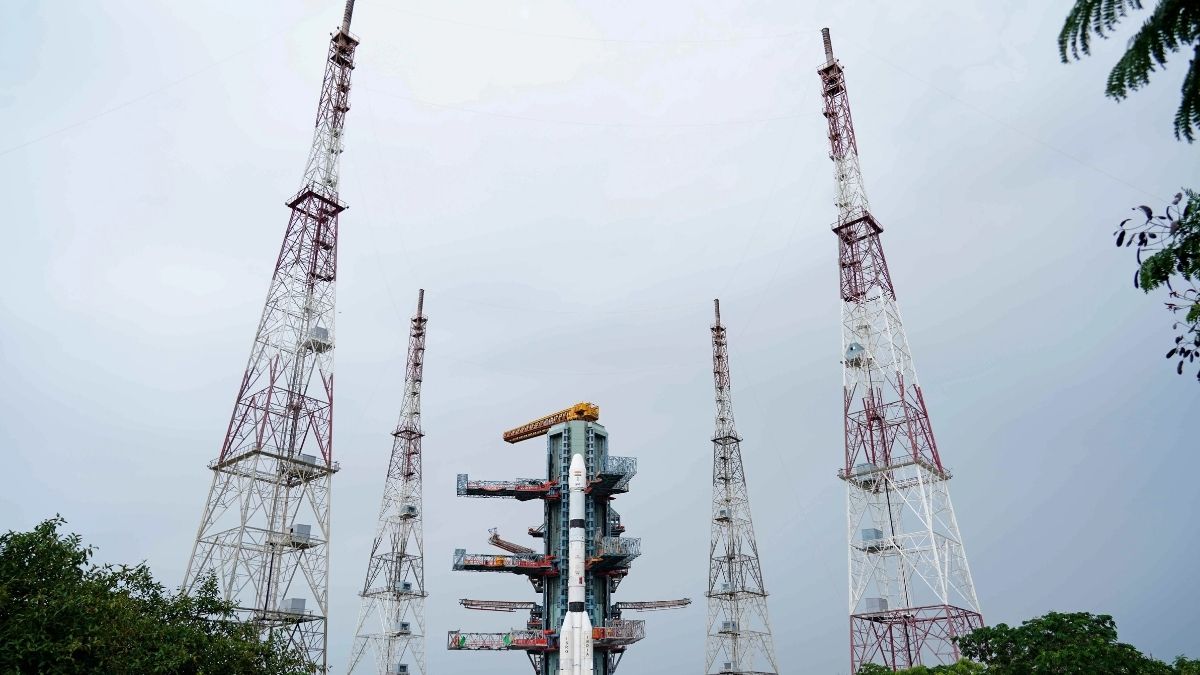
GSLV-F18 is the 20th flight of India’s Geosynchronous Satellite Launch Vehicle (GSLV)
To strengthen Indian indigenous navigation capabilities, the Indian Space Research Organisation (ISRO), has successfully launched GSLV-F18, placing the NVS-03 navigation satellite into a Geosynchronous Transfer Orbit (GTO). The launch was carried out from the Second Launch Pad at Satish Dhawan Space Centre, SHAR, in Andhra Pradesh, marking the 20th flight of India’s Geosynchronous Satellite Launch Vehicle.
In a press statement, ISRO says that NVS-03 is the third satellite in the country’s next-generation navigation satellite system, envisaged to ensure continuity of navigation services provided by the Indian Regional Navigation Satellite System (IRNSS).
Also Read: Space: India’s growing mettle in star wars
The satellite carries an indigenous atomic clock alongside procured atomic clocks. It also introduces an L1 signal in addition to the existing L5 and S signals, expanding the navigation system’s capabilities.
The system is designed to provide navigation coverage across India’s landmass and a region extending 1,500 km beyond the country’s geopolitical boundary.
