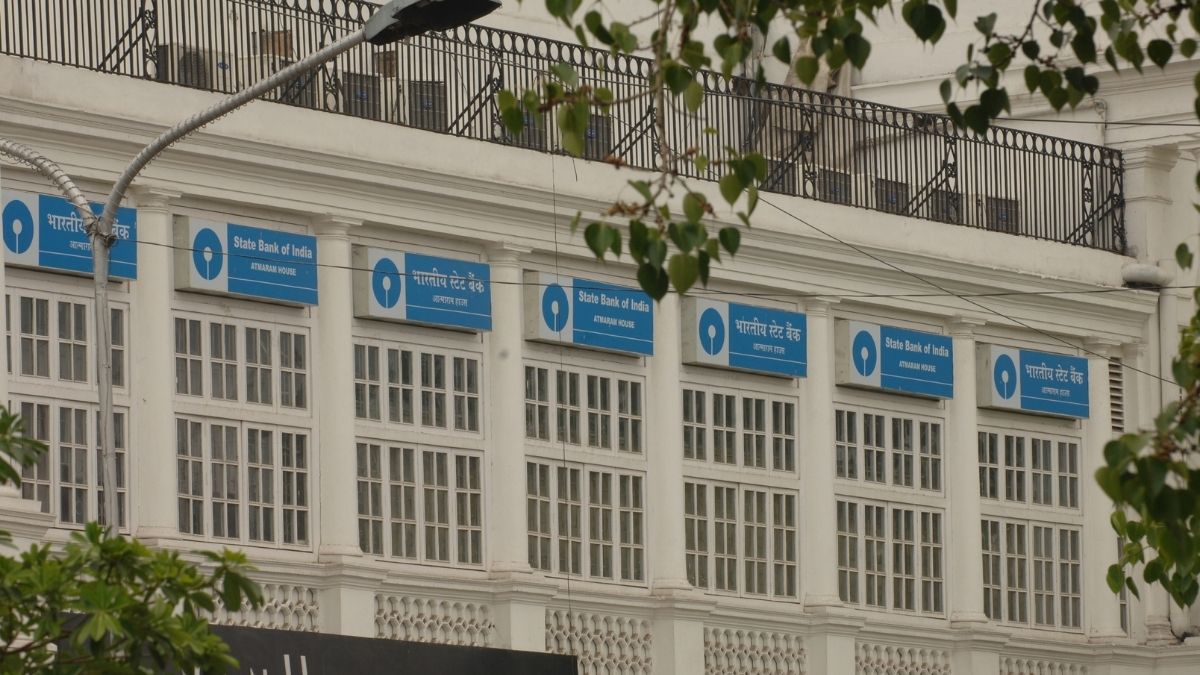
The three-day bank strike from September 28-30 is expected to test the country’s dependence on physical banking infrastructure (Photo: Media India Group/Sunil Yadav)
India’s digital banking infrastructure is set to undergo its biggest test in recent past as thousands of bank branches are likely to shut down for three consecutive days from September 28-30 in wake of a nationwide strike called by a federation of bank workers.
The United Forum of Bank Unions (UFBU), which federates unions of banks that form part of Indian Banks Association (IBA) have called for the strike to assert their demands, mainly centred around their working conditions including a five-day week.
The timing of the strike makes the disruption significant. September 30 marks the half-yearly closing of the financial year, with several deadlines for business and banks, notably centred around payment of taxes and other financial transactions. A three-day strike at this point could create delays that extend beyond routine customer transactions.
“The biggest risk is the accumulation of branch-dependent work at exactly the wrong time. Half-year closing requires reconciliation, documentation, settlements and reporting, so even a short interruption can create a backlog,” says Tarun Narain, Assistant General Manager, Bank of India.
The Union Finance Ministry has moved to limit the impact. On September 21, the Department of Financial Services held a meeting with heads of public sector banks (PSBs), regional rural banks (RRBs), the Indian Banks Association and the National Bank for Agriculture and Rural Development to prepare contingency arrangements. Banks have also been asked to maintain essential services, including cash and ATM operations.
Also Read: Indian banks likely to adopt 5-day work week
The government has additionally asked PSBs and RRBs to keep branches and other relevant infrastructure operational on Sunday, September 27, ahead of the strike. The move is intended to reduce the disruption caused by the three-day action.
The UFBU, an umbrella body of bank employee and officer unions, is demanding a five-day working week, along with pension-related changes and other service-related demands. The unions had also held a nationwide strike on September 11, with disruptions reported in several states.
For businesses, the biggest concern may not be whether payments can be made digitally, but whether money can move at the required time.
A small business waiting for a cheque to clear, a retailer depositing cash after daily sales or a trader withdrawing money to pay suppliers may have limited alternatives to branch-based banking. A delay in cheque realisation or cash access can temporarily tighten working capital, particularly around month-end when businesses have salaries, supplier payments, taxes and loan obligations to meet.
“Cash-intensive businesses and businesses dependent on cheque-based collections are more exposed. A delay of even one or two days in realising funds can affect supplier payments, salaries or other immediate obligations when a business is operating on a tight cash cycle,” Ravin Singh, Manager, ICICI Bank, a private bank, tells Media India Group.
For the common consumer, India’s digital infrastructure provides a significant buffer. Unified Payments Interface (UPI), a national payments platform, processed 24.51 billion transactions worth nearly INR 29.82 trillion in August 2026. Yet digital payments cannot replace every branch function. Cash deposits, cheque processing, physical documentation and parts of loan processing remain dependent on bank staff.
“Digital banking can absorb a very large proportion of routine payments, but it cannot replace the branch completely. You can transfer money digitally, but you cannot use UPI to deposit physical cash, process every cheque, complete every form of personal verificiation needed under Know-Your-Customer or resolve every credit-related requirement,” Singh says.
Also Read: Banking unions to join general strike on February 12 over labour reforms
“Cash availability is another area where digital banking cannot provide a complete substitute. We are therefore planning additional cash loading at Automated Teller Machines and ensuring adequate liquidity through business correspondents. For cash-dependent small businesses, the key is to anticipate requirements rather than wait for shortages to emerge,” says Narain.
Cash availability could therefore become particularly important. The Finance Ministry has asked PSBs to adequately stock ATMs and ensure cash availability at business correspondent outlets. Banks have also been asked to make contingency arrangements for currency chests, cheque-clearing centres, data centres and treasury operations.
The strike could also lead to some migration of routine transactions towards banks that remain operational.
“There could be some migration of routine transactions towards banks that remain operational, particularly where customers have urgent cash or payment requirements. But the larger trend is likely to be a shift towards digital channels rather than a wholesale movement between banks,” Singh says.
The rural economy presents another vulnerability. RRBs are part of the government’s contingency planning, while smaller centres were among those reporting greater disruption during the September 11 strike. Whether the impact is greater in rural areas will depend on local ATM availability, business correspondents, connectivity and customers’ ability to shift to digital channels.
“Cash remains extremely important in rural markets, particularly for small traders, farmers and micro-businesses. While UPI adoption has grown rapidly, it has not eliminated the need for branches,” Ramprakash Mishra, Assistant Manager, of Samastipur branch of Bihar Gramin Bank, a rural bank, tells Media India Group.
“Services involving cash, documentation, account-related issues and credit still depend heavily on physical access, so a prolonged branch disruption can be more difficult to absorb in rural areas,” he says.
Also Read: RBI tightens norms, flags risks as household debt surge
“Rural coverage is uneven and cash replacement itself depends on physical logistics. That is why advance cash planning is critical. If demand suddenly rises at multiple locations, the challenge is not the availability of digital infrastructure but getting physical cash to the right place.”
The disruption could also have a disproportionate effect on rural businesses operating on short cash cycles.
“Someone waiting for a cheque to clear, requiring cash or seeking branch-based credit assistance cannot necessarily find an immediate substitute. For rural businesses operating on daily or weekly cash flows, even a short delay can have a disproportionate effect,” Mishra says.
The government has urged unions to defer the strike, while the UFBU has maintained that concrete progress on its demands is required. With no settlement announced so far, the September 28-30 action remains scheduled.
The strike will therefore test more than banking operations. It will show how far India’s shift towards digital banking has reduced dependence on physical branches and which parts of the economy still need them when the digital alternative cannot fully substitute for cash, cheques, credit and human intervention.