Indian cinema has never shied away from making films based on real-life events
A Delhi High Court order directing the removal of the Kala Hiran: The Battle for Legacy teaser has brought the film into the spotlight before its release. At the heart of the dispute are questions over personality rights, creative freedom and whether filmmakers can dramatise real people and unresolved criminal cases without their consent.
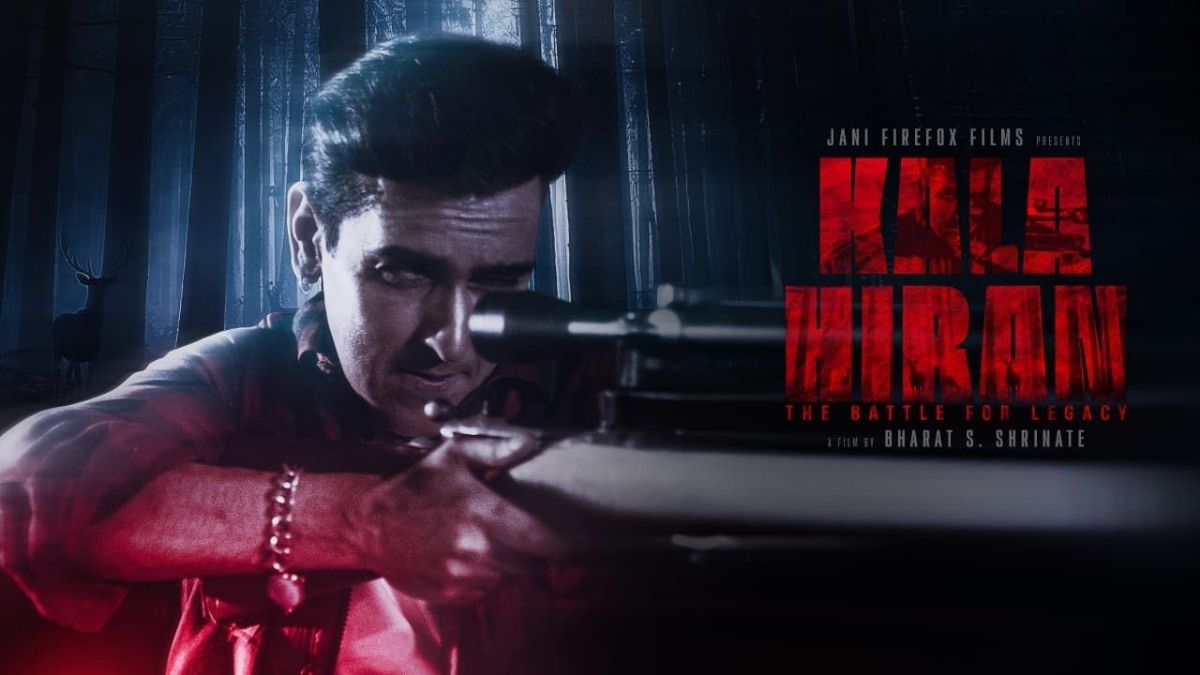
The film is produced by Amit Jani through Jani FireFox Films, directed by Bharat Shrinate, written by Akshay Pandey, and led by actor Kashif Iqbal Khan. According to interviews Jani has given, and which are cited in court filings, the film draws on the blackbuck case and a purported rivalry with gangster Lawrence Bishnoi. Neither is named directly in the film’s marketing, but the case is widely known: Leading film stars, Salman Khan, Saif Ali Khan, Sonali Bendre and Karisma Kapoor were accused of killing a blackbuck near Jodhpur in 1998, during the filming of Hum Saath Saath Hain. A trial court convicted Khan in 2018, a sessions court granted him bail, and the matter was transferred by the Rajasthan High Court in 2022. It remains pending before the Rajasthan High Court and the Supreme Court. Khan was separately acquitted under the Arms Act.
Also Read: Return of re-release economy in Indian cinema
Indian cinema has never shied away from making films based on real-life events. Films on the underworld, on political assassinations, on financial scams, get made regularly, usually protected by disclaimers stating that characters and events are fictionalised. What sets Kala Hiran apart is timing. The blackbuck case has not concluded. One conviction is under appeal, one acquittal stands, and a producer is marketing a film around both before either is settled.
Khan’s legal team has said that this raises two distinct problems, not one. The first is personality rights: a poster released on May 29 showed a character resembling Khan and wearing a bracelet similar to the one he is known for, and the teaser, released on July 17, allegedly carries further identifiable references, including a firearm scene. Khan’s counsel say this uses his persona for commercial gain without consent. The second is prejudice to a pending trial: portraying a version of the firearm allegations, on which Khan was acquitted, risks shaping public opinion on a matter still before the courts.
Khan had sent a legal notice to the filmmakers on April 24, asking them to halt the project, following an earlier suit filed in December 2025 seeking a permanent injunction to protect his name, image and likeness from unauthorised use, including AI-generated content. When the notice did not stop the teaser’s release, he filed for interim relief within the same suit, an application under Order XXXIX Rules 1 and 2 of the Code of Civil Procedure, naming Jani, Jani FireFox Films, Shrinate and Pandey.
Also Read: Cinema’s undying obsession with regional stereotypes
India has no statute defining personality or publicity rights. What exists instead is a run of Delhi High Court orders, built one case at a time over the past four years. Amitabh Bachchan obtained the first interim injunction of its kind in 2022, covering unnamed defendants who used his voice and image in a fraudulent lottery scheme. Anil Kapoor followed in 2023, with the court restraining commercial use of his catchphrase and likeness, including through AI tools. Jackie Shroff won comparable protection in May 2024, against 18 defendants ranging from merchandise sellers to an unlicensed chatbot built on his voice. Jaya Bachchan, Aishwarya Rai Bachchan, Abhishek Bachchan, Hrithik Roshan, Akkineni Nagarjuna and Karan Johar have secured similar orders since, most within the past year.
Each of those cases involved commercial use unrelated to storytelling: merchandise, chatbots, deepfakes, fraudulent endorsements. Khan’s case is different. It raises questions whether the same protection extends to a dramatic film that resembles him closely enough, without naming him, and whether a pending criminal appeal changes what a filmmaker can show.
On August 4, Justice Jyoti Singh, hearing the interim application, ordered the teaser and related promotional links taken down within 24 hours, with platforms including X and YouTube to be directed to remove the content if the makers did not comply themselves. That order covers marketing material only. It does not stop the film from being made, submitted for certification, or eventually released. Jani said on social media that there was no stay on the film itself. His counsel told the court, ahead of the order, that the film had not yet been sent to the Central Board of Film Certification, and Jani has said he still expects a release across roughly 8,000 screens worldwide.
The application seeking to block the film’s release altogether is still pending. That ruling, whenever it comes, will be the one that actually tests the boundary: how much of a real person’s story a filmmaker can tell without their consent and whether an unresolved court case changes the answer.