Beyond the Mangalsutra: India’s regional nuptial ornaments
From thalis to dejhor
Thali, shakha-pola and more, India’s diverse symbols of marriage
Indian weddings are known for their grandeur, but they also reflect the country’s cultural diversity through unique symbols of marriage. Across India, different regions mark marital status with distinct ornaments, from the South’s thali to Bengal’s shakha-pola and Kashmir’s dejhor.
Thali, shakha-pola and more, India’s diverse symbols of marriage
While the mangalsutra is widely recognised across the country as an ornament signifying the marital status of a woman, various regions across India have their own distinctive nuptial ornament, deeply rooted in the local culture and beliefs. These symbols not only mark a woman’s married status but also reflect the rich traditions and identity of the community.
Thaali
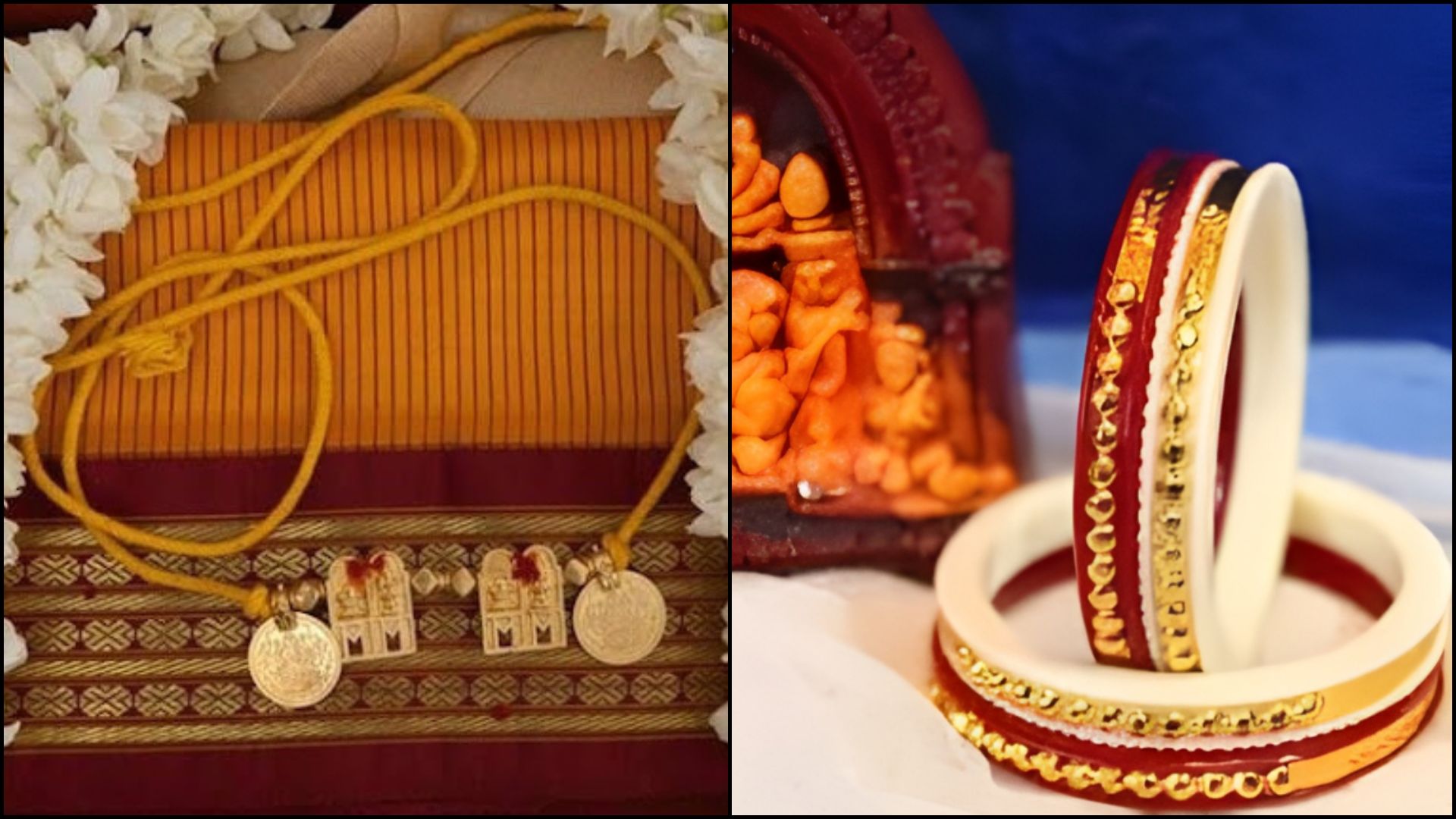
In South India, the thali or thaali is considered the equivalent of the mangalsutra. The groom ties this sacred necklace around the bride’s neck during the wedding ceremony, symbolising marital commitment and protection.
The thali varies in design across states and communities, often featuring motifs such as Lakshmi, Mangala or temple symbols. In Tamil Nadu, Kerala, Karnataka, Andhra Pradesh and Telangana, the thali is worn as a lifelong mark of marriage and is considered a sacred bond.
Dejhor
Dejhor is a dangling ear ornament primarily worn by married Kashmiri Pandit women from the day before their wedding. This piece of jewellery is placed in the inner-centre cartilage of the ear with a red thread, later replaced with a gold chain given by her in-laws.
It symbolises the union between two families and the ornament represents a yantra denoting the union of Shiva and Shakti.
Also Read: Unusual wedding traditions in India
Shakha-Pola
Married Bengali women adorn their wrists with a white and red bangle set after marriage. Shakha is the white bangle and Pola is the red one.
These bangles represent Shakti, the divine feminine energy in the Vedic religion, symbolising good health and prosperity.
Dholna
In Bihar, Dholna is a distinctive marital ornament traditionally worn by married women, known for its detailed filigree work, beads and traditional motifs.
It is worn during important ceremonies and family functions as a visible sign of marriage, believed to bring good fortune and protect the wearer from negative energies.
Thushi
In Maharashtra, many married women wear the thushi, a traditional gold choker-style necklace.
The thushi is often worn during weddings and special occasions and in some communities, it is accompanied by a mangalsutra. The necklace represents marital status and is a sign of cultural pride.
Also Read: India’s top 6 winter festivals to experience culture and tradition
Chooda
Punjabi married women, especially newlyweds, wear chooda, a set of red bangles, after their wedding. Initially covered with a white cloth as it is considered unlucky to see them before the wedding, the chooda is worn by the bride for a full year after marriage.
It is believed to bring prosperity and fertility to the married couple. This custom is now adopted by brides across the nation and has become a symbol of marriage for all newly-married brides.
Junbiri and traditional gold jewellery
In Assam, married women wear traditional gold jewellery such as junbiri earrings, often paired with the mekhela chador.
These ornaments represent cultural identity, good fortune and the woman’s new status within the family. The tradition reflects Assam’s deep-rooted ethnic customs and craftsmanship.